This article may contain affiliate links. If you buy a book through those links, the site may earn a commission at no extra cost to you.
People search for 13 law books to read when they want more than a statute book and less than a full casebook. The phrase usually means a short, serious stack: texts that explain how legal systems work, how lawyers argue, and how courts treat people. This list is built for that intent.
The 13 titles below mix accessible overviews, core jurisprudence, constitutional argument, criminal-justice reporting, advocacy craft, and one first-year memoir. They are not a hidden syllabus and they are not interchangeable. Some reward a weekend. Others take months. Several are written from a U.S. or English vantage point, which matters if you practice elsewhere.
What “law books to read” usually means
Searchers rarely want a multi-volume treatise. Community threads among students and lawyers tend to split into three piles: books that teach legal thinking, books that describe the justice system as it actually operates, and books that prepare someone for the culture of law school or practice. Lists that dump only bar manuals or only novels miss that mix.
Jurisprudence titles keep appearing because they answer a question casebooks postpone: what is law, and what makes a legal system legitimate? Narrative titles keep appearing because theory without people is easy to admire and hard to test. Practical titles keep appearing because courts reward clarity more than eloquence. The books here were chosen because they show up across those conversations and can be verified through publishers, library catalogs, and author records.
13 law books worth reading
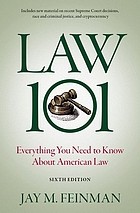
Law 101: Everything You Need to Know About American Law
Feinman’s survey is the cleanest entry point on this list if you want a map of American private and public law before you choose a specialty. The sixth edition walks through constitutional structure, civil procedure, contracts, torts, property, and criminal law with cases used as illustrations rather than as a full casebook grind.
It belongs here because many “start reading law” queries are really requests for orientation. Feinman writes for non-specialists without turning doctrine into trivia. Readers outside the United States should treat the examples as a guide to one major common-law system, not as universal rules.
The book is less useful if you already have a first-year curriculum under your belt. It explains how fields fit together; it does not replace a jurisdiction-specific code commentary.
The Rule of Law
Bingham, a former senior British judge, takes a phrase that politicians overuse and turns it into a short set of working conditions: accessible law, limits on discretion, equality before the law, fair process, and respect for basic rights. The book is historical enough to show where the idea came from and concrete enough to show where it fails.
It belongs on a reading list because teachers, practitioners, and general readers keep recommending it as the least pretentious account of a foundational idea. Unlike Hart or Dworkin, Bingham is writing for civic literacy rather than for a seminar fight about legal positivism.
The focus is British and European in its examples. Readers looking for a U.S. constitutional treatise will need a different book afterward. The payoff is a vocabulary for judging whether a government is merely claiming legality or actually practicing it.
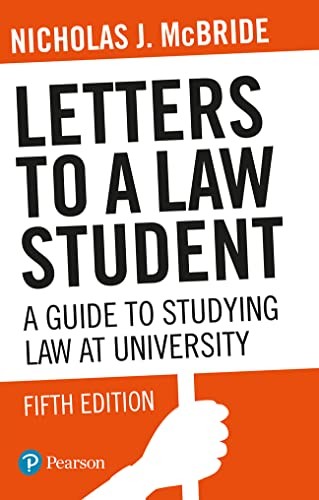
Letters to a Law Student: A Guide to Studying Law at University
McBride frames advice as letters from a lecturer to a student who is still deciding whether law is the right subject. The fifth edition covers choosing a degree, reading cases and statutes, writing essays and problem answers, and thinking about qualification routes in England and Wales.
It earns a place because many people searching for law books are not looking for theory. They want to know how university legal study actually works. McBride is practical without pretending that technique can replace judgment.
The book is most useful in a UK university setting. American readers will still get value from the chapters on argument and close reading, but they should not treat the qualifying-exam material as transferable.
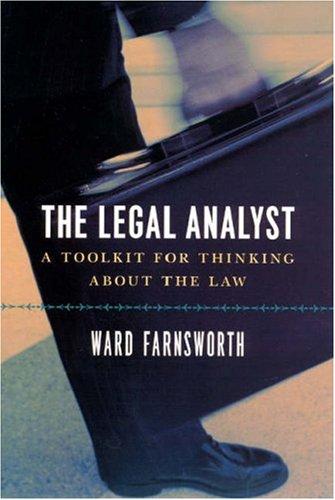
The Legal Analyst: A Toolkit for Thinking about the Law
Farnsworth collects the mental tools law school often smuggles in around the edges: incentives, the Coase theorem, prisoner’s dilemmas, hindsight bias, slippery slopes, and related ideas from economics, game theory, and psychology. Each chapter isolates one tool and shows how it changes the way a legal problem looks.
This is the book many incoming students are told to read when they ask what “thinking like a lawyer” means beyond briefing cases. It does not teach black-letter rules. It teaches habits of comparison: who bears a cost, what happens if a rule is announced in advance, and why a result that feels fair after the fact may be a poor rule going forward.
Readers who dislike economic framing may find some chapters reductive. That is a fair limit. Use the book as a toolkit, not as a complete theory of justice.
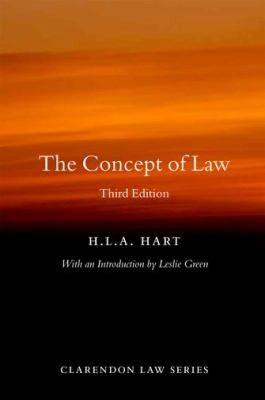
The Concept of Law
- Series
- Clarendon Law Series
First published in 1961 and still the usual starting point in English-language jurisprudence, Hart’s book argues that law is best understood as a union of primary rules of conduct and secondary rules that tell officials how to recognize, change, and apply those rules. The third edition reprints the second-edition text and postscript, with an introduction by Leslie Green.
It belongs here because later debates about judges, rights, and legal positivism still orbit this account. Hart is denser than Bingham or Feinman, but he is clearer than many of his commentators. Read him before Dworkin if you want the argument in the order the field actually developed.
The book is not a history of any one country’s code. International law gets a late chapter that some readers find thin. Patience is required; the payoff is a precise way to talk about obligation, validity, and the difference between having a rule and being obliged by force.
The Morality of Law
- Series
- The Storrs Lectures Series
Fuller argues that law is a purposive enterprise with an inner morality: rules should be general, public, prospective, understandable, consistent, possible to follow, reasonably stable, and congruent with official action. The revised edition adds a long reply to critics, including Hart.
Place this next to The Concept of Law rather than in isolation. Fuller’s eight failures of lawmaking give readers a test they can apply to emergency decrees, secret rules, and contradictory statutes. Where Hart stresses social sources of law, Fuller stresses the conditions under which a system can claim to govern by law at all.
The lectures are shorter than Dworkin and more concrete than much natural-law writing. They will frustrate readers who want a full theory of justice. That is not the book’s job. Its job is to show how legality can collapse even when officials still call their commands “law.”
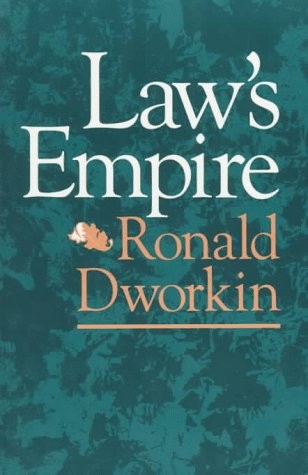
Law's Empire
Dworkin asks how judges should decide hard cases when the rulebook runs out. His answer is interpretive: law is a practice that seeks integrity, so a decision should fit the community’s legal history and justify it in the best moral light available. The book is the fullest statement of the view that law is not only a system of pedigree rules.
It is on this list because Hart’s students and critics still treat it as the main alternative to legal positivism. Dworkin writes with more rhetorical lift than Hart, which helps some readers and irritates others. The imagined judge Hercules is a teaching device, not a claim that real courts are infallible.
This is the hardest book in the set after Hart. Readers who want courtroom narrative should start elsewhere. Readers who want to understand modern debates about principle, policy, and judicial role will eventually need it.
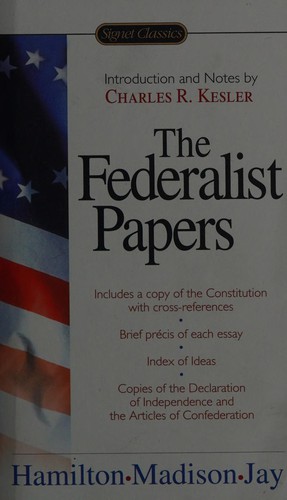
The Federalist Papers
Written in 1787–1788 to support ratification of the U.S. Constitution, these 85 essays remain the most cited extra-textual source in American constitutional argument. A practical modern edition, such as the Signet text based on the McLean edition and edited by Clinton Rossiter, pairs the essays with the Constitution and brief apparatus.
The collection belongs among law books because constitutional doctrine still leans on its accounts of separation of powers, federalism, and faction. It is political theory written under deadline, which makes it sharper and more uneven than a treatise. Readers do not need to accept every claim to see how institutional design was argued in public.
The prose is eighteenth-century. Start with the essays on union, faction, and the judiciary rather than reading straight through. This is not a guide to current doctrine; it is a primary source that later doctrine keeps revisiting.
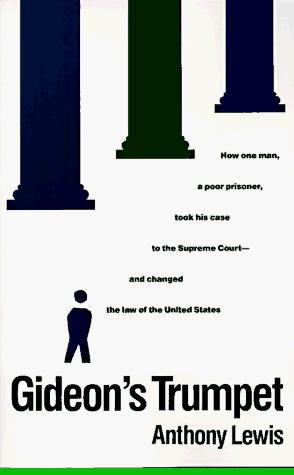
Gideon's Trumpet
Lewis reconstructs how Clarence Earl Gideon, convicted in Florida without a lawyer, forced the U.S. Supreme Court to confront the right to counsel in felony cases. The 1964 account follows a handwritten petition into the Court’s process and outward into a national rule.
It is here because lawyers still recommend it as the most readable introduction to constitutional litigation from the ground up. Lewis explains procedure without drowning the human facts. The book is also a reminder that landmark doctrine often begins with a person who had no institutional power.
This is not a full history of criminal procedure after the 1960s. Later cases complicated the right Gideon won. Read it as a case study in how one dispute becomes a rule, not as a current practice manual.
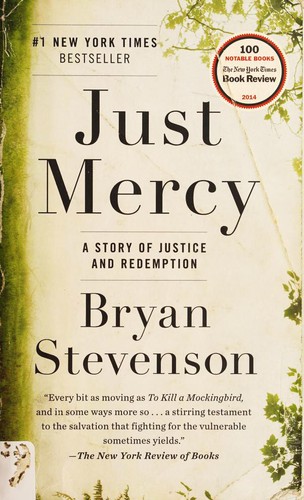
Just Mercy: A Story of Justice and Redemption
Stevenson’s 2014 memoir follows his work with the Equal Justice Initiative, especially the effort to challenge the conviction of Walter McMillian. Around that case he describes clients who are poor, young, disabled, or condemned, and the institutions that process them.
The book is on almost every contemporary “law books to read” list because it translates criminal procedure into lived consequence. It is not a substitute for a criminal-law treatise. It is a record of how charging, counsel, race, and punishment interact when the client cannot buy a second chance.
Some readers come for the later film and stay for the legal detail. Others find the moral framing too pointed. Either way, the documented cases are the reason to read it, not the celebrity of the adaptation.
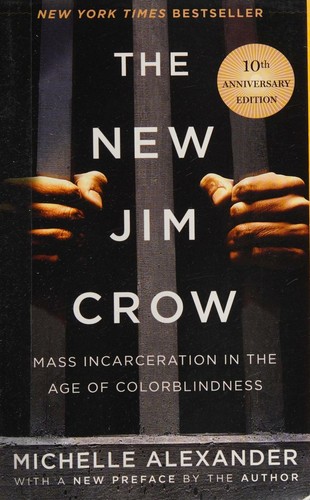
The New Jim Crow: Mass Incarceration in the Age of Colorblindness
Alexander, a civil-rights lawyer and legal scholar, argues that U.S. mass incarceration—especially through drug enforcement—functions as a racial caste system even after formal Jim Crow laws fell. The tenth-anniversary edition adds a preface on the book’s afterlife in courts, classrooms, and reform debates.
Include it because criminal-justice reading lists treat it as a structural companion to memoirs like Just Mercy. Stevenson shows representation in individual cases. Alexander asks how facially neutral statutes, police practice, and collateral consequences can lock people out of voting, housing, and work after the sentence ends.
Critics have challenged parts of the causal story and the relative weight of drug cases versus violent-crime policy. Those disputes are part of reading the book well. It is an argument, not an encyclopedia of every prison system.
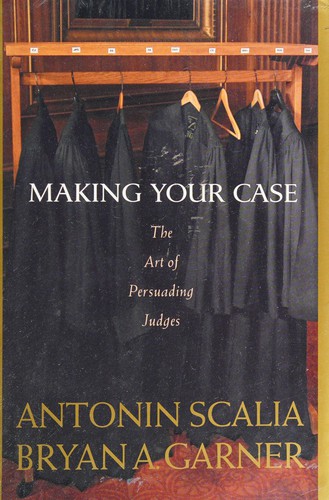
Making Your Case: The Art of Persuading Judges
Scalia and Garner compress brief-writing and oral argument into short numbered lessons: build a syllogism, respect the record, cut what does not help the court, and speak to judges as reasoners rather than as a crowd. The 2008 West volume is a craft book, not a political memoir.
It belongs on a general law list because lawyers keep naming it when asked what improved their writing. You do not have to share Scalia’s interpretive theory to use the advice on structure, tone, and preparation. Garner’s hand is visible in the insistence on plain, exact English.
Some guidance assumes U.S. appellate practice. Trial lawyers in other systems will still recognize the core demand: make the issue easy to decide. Readers seeking a liberal or critical theory of judging should look to Dworkin instead.
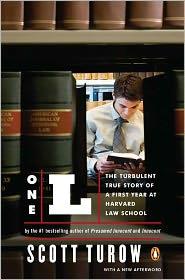
One L: The Turbulent True Story of a First Year at Harvard Law School
Turow’s 1977 journal of his first year at Harvard Law School remains the standard narrative of Socratic teaching, study groups, grading panic, and the pressure to look certain in public. Later reprints include afterwords written after he had practiced.
It is here because incoming students still read it to test their appetite for the culture, not because Harvard in the 1970s is every law school now. The book is strong on the emotional cost of the case method and weaker as a guide to current curricula, clinics, or debt.
Some lawyers say it oversells misery. Others say it underplays how much of practice is paperwork and clients rather than classroom combat. Read it as a period memoir that still names real stressors, then compare it with a modern school’s actual first-year materials.
How to choose among these 13
If you want orientation, start with Feinman, Bingham, or McBride. If you want methods rather than stories, read Farnsworth, then Scalia and Garner. If you want the central jurisprudence argument of the last century, read Hart, Fuller, and Dworkin in that order.
If your interest is constitutional structure, pair The Federalist Papers with Gideon's Trumpet. If your interest is criminal justice as practiced, pair Stevenson with Alexander. If you are testing whether law school is for you, read One L after an overview book so the memoir does not become your only data point.
Do not treat this as a ranked championship. Difficulty, jurisdiction, and purpose differ. A UK applicant gains more from McBride than from Feinman. A public-defense intern gains more from Stevenson than from Dworkin. A clerk gains more from Making Your Case than from One L.
Frequently asked questions
What should I read before law school?
A practical trio is Feinman’s Law 101 or McBride’s Letters to a Law Student, Farnsworth’s The Legal Analyst, and either Bingham or One L. That mix covers institutional basics, analytical habits, and the culture of study. Save Hart and Dworkin unless you already like philosophy.
Do I need jurisprudence books if I only want to practice?
Not first. Advocacy and doctrine will matter more day to day. Hart, Fuller, and Dworkin still help when a statute is silent, a judge asks what the law “is,” or you have to explain why a formally valid rule feels illegitimate. They are tools for hard cases, not substitutes for procedure.
Are novels about lawyers a substitute for law books?
No. A novel can show ethics under pressure, but it is not a source of doctrine. This list stays with nonfiction because the search “law books to read” usually seeks explanation, argument, or documented cases. Fiction can sit beside these titles; it should not replace them.
Which of these books is hardest?
Law's Empire and The Concept of Law are the most demanding. The Federalist Papers is linguistically older rather than technically harder. Just Mercy and Gideon's Trumpet are the most readable. Choose difficulty based on time, not prestige.
Do these books work outside the United States and England?
Several are jurisdiction-specific. Feinman, Lewis, Stevenson, Alexander, Scalia and Garner, and The Federalist Papers are rooted in U.S. law. Bingham and McBride are rooted in English legal life. Hart, Fuller, Dworkin, and Farnsworth travel better because they analyze concepts and methods rather than one code.
Thirteen books cannot cover tax, evidence, or every legal tradition. They can give a reader a working path: what law is, how a constitution is argued, how a case is won or lost, and what the system does to the people inside it. Pick by purpose, read slowly, and pair any memoir with a book that explains the rules the memoir is fighting.