This article includes search links to retailers. If you buy a book through a partner link, a commission may be earned at no extra cost to you.
Some reading lists pile up titles that look impressive on a shelf and then sit unfinished. This one is built for a different problem: you want fourteen books that people keep pressing into other readers’ hands because the pages actually hold attention.
The mix covers a comedy of manners, a courtroom coming-of-age, a political nightmare, an adventure epic, quiet speculative fiction, family sagas, myth retelling, science fiction, magical atmosphere, historical charm, big-history nonfiction, memoir and cozy fantasy. The point is not that every reader will love every title. The point is that each book earns its place for a different kind of appetite.
What “amazing” means on a general reading list
Searchers who type 14 amazing books to read are rarely looking for a single genre or a prize shortlist. They want a short, varied menu: books with strong voices, clear premises and a track record of staying in circulation among ordinary readers, not only critics.
Community threads keep returning to the same tensions. Classics can feel alive or assigned. Beautiful prose can also feel slow. Comfort reads can feel thin if you wanted grit. Long books reward some readers and exhaust others. Those disagreements are useful. They keep a list honest about pace, tone and who a book is for.
The fourteen titles below were chosen because they appear again and again in publisher catalogs, major year-end and century lists, and reader discussions, and because their facts can be checked against official editions. Descriptions stay spoiler-free and do not pretend one person has lived inside every book.
The 14 books

Pride and Prejudice
Austen’s 1813 novel still works because the social comedy is sharp and the central mismatch is earned. Elizabeth Bennet has judgment, humor and a family that keeps making public scenes. Fitzwilliam Darcy has money, pride and a talent for first impressions that land badly. The plot is courtship under economic pressure, not a modern romance template pasted onto bonnets.
Readers looking for an amazing book that is also rereadable tend to land here for the dialogue. The book is short enough to finish, dense enough to argue about, and specific about class, gossip and the cost of being wrong about someone. It will frustrate anyone who wants plot twists every chapter. It rewards anyone who likes character, wit and the slow correction of a first reading of a person.
To Kill a Mockingbird
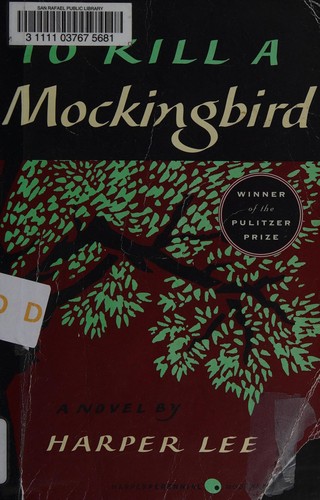
Published in 1960 and awarded the Pulitzer Prize the following year, Lee’s novel is told through Scout Finch, a child watching a Depression-era Alabama town reveal what it rewards and what it punishes. The courtroom plot is famous, but the book’s lasting power is the everyday texture around it: neighbors, schoolyard rules, family loyalty and the gap between what adults say and what they do.
It remains one of the most recommended American novels because it is readable and morally direct without becoming a lecture on every page. That same directness is why some adult readers now want more complexity than a child’s vantage can give. It is still an extraordinary entry point to questions of justice, courage and belonging, provided you know it is a product of its time and told from a particular seat in the room.
1984
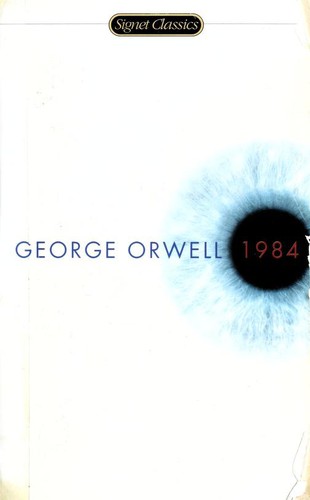
Orwell’s 1949 novel follows Winston Smith, a man who rewrites records for a state that wants not only obedience but rewritten memory. The famous slogans are the hook. The book’s real engine is smaller: how language, surveillance and loneliness make private thought feel like a crime.
People keep calling it an amazing book to read because it is both a story and a set of tools. Newspeak, doublethink and the erasure of the past are ideas you can carry into news cycles without treating the novel as a prophecy checklist. It is not subtle, and it is not comforting. Readers who want lyrical interiority may find the prose plain. Readers who want political fiction with narrative drive still find it hard to shake.
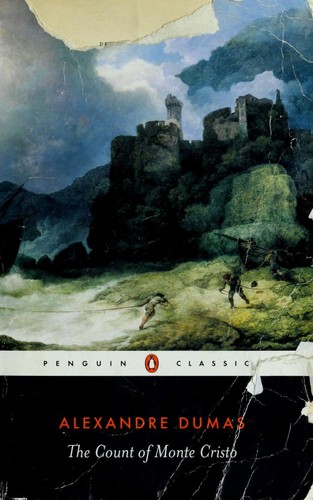
The Count of Monte Cristo
Serialized in the 1840s, Dumas’s novel is the rare long classic that many readers still describe as fun. Edmond Dantès is a young sailor ruined by envy and politics, buried in the Château d’If, then remade by knowledge, fortune and a plan. The Penguin Classics edition translated by Robin Buss is a complete English text rather than a trimmed school version.
The book belongs on a list of amazing reads because it delivers plot without apology: disguises, letters, dinner-table traps, sudden reversals. It is also longer than most contemporary novels and spends time on side lives. That length is the usual complaint. If you want a single-volume adventure that can occupy a month and still feel like entertainment, this is the one to choose over denser nineteenth-century monuments.
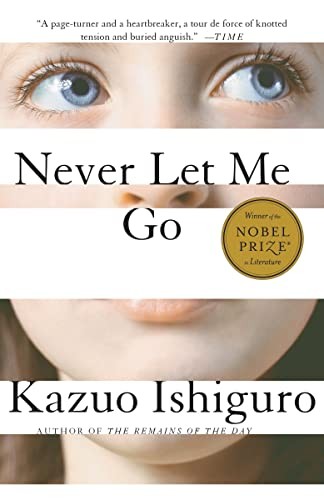
Never Let Me Go
Ishiguro’s 2005 novel, later named among the New York Times’s best books of the twenty-first century, is narrated by Kathy as she looks back on Hailsham, the English boarding school that shaped her and her friends Ruth and Tommy. The school feels privileged and slightly off. The novel withholds its full logic on purpose, then lets recognition arrive in ordinary conversation.
It is an amazing book for readers who like emotional aftershocks more than plot machinery. The speculative premise is handled with almost no genre noise. That quietness is why some readers stall: they want explanation and incident, and Ishiguro offers memory, envy, tenderness and a narrowing future. If you finish it, the book tends to stay in the room. If you need momentum every ten pages, choose a different title on this list.
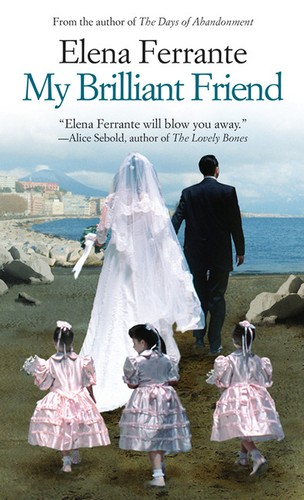
My Brilliant Friend
- Series
- Neapolitan Novels
The first of Ferrante’s Neapolitan Novels, published in English by Europa Editions in 2012 and translated by Ann Goldstein, begins in a poor neighborhood on the edge of postwar Naples. Elena Greco looks back on her childhood bond with Lila Cerullo: rivalry, loyalty, intelligence and the question of who gets to leave. The New York Times later ranked it first among its 100 best books of the twenty-first century.
It earns a place here because friendship is treated as a force as serious as love or politics. The sentences feel spoken and urgent. Violence in the neighborhood is part of the air, not a special episode. Readers who want a tidy, stand-alone story should know this is the start of a four-book sequence. Readers who want a novel that makes ordinary girlhood feel historically large usually keep going.

Pachinko
Lee’s 2017 novel, a National Book Award finalist and a New York Times 21st-century favorite, follows four generations of a Korean family living in Japan across the twentieth century. It starts with a boardinghouse by the sea and widens into churches, markets, schools and pachinko parlors. History is not background decoration. It decides who can belong and who remains permanently foreign.
Readers call it amazing because it is both sweeping and intimate: meals, marriages, jobs, shame, stubborn love. It is also long and structured as a multi-generational relay, so a favorite character will eventually hand the story forward. That is a feature if you like family sagas and a frustration if you wanted one protagonist for 500 pages. Come for the scope. Stay if you care how ordinary people absorb national cruelty without becoming symbols.
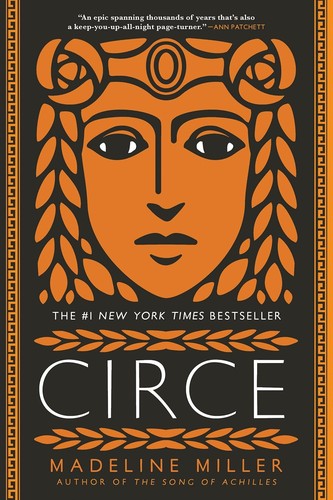
Circe
Miller’s 2018 novel retells the life of Circe, the witch of Aiaia who appears in The Odyssey as an obstacle and becomes, here, the person living the whole story. Born in the house of the Titan Helios, she is first dismissed as weak, then feared when her witchcraft works. Exile on an island becomes an education in power, craft, solitude and the dangerous charm of gods and heroes.
It is one of the most approachable myth novels of the last decade: lush without being unreadable, feminist without turning every scene into a thesis. Readers who know Homer will enjoy the angle change. Readers who do not can still follow it as a character study. The main limitation is taste. If you dislike first-person lyric myth, this will feel perfumed. If you want an amazing book that makes old stories feel newly inhabited, start here.
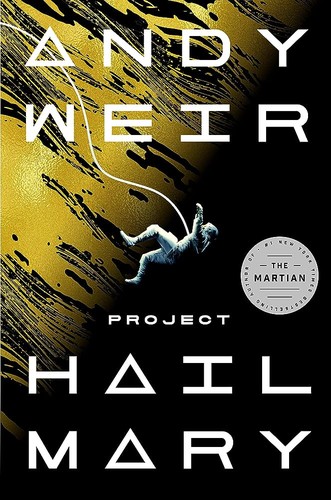
Project Hail Mary
Weir’s 2021 novel, a Hugo Award finalist from the author of The Martian, wakes up with an astronaut who has forgotten his own mission and has to reconstruct it while the clock runs. The science is the entertainment: trial, error, equations on the wall, jokes under pressure. Then the story becomes something larger than a lone-genius puzzle.
Reddit and mainstream lists keep recommending it because it is one of the few recent science-fiction novels that both specialists and general readers finish. It is funny without turning the stakes into a sitcom. The usual caveats are fair. The prose is utilitarian. Some readers bounce off the early amnesia setup or the amount of problem-solving. If you want literary ambiguity, this is the wrong book. If you want an amazing read that makes curiosity feel like action, it belongs here.
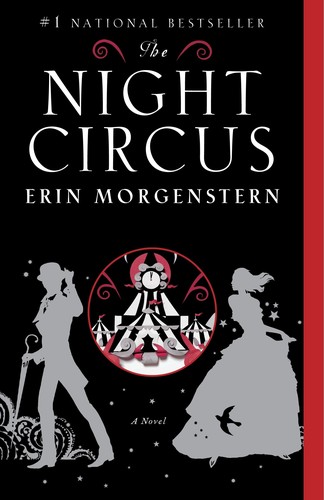
The Night Circus
Morgenstern’s 2011 debut presents Le Cirque des Rêves, a circus that appears without warning and opens only at night. Behind the black-and-white tents, two young magicians are bound to a competition they did not design. The book became a durable recommendation because it sells atmosphere as hard as plot: rooms of ice, perfume, clocks, midnight dinners.
That is also the split in reader opinion. Admirers talk about mood and set-piece wonder. Detractors say the tents are described more lovingly than the people. Both reactions are describing the same book. Put it on this list for readers who want an amazing, transportive novel and can accept a story that moves like a carousel rather than a sprint. Skip it if you need tight causality in every chapter.
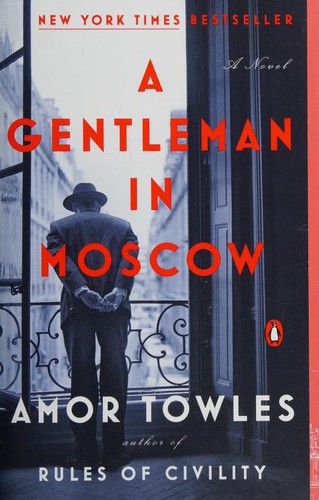
A Gentleman in Moscow
In Towles’s 2016 novel, Count Alexander Rostov is sentenced by a Bolshevik tribunal to live indefinitely inside Moscow’s Metropol Hotel. History turns outside. Inside, the count rebuilds a life from an attic room, hotel staff, a curious child and the rituals of a grand building that is both prison and stage. The book has become a word-of-mouth favorite more than a shock-value title.
Its claim to being an amazing read is charm under confinement: manners as a survival skill, friendship as architecture. Some readers find that charm too polished and the politics too soft. Others finish it grateful for a historical novel that is generous instead of grim at every turn. Choose it when you want warmth, wit and a closed setting. Choose something harsher from this list if you want the century’s violence in close-up.
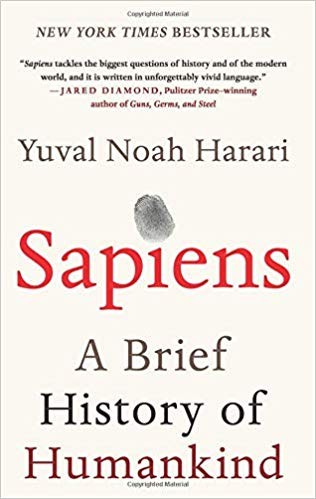
Sapiens: A Brief History of Humankind
First published in Hebrew in 2011 and widely released in English in the mid-2010s, Harari’s survey argues that Homo sapiens outlasted other human species through shared stories, not only tools. The book moves from cognitive change through agriculture, money, empire, science and the modern bet on progress. It is the nonfiction title on this list because readers keep treating it as a gateway to big-history thinking.
It is amazing when you want a single-volume map and a set of provocative claims you can argue with. That argument is part of its reputation. Specialists have objected to sweeping statements and missing caveats. Harari is a historian writing for a general audience, not a stand-in for a whole scientific field. Read it as a conversation starter about cooperation, myth and power, then go to narrower books for any chapter that hooks you.
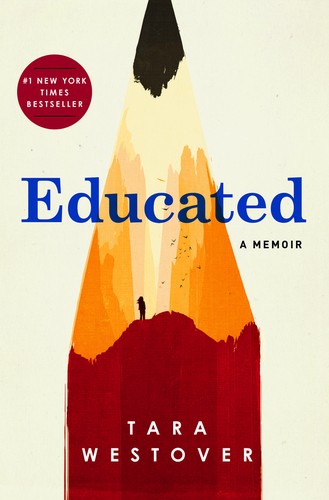
Educated
Westover’s 2018 memoir begins in the mountains of Idaho, in a survivalist family that kept her out of school. She is seventeen before she sits in a classroom, then builds a path that leads to Brigham Young University, Cambridge and a life that no longer fits the one that raised her. The book was a number-one bestseller and a finalist for major nonfiction prizes.
It is on this list because the voice is exact and the stakes are personal without needing a novelist’s plot. Readers recommend it as a story about learning as self-invention. They also warn that it is not a gentle uplift tale. Family loyalty and family harm occupy the same rooms. If you want an amazing book that is also emotionally expensive, this is the memoir. If you want escapism, pick the circus or the hotel instead.

The House in the Cerulean Sea
- Series
- Cerulean Chronicles
Klune’s 2020 fantasy follows Linus Baker, a cautious caseworker sent by the Department in Charge of Magical Youth to inspect an orphanage on a remote island. The children are classified as dangerous. The house is not what the files suggest. What follows is a found-family story about bureaucracy, tenderness and the decision to stop living only by the rules on a clipboard.
It is the comfort book on this list, and that is a legitimate kind of amazing. Readers who want bite will call it sweet to a fault. Readers coming off grim fiction often describe it as a reset. There is a sequel, Somewhere Beyond the Sea, but this novel stands on its own. Choose it when you want queer joy, gentle humor and a world where kindness is treated as a plot, not an afterthought.
How to choose among these fourteen
If you want speed and plot, start with Project Hail Mary or The Count of Monte Cristo. If you want sentences and social intelligence, start with Pride and Prejudice, Never Let Me Go or My Brilliant Friend. If you want a world to sit inside, The Night Circus and Circe do that work in different keys.
Match energy, not prestige. A Gentleman in Moscow and The House in the Cerulean Sea are generous. 1984 and Educated are not. Pachinko and Sapiens ask for stamina of two different kinds: emotional range versus conceptual range. It is reasonable to bounce off a beloved book. The useful question is whether the problem was the book or the timing.
Frequently asked questions
Do I need to read these 14 amazing books in any order?
No. Most are stand-alone. Read My Brilliant Friend first if you continue into Ferrante’s Neapolitan Novels. The House in the Cerulean Sea also stands alone, with a later sequel available if you want more of that world.
Which book on this list is the best place to start if I am out of the habit of reading?
Pride and Prejudice, The House in the Cerulean Sea and Project Hail Mary are the most approachable in voice and momentum. Save The Count of Monte Cristo and Pachinko until you want a longer project.
Are these books all fiction?
No. Twelve are novels. Sapiens is a work of popular history. Educated is a memoir. The split is intentional so the list can serve different reading moods.
Why do some highly praised books disappoint people?
Reader discussions keep returning to pace and tone. Quiet literary novels can feel uneventful. Atmospheric books can feel underplotted. Comfort reads can feel sugary. An amazing book for one reader is often a mismatch of expectation rather than a fraud.
Which editions should I look for on the long classics?
For The Count of Monte Cristo, a complete translation such as Robin Buss’s Penguin Classics edition avoids abridgment. For Pride and Prejudice and 1984, any reliable publisher text is fine; the ISBNs listed are widely circulated trade editions, not the only valid ones.
Fourteen books cannot cover every kind of greatness, and they should not pretend to. They can give you a practical map: wit, justice, dread, revenge, hush, friendship, lineage, myth, science, night magic, courtesy, big history, memoir and warmth. Pick the mood you can actually finish this month. The amazing part is the book that changes the temperature of the week, not the one that only looks serious on a list.