This article contains search links to book retailers. If you buy through those links, a site may earn a commission at no extra cost to you.
The search for feminine books is rarely a hunt for pink covers. Readers usually want stories that take women’s inner lives seriously: instinct, friendship, appetite, shame, glamour, caretaking, and the slow work of becoming someone. That can mean a mythic exile, a parlor full of sisters, a secret written language, or a psychology text built from folk tales.
This list keeps the number at fifteen and stays close to that intent. The books differ in period, tone, and difficulty. Some are tender. Some are severe. What they share is a female center of gravity and a close interest in how femininity is lived, argued with, or remade.
What people mean by feminine books
Online, “feminine books” splits in two directions. One group wants the wild-woman and goddess register: folklore, embodiment, intuition, and stories that treat softness as a form of power. Another wants novels of manners, sisterhood, and female friendship, where the drama happens in kitchens, classrooms, letters, and marriages. Both are valid readings of the keyword, so this article includes each.
The list is not a synonym for feminist theory, nor is it limited to romance. Feminist argument appears in several titles, but the through-line is texture: how a woman notices the world, how she is watched, and what she keeps private. Readers on book forums often ask for feminine heroines who are still competent, and for books that feel lush without becoming empty. The titles below were chosen because they answer that request in different keys.
15 feminine books to read

Women Who Run with the Wolves
Estés, a Jungian analyst and storyteller, uses fairy tales, folk stories, and case material to describe what she calls the Wild Woman: the instinctive, creative part of a woman’s psyche that culture often trains out of her. The book is not a novel and not a quick manifesto. It moves tale by tale, pausing on images of hunger, initiation, and return.
It belongs on a feminine reading list because it is the text people still name when they want language for intuition without treating femininity as decoration. The prose can be incantatory, which some readers find nourishing and others find repetitive. It is long, associative, and dated in places, especially where the psychology leans on broad archetypes. Start here if you want a map of feminine instinct rather than a plot. Skip it if you need a tight argument or a short book.
Circe
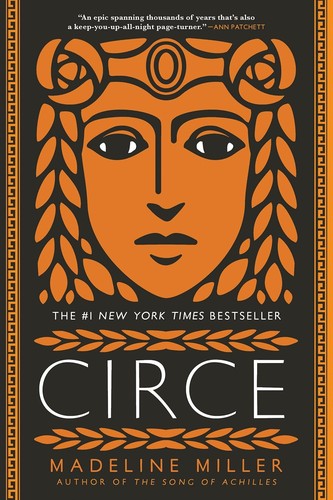
Miller retells the life of Circe, the witch of Aiaia, from a neglected Titan daughter to a woman who learns craft the hard way. Gods, heroes, and monsters pass through her island, but the novel’s real subject is how a scorned girl builds a self when no one has granted her one. The magic is present and practical: herbs, transformation, isolation.
Among feminine books, this is the lush mythic option. Readers looking for goddess atmosphere and a heroine who grows rather than arrives fully armed often land here. The middle stretch is quieter than the opening, which is either the point or a complaint, depending on whether you want event or interior weather. It is a better fit than Estés if you need story, and a better fit than many courtly classics if you want solitude, craft, and a female gaze on Homeric material.

The Red Tent
Diamant takes a brief biblical mention of Dinah and builds a novel around the women who raise her: Leah, Rachel, Zilpah, and Bilhah. The red tent is the space where they gather during menstruation and childbirth, trading stories, midwifery, and a private calendar. The book is historical fiction with a ritual pulse, not a theology textbook.
It earns its place because so many readers treat it as a gateway to feminine community: bodies, birth, and the knowledge women keep when official narrative belongs to men. Some readers find the reconstructed ancient world romanticized. Others want exactly that warmth. Compared with Circe, the magic here is social rather than supernatural. Compared with Estés, the teaching arrives as story instead of commentary.
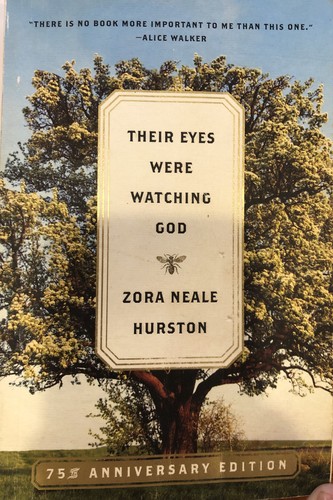
Their Eyes Were Watching God
Janie Crawford tells a friend how she moved through three marriages in early-twentieth-century Florida, chasing a life that feels like her own rather than a role assigned by grandmother, husband, or town. Hurston writes in a voice that can turn a pear tree, a store porch, or a hurricane into a measure of desire. The novel is short and concentrated.
This is one of the essential feminine books because it treats a Black woman’s longing as a serious philosophical subject. Janie wants love, but she also wants to hear herself think. Readers who come from the wild-woman shelf often recognize the same hunger for an unborrowed life. The dialect and the violence of some relationships ask for attention, not a breezy read. It is less ornamental than Circe and less communal than The Red Tent; the center is one woman’s voice.

Pride and Prejudice
Elizabeth Bennet has wit, limited money, and a family that will not stop performing in public. Austen uses courtship as a social instrument: who sees clearly, who performs status, and what a woman can refuse when marriage is the main available plot. The comedy is precise. The stakes are economic as much as romantic.
If Circe is feminine exile, this is feminine society. It belongs here because so many later “feminine” novels still work in Austen’s key: observation, moral intelligence, and the right to dislike a man who expects gratitude. Readers who want myth or trauma work will find it too mannered. Readers who want a heroine whose power is judgment rather than magic will find it exact. It is the sharpest book on this list about how femininity is staged in rooms.
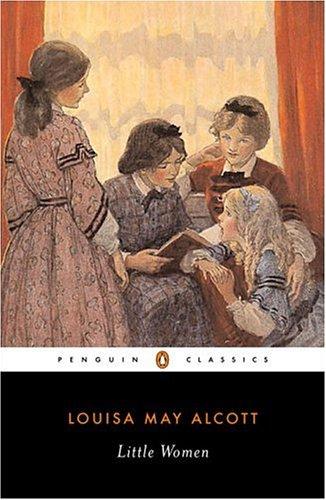
Little Women
The March sisters — Meg, Jo, Beth, and Amy — grow up poor, ambitious, and closely watched in Civil War–era New England. Alcott gives each sister a different bargain with femininity: prettiness, art, duty, polish. The novel is domestic without being small. Work, illness, and authorship sit beside dances and letters.
It remains a feminine book because it takes girlhood as a workshop, not a waiting room. Jo’s hunger to write is the most quoted thread, but the novel is richer when you watch how the sisters correct and fail one another. Some modern readers bristle at the moral lessons and at later marriage choices. That friction is useful. Compared with Austen, Alcott is warmer and more didactic. Compared with Ferrante, she is kinder to the idea of home.
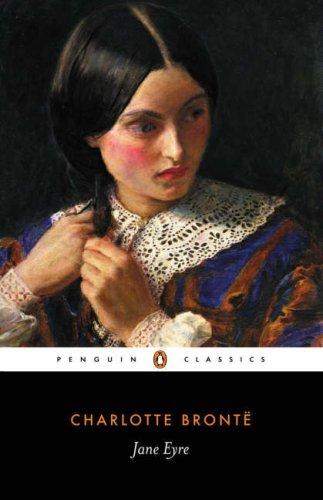
Jane Eyre
An orphaned governess with no beauty and little protection insists on a moral life she can respect. Jane’s childhood is harsh, her work is precarious, and her attachment to Rochester is complicated by secrets in the house. Brontë writes desire and conscience in the same heated register.
Jane is a cornerstone of feminine reading lists because she refuses the usual trade: she will not purchase love by erasing herself. The novel is Gothic where Austen is comic and more spiritually intense than Alcott. Readers who want softness alone may find it stormy. Readers who want a plain heroine with an unplain inner life usually stay. It is the book on this list that most clearly treats feminine self-respect as a plot engine.
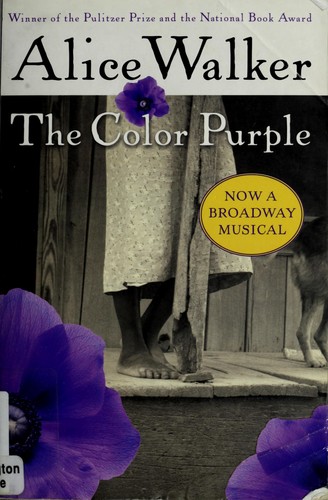
The Color Purple
Celie begins with almost no language for her own life. Letters — first to God, later to her sister Nettie — become the way she records harm, work, and the slow arrival of other women who treat her as a person. The rural Georgia setting is specific. The emotional movement is from silencing to speech.
This belongs among feminine books because it shows femininity under pressure: labor, desire, faith, and sisterhood as survival. It is harsher than Little Women and less mythic than Circe. Shug and Sofia offer different models of female force, which is why the novel keeps being recommended as a book about women seeing one another. It is not a gentle entry point. It is a necessary one if the keyword is meant to include more than parlor femininity.
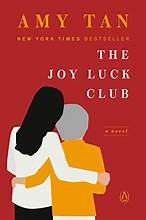
The Joy Luck Club
Four Chinese immigrant mothers in San Francisco play mahjong and keep stories their American-born daughters only half want. Tan braids sixteen linked narratives so that each pair of women is both intimate and mistranslated. The feminine material here is intergenerational: advice, fear, food, luck, and the gap between what a mother survived and what a daughter thinks is possible.
It fits the keyword because femininity is not one style. The mothers carry old-world rules; the daughters improvise new ones; neither side is simple. Readers who loved The Red Tent’s chorus of women often like this modern, diasporic version of a women’s circle. It is less witchy than Weyward and less solitary than Jane Eyre. The structure asks you to hold several voices at once.
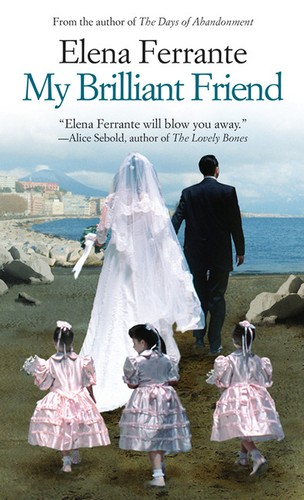
My Brilliant Friend
- Series
- Neapolitan Novels
In a poor neighborhood on the edge of postwar Naples, Elena Greco watches Lila Cerullo with a mixture of love, rivalry, and fear of being left behind. This first volume of the Neapolitan novels follows them from childhood into adolescence, when school, boys, and family work begin to split their paths. Ferrante writes female friendship as an education and a contest.
If Alcott gives sisterhood its gentlest American form, Ferrante gives friendship its most unsentimental modern one. Readers looking for feminine books often want exactly this: two girls inventing intelligence together. The novel is dense, local, and emotionally airless in the best sense. It is not cozy. It is the right next step after Little Women if you want to see what female closeness looks like without moral embroidery.
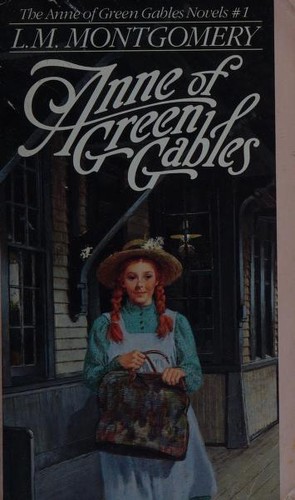
Anne of Green Gables
- Series
- Anne of Green Gables
An orphan with red hair and too much vocabulary is sent, by mistake, to a farm that wanted a boy. Anne Shirley talks the Island into color: roads become stories, mistakes become tragedies, and belonging becomes a project. Montgomery writes girlhood as an aesthetic practice. Feeling is not an embarrassment; it is Anne’s method.
This is the softest book on the list, and that is why it belongs. Plenty of readers asking for feminine books want permission to enjoy prettiness, talk, and romantic weather without being told the taste is trivial. Anne is dramatic and kind, which is a different model from Jane Eyre’s steel or Circe’s isolation. Adults reread it for the same reason children do: it takes a girl’s inner theater seriously.
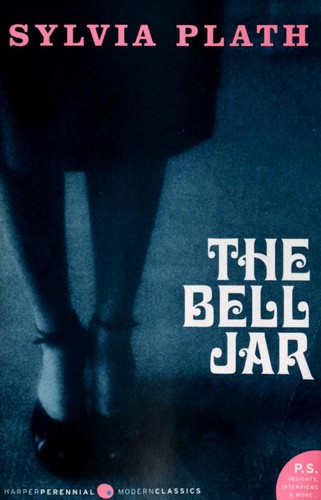
The Bell Jar
Esther Greenwood wins a magazine internship in New York and finds that the prizes of mid-century girlhood — polish, dates, a shining career — do not hold. The novel follows her mind as options narrow and a psychiatric crisis begins. Plath’s sentences are clean and cold. The feminine world of clothes, scholarships, and expected marriage is rendered as a set of rooms with thinning air.
It is on this list because “feminine books” also means books about the cost of performing femininity. Esther’s problem is not that she lacks taste or intelligence. It is that the available scripts feel unlivable. This is the bleak counterpart to Anne and Austen. Do not start here if you want comfort. Do start here if you want a classic of female interior weather that refuses charm as a solution.
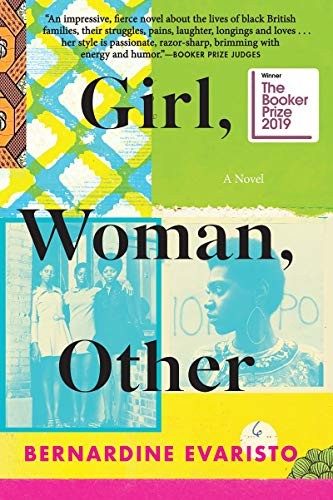
Girl, Woman, Other
Twelve connected Black British women — and one of their partners — occupy overlapping London lives as playwrights, teachers, cleaners, students, and elders. Evaristo writes in a fluid, mostly unpunctuated line that feels like talk caught mid-thought. Age, class, sexuality, and nation keep shifting the meaning of woman.
This is the contemporary chorus on the list. Where The Joy Luck Club works in mother-daughter pairs, Evaristo widens the circle until femininity looks like a city rather than a type. It won the Booker Prize and reads quickly despite its range. Readers who think “feminine books” means one mood will be usefully contradicted. The book argues, by structure, that there is no single feminine life to recommend.
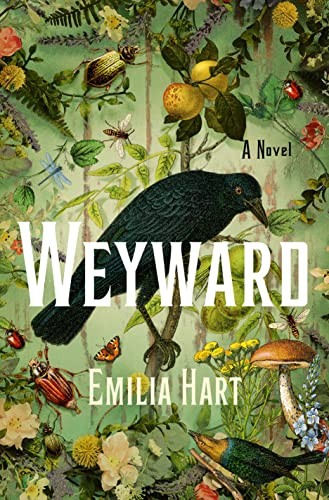
Weyward
Three Weyward women, living in 1619, 1942, and the present, inherit a cottage, a reputation, and a kinship with the natural world that other people call witchcraft. Altha faces a trial. Violet is boxed in by a father’s idea of a proper girl. Kate arrives at the cottage fleeing a controlling relationship. Hart braids the timelines so that wildness looks like both gift and liability.
This is the current book readers often mean when they ask for feminine, witchy fiction without a full high-fantasy system. It sits between Circe’s myth and Estés’s wild-woman thesis: women punished for noticing too much. Some readers want more vengeance than the novel gives. Others want exactly its quieter claim that belonging to the wild is a form of memory. It is more accessible than Ferrante and darker than Anne.
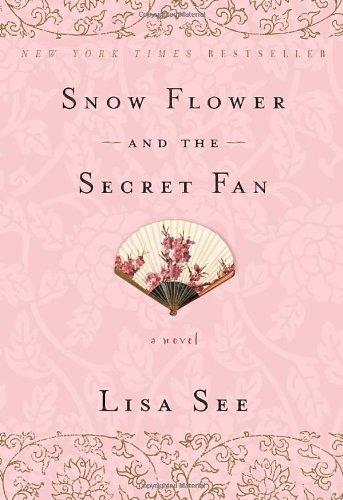
Snow Flower and the Secret Fan
In nineteenth-century Hunan, girls are bound, married out, and expected to live inside a narrow women’s world. Lily is paired with Snow Flower as a laotong, an “old same,” and they write to each other in nu shu, a script used by women. The fan and later embroidered cloth become a private archive of a friendship that has to survive ritual, distance, and misunderstanding.
Few novels literalize feminine culture this directly: a language men are not meant to read. That is why it closes the list. It shares The Red Tent’s interest in women’s rooms and Ferrante’s interest in a bond that can wound. The historical detail is heavy with footbinding and confinement, so it is not a pastoral. It is the book to choose if you want femininity as a made culture — codes, vows, and the cost of being each other’s witness.
How to choose among these 15 feminine books
If you want language for instinct and creativity, begin with Women Who Run with the Wolves. If you want that same wildness as story, choose Circe or Weyward. If you want rooms full of women rather than one exile, choose The Red Tent, The Joy Luck Club, Girl, Woman, Other, or Snow Flower and the Secret Fan.
If you want classic English-language girlhood and courtship, the cluster is Pride and Prejudice, Little Women, Jane Eyre, and Anne of Green Gables. If you want friendship as a life sentence, Ferrante is the most demanding and the most precise. The Color Purple and The Bell Jar are the hardest emotionally; they belong on the list because femininity is not only softness. Match the book to the mood you can actually finish.
Frequently asked questions
What counts as a feminine book?
In practice, readers mean books that center women’s inner lives, female friendship, embodiment, or a distinctly female social world. The category is tonal and thematic, not a genre label. A book can be feminine without being romantic, pink, or politically identical to every other title on a women’s-studies syllabus.
Are feminine books the same as feminist books?
No. Some titles here are openly concerned with women’s freedom. Others are simply close studies of girls and women. Feminist books argue a position; feminine books may do that, or they may only render a texture of attention, care, glamour, or instinct. The overlap is large and not complete.
Which of these 15 feminine books is the best place to start?
For a short, complete story with a clear heroine, start with Their Eyes Were Watching God or Circe. For comfort, start with Anne of Green Gables or Pride and Prejudice. For the idea of a wild feminine self, start with Women Who Run with the Wolves, knowing it is long nonfiction.
Do feminine books have to be written by women?
This list uses women authors because that is what most searchers and forum threads mean. A masculine-authored book can still portray women well. The phrase “feminine books,” though, usually points to work that comes from inside a female or feminized experience rather than observing it from outside.
Are these books only for women readers?
No. The list is organized around subject and sensibility, not a gate. Anyone interested in how womanhood is imagined in fiction and folklore can read them. A few titles, especially The Color Purple, The Bell Jar, and Weyward, ask for care because of their content, regardless of the reader.
Fifteen titles cannot cover every version of femininity, and they should not pretend to. Use the list as a spread of temperatures: myth, manners, sisterhood, rupture, and the private languages women invent. Pick the book that matches the kind of feminine life you want to sit with this month, then let the next title correct it.