This article contains search links to retailers such as Amazon and Goodreads. If you buy through those platforms, they may earn a commission. Book facts were checked against publisher pages, library catalogs and author records.
People searching for 12 Muslim books to read are rarely looking for one genre. Some want a clear English Quran. Others want a trustworthy life of the Prophet, a daily hadith reader, a practical primer, or a novel that treats Muslim characters as more than background. This list treats that mixed intent as the point.
The twelve titles below cover scripture, seerah, hadith, spiritual ethics, introductory practice, civilizational history and two works of fiction. They differ in density, tone and audience. That spread matters, because a book that helps a new Muslim learn prayer will not do the same work as a novel about Kabul, and pretending otherwise wastes a reader's time.
What counts as a Muslim book worth reading
In English-language search results, Muslim books usually means one of three things: Islamic source texts and their translations, books written by Muslim scholars or authors about faith and history, or fiction that grows out of Muslim life. All three appear in community recommendations, from study circles to general reading lists.
The titles here were chosen because they keep showing up for different reasons. Some are foundational. Some are easier on-ramps. Some are widely read stories rather than manuals of worship. Where readers disagree, that disagreement is noted instead of flattened. No title is presented as a substitute for studying with a qualified teacher when the subject is law or creed.
12 Muslim books to read
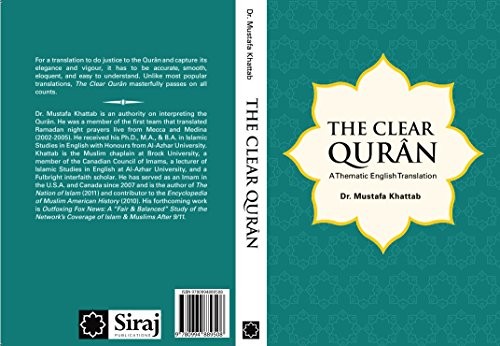
The Clear Quran
- Series
- The Clear Quran Series
A list of Muslim books that skips the Quran is not a serious list. The question is which English rendering a general reader can actually finish. Mustafa Khattab's The Clear Quran is a modern thematic translation first published in 2015 and later approved by Al-Azhar and endorsed by bodies such as the Canadian Council of Imams. It uses contemporary English, short surah introductions and grouped verse headings rather than Jacobean phrasing.
It belongs here because English readers repeatedly ask for a translation that is readable without feeling paraphrased into self-help. It will not replace Arabic recitation or a full tafsir. Readers who want more commentary should pair it with an established explanation rather than treating the footnotes as a complete scholarly apparatus. For many beginners and returning readers, though, it removes the first barrier: language that gets in the way of the text.

The Sealed Nectar
Ar-Raheeq Al-Makhtum, published in English as The Sealed Nectar, is the seerah title that surfaces most often when English-speaking Muslims ask where to start with the Prophet's biography. Safiur Rahman Mubarakpuri wrote the Arabic original for a Muslim World League seerah contest in the late 1970s; it took first prize and Darussalam's English editions have kept it in print ever since.
The book is valued for chronological coverage from lineage and early Makkah through the Medinan years. It is denser and more source-driven than a literary retelling. That is why it belongs on this list beside Martin Lings rather than instead of him. Readers who want maps, names and a traditional documentary tone usually prefer this one. Readers who want narrative cadence sometimes find the English utilitarian. Both reactions are fair.
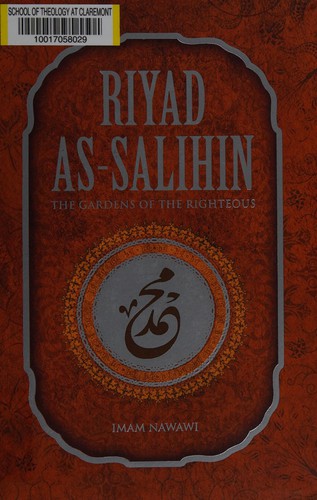
Riyad as-Salihin
If the Quran is the first book and seerah is the second habit, Riyad as-Salihin is the hadith collection many households actually open. Imam al-Nawawi, the thirteenth-century Damascene Shafi'i scholar, arranged roughly two thousand reports by theme: intention, repentance, patience, manners, worship and social conduct. English-Arabic sets from publishers such as Darussalam remain the copies most readers buy.
It earns a place here because it is usable. You can read one chapter after fajr without needing a seminar in hadith criticism. Specialists still debate a small number of weaker narrations in some printings, which is why annotated editions matter. As a character-and-practice reader rather than a legal encyclopedia, it is one of the most practical Muslim books in English circulation.

Muhammad: His Life Based on the Earliest Sources
Martin Lings, also known as Abu Bakr Siraj ad-Din, published this seerah in 1983 with the Islamic Texts Society; Inner Traditions issued the widely available revised edition. It draws on eighth- and ninth-century Arabic biographies and aims for a continuous narrative rather than a handbook of citations. Governments in Pakistan and Egypt honored it, and it is often called the most readable English life of the Prophet.
It belongs on a twelve-book list because it does a different job from The Sealed Nectar. Lings writes in a high, almost scriptural cadence. That style is why many readers finish it and remember scenes. It is also why some later critics argued over particular reports and over Lings's traditionalist-Sufi frame. Use it as literature grounded in early sira, not as the only source you will ever consult.
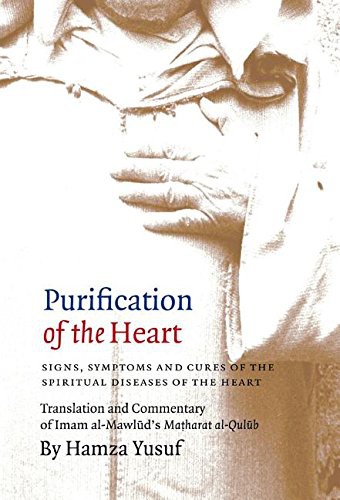
Purification of the Heart
Hamza Yusuf's Purification of the Heart is an English commentary on Matharat al-Qulub, a didactic poem by the Mauritanian scholar Muhammad Mawlud. First issued by Starlatch in 2004 and later revised by Sandala, it treats envy, arrogance, ostentation, rage and stinginess as diseases with causes and treatments. The frame is classical Islamic ethics, not generic wellness.
Community lists keep recommending it because it is specific. Instead of telling readers to be better people, it names a vice, shows how it works in ordinary life and points to a remedy drawn from the tradition Yusuf studied in North and West Africa. It is denser than a paperback of essays and lighter than Ghazali's full Ihya. Readers looking for memoir will be disappointed. Readers looking for a map of the inner life usually stay.
Reclaim Your Heart
Yasmin Mogahed's Reclaim Your Heart, first published in 2012 and later reissued by Idify Publishing, is the contemporary spiritual book English-speaking Muslim women in particular keep handing to one another. It is a set of short reflections on attachment, loss, pain and worship rather than a textbook of creed. Mogahed writes as a speaker and essayist, not as a medieval commentator.
It is on this list because it answers a different search than Nawawi or Ghazali. Readers often come to it after a breakup, a grief or a period of emptiness, and they want language that sounds like the present. Some students of the classical sciences find it thin. That limitation is real. As an on-ramp that keeps people reading about the heart instead of abandoning religious books altogether, it has a documented audience.

The Alchemy of Happiness
Abu Hamid al-Ghazali wrote Kimiya-yi Sa'adat in Persian as a shorter companion to his massive Revival of the Religious Sciences. English readers usually meet it through Claud Field's 1910 abridged translation, later annotated by Elton L. Daniel. The book walks through knowledge of the self, knowledge of God, this world, the next world, and the discipline of love and remembrance.
It belongs among twelve Muslim books because Ghazali still sits at the center of Sunni ethical and spiritual reading. The Alchemy is the version a non-specialist can finish. Field's English is dated and abridged, so it is not a substitute for the Arabic or Persian originals. Even so, it shows why later writers keep returning to self-knowledge as the start of religion rather than as a modern self-help invention.

Being Muslim: A Practical Guide
Asad Tarsin's Being Muslim, published by Sandala in 2015 with a foreword by Hamza Yusuf, is a primer written for people who need the basics in one place: belief, prayer, zakat, fasting, hajj, refinement of character, the Prophet, the Quran, holy days and daily life. Tarsin compiled the material from traditional authorities and wrote it for readers with little or no background.
New-Muslim forums and mosque book tables recommend it because it is operational. It tells you what to do next week, not only what to admire. It is not a work of advanced fiqh and should not be used as one. For converts, returning Muslims and non-Muslims who want a respectful outline of practice, it is one of the cleaner English starting points currently in print.

Lost Islamic History
Firas Alkhateeb's Lost Islamic History, first published by Hurst in 2014 and revised in 2017, is a short survey from pre-Islamic Arabia to modern nation-states. It moves through the early caliphates, intellectual life, al-Andalus, West African kingdoms, the Ottomans and Mughals, colonial rupture and later political thought. Oxford University Press distributes the revised edition.
Readers ask for a Muslim-centered history that is longer than a pamphlet and shorter than a graduate syllabus. This is that book. Specialists will find compression and omission; a 250-page narrative of fourteen centuries cannot be otherwise. As a first map of names, regions and achievements that school textbooks often skip, it is one of the most useful recent English introductions.

Secrets of Divine Love
A. Helwa's Secrets of Divine Love, published in 2020 by Naulit Publishing House, is a contemporary spiritual book that braids Quranic themes, poetry and personal address. It became a commercial success among younger English-speaking Muslims looking for warmth after encountering religion as rule-lists or public argument. Chapters move through divine love, the pillars and the inner life.
It is included because searchers for Muslim books now meet this title as often as older manuals. That popularity is not the same thing as scholarly standing. Some readers in traditional study circles warn that its sources and framing are looser than Nawawi or Ghazali. The honest use of the book is as a doorway. If it restores a reader's desire to pray and then read stronger texts, it has done its limited job.

A Thousand Splendid Suns
Khaled Hosseini's second novel, published by Riverhead Books in 2007, follows two Afghan women whose lives meet in Kabul across decades of war and political change. Hosseini, born in Kabul and later a UNHCR goodwill envoy, wrote it as a mother-daughter story after the father-son focus of The Kite Runner. The paperback most readers buy is the 2008 Riverhead edition.
It belongs on a Muslim-books list because many general readers first meet Muslim characters through Hosseini. The novel is not a primer on Islam and should not be read as one. It is historical fiction about family, survival and women's constrained choices under successive regimes. The book is emotionally heavy. Readers who want comfort reading or a flattering national portrait should choose something else.
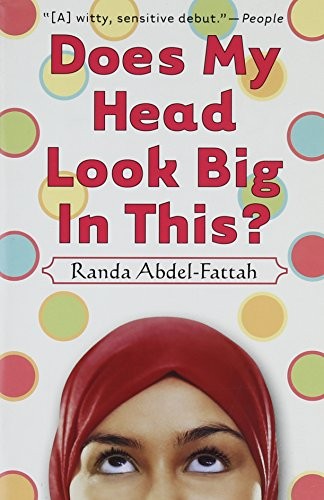
Does My Head Look Big in This?
Randa Abdel-Fattah's debut novel appeared from Pan Macmillan Australia in 2005 and from Scholastic/Orchard in the United States in 2007. It follows Amal, a sixteen-year-old Australian-Palestinian-Muslim student who decides to wear the hijab full-time at a private Melbourne school. The book won the 2006 Australian Book Industry Award for older children and remains a standard young-adult title about visible Muslim identity.
It closes this list because not every Muslim book has to be a manual. Abdel-Fattah writes teenage friendship, family pressure and public curiosity with humor instead of sermon. The plot includes a crush and school politics, but the engine is Amal's decision and the social weather around it. Adult readers may find the voice young. For teenagers, and for adults who want to remember how identity feels at sixteen, it is still one of the clearest English novels on the subject.
How to choose among these twelve
Start with the job you need done. For meaning of the Quran, use The Clear Quran. For the Prophet's life, pick The Sealed Nectar if you want a traditional documentary seerah, or Lings if you want a continuous narrative. For practice, use Being Muslim and Riyad as-Salihin. For the inner life, Ghazali and Yusuf are sturdier than Mogahed or Helwa, which work better as first conversations.
If you want history rather than devotion, Alkhateeb is the short survey. If you want fiction, Hosseini and Abdel-Fattah are not interchangeable: one is adult tragedy set in Afghanistan, the other is a funny Australian school novel. Do not read the novels as stand-ins for scripture or law. Do not expect the manuals to deliver plot.
Frequently asked questions
What is the best Muslim book to read first?
If you have not read an English Quran recently, begin with The Clear Quran. If you already read Quran and want the next book, Being Muslim plus a short seerah is a more useful pair than starting with fiction or a dense classical text.
Should I read The Sealed Nectar or Martin Lings first?
Read The Sealed Nectar if you want the contest-winning, widely taught documentary biography. Read Lings if you are more likely to finish a literary narrative. Many readers eventually use both because they are written for different appetites.
Which of these books is best for a new Muslim?
Being Muslim: A Practical Guide is the most direct primer on this list. Pair it with The Clear Quran and a short seerah. Purification of the Heart and Riyad as-Salihin can come after the daily practices are in place.
Are novels by Muslim authors the same as Islamic books?
No. A Thousand Splendid Suns and Does My Head Look Big in This? are fiction about Muslim lives. They can widen sympathy and imagination. They do not teach creed, law or worship and should not be used that way.
Do I need a teacher for these books?
You can read the novels, the history survey and much of the spiritual prose alone. For Quranic interpretation, hadith grading and legal rulings, a qualified teacher still matters. Several of the religious titles on this list are starting points, not licenses to issue rulings.
These twelve Muslim books to read will not cover every school of law or every diaspora novel published in the last twenty years. They will give a reader a working shelf: scripture, two kinds of seerah, a hadith reader, a primer, a history, three spiritual registers and two works of fiction that treat Muslim lives as central rather than exotic.
Sources and further reading
- Wikipedia: Mustafa Khattab
- The Clear Publishing
- Wikipedia: The Sealed Nectar
- Darussalam UK
- Jarir Books USA
- Wikipedia: Muhammad: His Life Based on the Earliest Sources
- Simon & Schuster / Inner Traditions
- AbeBooks / Starlatch and Sandala listings
- Google Books: Reclaim Your Heart
- Wikipedia: The Alchemy of Happiness
- Being Muslim official book page
- Oxford University Press
- Hurst Publishers
- Mecca Books
- Wikipedia: A Thousand Splendid Suns
- Penguin Random House
- Wikipedia: Does My Head Look Big in This?
- Kirkus Reviews
- r/islam compiled reading list
- Book Riot