This article may contain affiliate links. If you buy a book through one of them, we may earn a commission at no extra cost to you.
Some books stay with you because of what happens. Others stay because of how a sentence lands, how a room is described, or how a single afternoon is made to feel larger than it should. That second kind is what people usually mean when they search for beautiful books to read: fiction and nonfiction in which the language itself is part of the pleasure.
The fifteen titles below were chosen for prose, atmosphere, and the way readers talk about them in reviews and discussion threads, then checked against publisher records and library catalogs. They are not a ranking. A slim, strange novel like Piranesi and a wide ecological novel like The Overstory are beautiful in different ways, and that difference is the point.
What makes a book feel beautiful
In reader discussions, “beautiful” rarely means only a pretty cover. It usually means sentences that are worth slowing down for, scenes that are built from sensory detail, and a mood that lingers after the plot has been set aside. Some of these books are lush. Others are spare. Beauty here includes both.
The list also mixes forms on purpose. A few titles are fantasies or myth retellings. A few are historical novels. One is a book of essays about plants. The shared quality is attention: to place, to inner life, to the texture of ordinary or extraordinary days. If you want only plot velocity, several of these will feel too quiet. If you want writing you can reread, they earn their place.
15 beautiful books to read
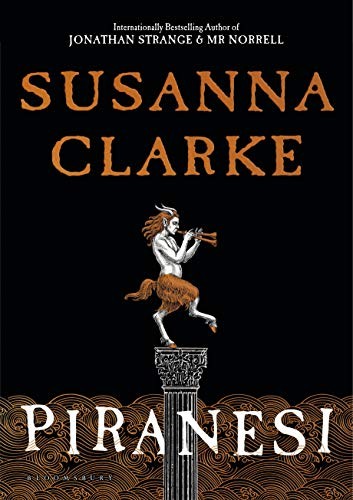
Piranesi
Piranesi lives in a vast House of halls, statues, and tidal waters. He keeps journals, maps the rooms he can reach, and treats the place with a devotion that is almost liturgical. Another man visits. Evidence of a life beyond the House begins to accumulate. Clarke withholds explanation long enough for the setting to become the book’s real subject.
The novel belongs on a list of beautiful books because its beauty is architectural. The sentences are clear, almost ceremonial, and the House is described with a patience that makes marble, seaweed, and moonlight feel newly invented. Readers who want a puzzle will find one. Readers who want atmosphere first will find more. It is short, strange, and better if you accept its slow opening instead of hunting for a conventional plot.
Gilead
- Series
- Gilead novels
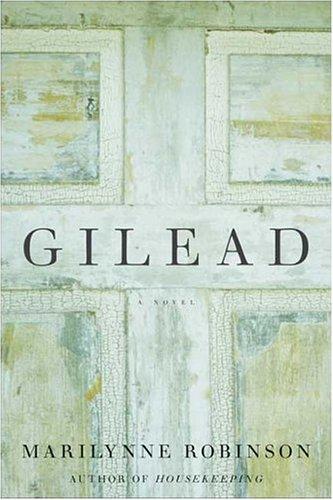
In 1956, an aging Congregationalist minister in Gilead, Iowa, writes a letter to the young son he does not expect to see grow up. The letter becomes a life: family history, faith, regret, and the arrival of a namesake who disturbs the peace John Ames has made with himself. Almost nothing is staged as drama. The book’s force is in what a careful mind notices.
Robinson’s prose is often the first book people name when asked for the most beautiful novel they have read. The sentences are plain on the surface and unusually exact underneath. Light on a street, the weight of a blessing, and the awkwardness between two men are rendered without decoration. It will frustrate anyone hunting for plot twists. It is ideal if you want a book that treats ordinary American life as worthy of close, unhurried attention.
The Night Circus
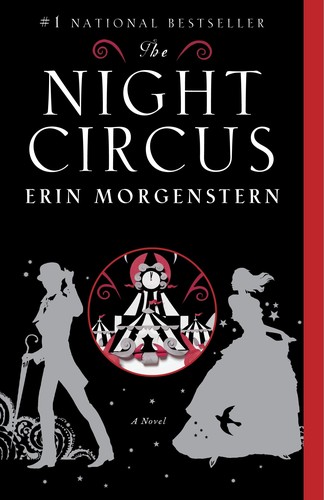
A circus appears without advertisement and opens only at night. Inside the black-and-white tents are rooms that feel designed rather than built. Two young magicians, bound to a contest they did not choose, become part of the circus’s secret machinery. The public spectacle and the private contest run on parallel tracks.
This is one of the most commonly recommended “beautiful books” because the setting is the pleasure. Morgenstern writes in set pieces: an ice garden, a cloud maze, a midnight dinner. Some readers find the plot thinner than the atmosphere. That complaint is fair. The book still earns its place here as a sensory novel, closer to a cabinet of curiosities than to a tightly wound thriller. Choose it if you want enchantment more than psychological realism.

The Song of Achilles
Patroclus, an exiled prince, is sent to the court of Peleus and meets Achilles. Friendship becomes love. Training with the centaur Chiron gives them a brief season of peace before the war at Troy calls Achilles toward the fame that has already been promised to him. Miller retells a known myth from the side of the companion who is usually a footnote.
The novel is widely praised for prose that is both simple and charged. Gods, ships, and battlefield dust are described with a classicist’s clarity rather than with ornamental antique diction. It is more intimate than epic, which is why it appears so often in conversations about beautiful writing rather than only in conversations about mythology. Readers who want a sanitized love story should know the source material still leads toward war and loss.
All the Light We Cannot See
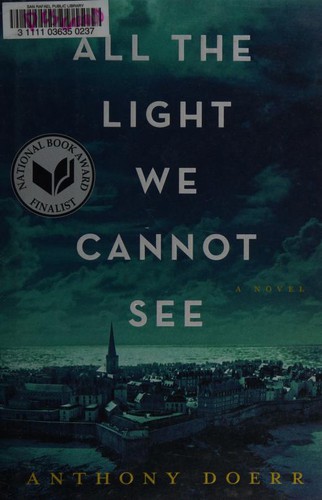
Marie-Laure, blind from childhood, learns Paris and later the walled city of Saint-Malo through scale models her father builds for her. Werner grows up in a German mining town with a gift for radios. World War II pulls their lives toward the same coast. Doerr cuts the story into short chapters that move back and forth in time.
People looking for beautiful books after this novel often say they want writing that treats light, sound, and objects as if they had moral weight. Doerr’s sentences are polished and highly visual, even when the viewpoint is a girl who cannot see. The book is long and carefully engineered. Some readers find the construction too neat. Others stay for the precision of the physical world: snails, radio parts, a model city under the fingers.
A Gentleman in Moscow
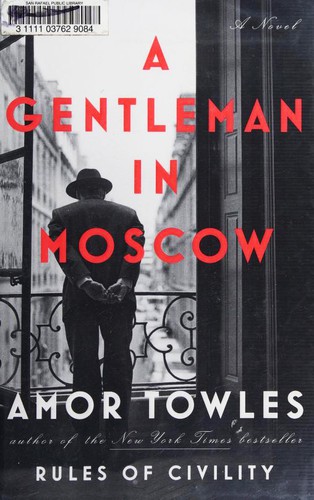
In 1922, Count Alexander Rostov is sentenced to house arrest in Moscow’s Hotel Metropol. History continues outside. Inside, the count rebuilds a life from friendships, work, and the hotel’s enclosed geography. Towles treats a luxury hotel as both a stage set and a compressed version of a country in upheaval.
The beauty here is social and stylistic: conversation, ritual, food, and the comedy of manners under political pressure. The prose is elegant without becoming precious. Readers who want raw experimental language may find it too smooth. Readers who want a book that makes confinement feel spacious often name this one first. It is the most companionable title on this list, which is a different kind of beauty from Gilead or Piranesi.
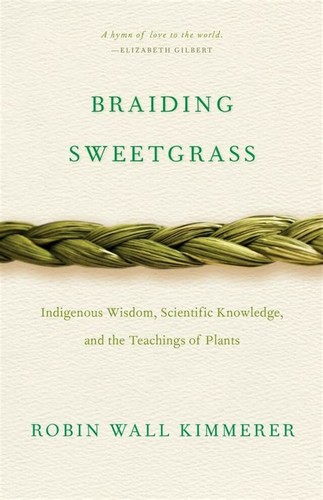
Braiding Sweetgrass
Kimmerer writes as a botanist and as a member of the Citizen Potawatomi Nation. The essays move between sweetgrass, strawberries, maples, moss, and the idea that plants are teachers rather than raw material. Science and Indigenous knowledge are held in the same hand instead of being forced into a contest.
This is the nonfiction entry that readers most often describe as beautiful in the same breath as novels. The language is exact about plants and generous about attention. It can be read in pieces, which makes it useful if a 500-page novel feels like the wrong kind of beauty right now. It is not a field guide and not a manifesto dressed up as memoir. It is a book about reciprocity, written so that ordinary looking becomes a practice.
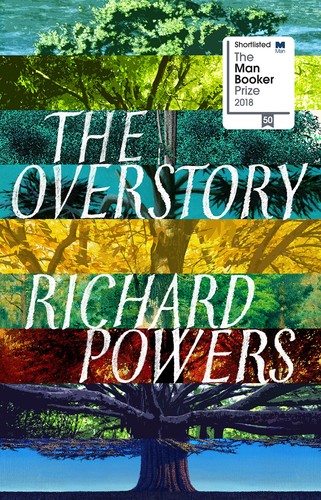
The Overstory
Nine people, each marked by a tree or a forest at a decisive moment, are drawn toward one another and toward the question of what humans owe to nonhuman life. The novel is built like a tree: separate roots, a shared trunk, a spreading crown. Powers writes activism, science, family history, and tree time in the same register.
The book is beautiful in scale. Individual set pieces, especially the early character introductions, are among the most admired pages in recent American fiction. It is also demanding. Some readers love the tree material and lose patience with the human plot; others feel the opposite. Include it here because “beautiful books” searches often lead people to nature, and this is the major novel that treats trees as more than backdrop.
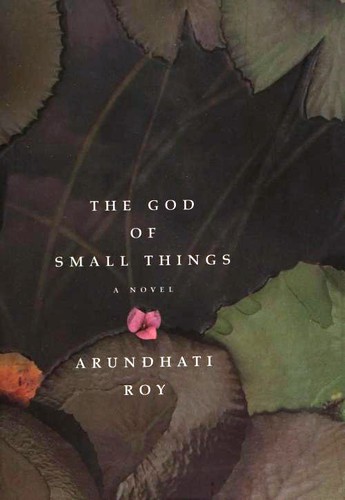
The God of Small Things
In Kerala, twins Estha and Rahel grow up inside a family that polices love as strictly as it polices class and caste. A visit, a forbidden attachment, and a later return home are arranged so that the reader understands the cost before understanding every cause. Roy’s sentences break and recombine in ways that mimic a child’s attention and an adult’s afterknowledge.
This is a book people recommend when they want language that is visibly made. Capital letters, repeated phrases, and sudden close-ups of insects, pickles, or river water are part of the design. It is not a gentle beautiful book. The style is playful; the material is not. Readers who want only pastoral prettiness should choose another title. Readers who want a novel in which every small thing is loaded should start here.
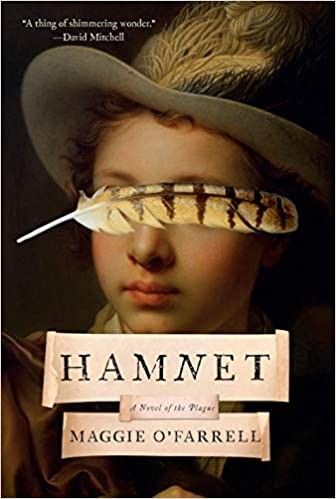
Hamnet
O’Farrell imagines the household around Hamnet Shakespeare, the boy who dies at eleven and whose name is later echoed in a play. The famous husband is present but not centered. Agnes, a woman with an uncommon feel for plants and people, carries much of the book’s attention. Domestic work, illness, and marriage are rendered at ground level.
The novel is frequently called beautiful because O’Farrell writes the body and the natural world with unusual closeness: a glove workshop, a forest edge, a sickroom. It is historical fiction that refuses the tour-guide voice. Readers come for Shakespeare and often stay for Agnes. It is also a grief novel, and that should be clear before anyone picks it as a soothing “pretty” read.
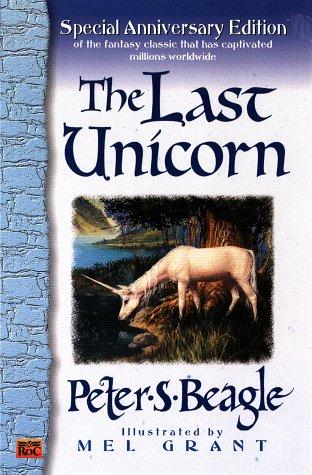
The Last Unicorn
A unicorn leaves her wood after hearing that she may be the last of her kind. She travels with a bungling magician and a worn-down companion toward a king who hoards what he cannot understand. Beagle writes a fairy tale that knows it is a fairy tale and still takes wonder seriously.
On discussion boards this novel appears again and again as a book whose sentences people remember decades later. The tone mixes comedy, melancholy, and a kind of courtly clarity. It is slighter in page count than several books here and larger in aftertaste than its premise suggests. Readers who only know the animated film should treat the novel as a separate object. It is beautiful in a spare, legendary register rather than a decorative one.

On Earth We're Briefly Gorgeous
Little Dog writes a letter to his mother, a Vietnamese woman who cannot read it. The letter gathers Hartford, farm work, first love, and the war that still lives in the family. Vuong, a poet, builds the novel from scenes and images rather than from a straight timeline.
The title itself is a thesis: beauty is brief and costly. The prose is tactile and metaphorical, closer to a sequence of photographs than to a conventional immigrant novel. Some readers find the lyricism overwhelming. That reaction is useful information. If you want language that risks excess in order to get at tenderness and harm, this belongs on the list. If you want a clean plot with invisible style, it will feel like too much perfume in a small room.

This Is How You Lose the Time War
Two agents fight on opposite sides of a war that moves through time. They begin by leaving taunts and then letters in the wreckage and gardens of possible futures. The book is short, co-written, and built almost entirely from correspondence. The war remains abstract so the voice can stay intimate.
It is on this list because readers looking for beautiful writing often want sentences they can quote, and this novella is made of those sentences. The imagery is extravagant on purpose: seals, seeds, ash, and coded gifts. Some readers bounce off the opacity of the conflict. If you need a clear map of the time war, look elsewhere. If you want a compressed love story written at a high stylistic pitch, this is the most concentrated option here.

The Secret History
Richard Papen arrives at a New England college and is pulled into a tiny circle of classics students under a magnetic professor. The group’s private world is built from language, money, beauty, and the wish to live as if ordinary rules were optional. Tartt tells you early that something irreversible has already happened, then spends the book explaining how a closed aesthetic life curdles.
People call it beautiful because Tartt can make a campus, a winter road, or a dinner feel hypnotic. The prose is controlled and slightly old-fashioned. The book is also about the danger of worshipping beauty as a moral system. That is why it belongs here and why it should not be sold as a cozy dark-academia accessory. It is long, chilly, and more interested in aftermath than in surprise.
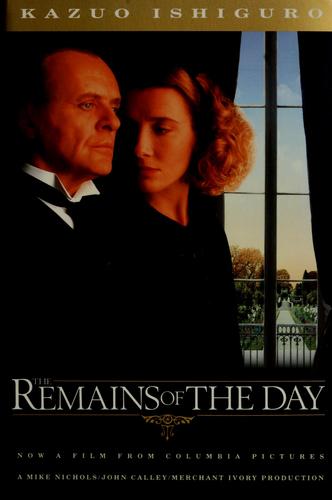
The Remains of the Day
Stevens, a longtime butler, drives through the postwar English countryside and tries to tell the story of his service at Darlington Hall without admitting what the story is. Professional dignity is his language. Memory keeps slipping past it. Ishiguro writes a whole novel in the gap between what Stevens says and what the reader can see.
This is beauty as restraint. There are no ornamental paragraphs. The landscape, the motoring holiday, and the rituals of service are described with a politeness that becomes almost painful. Readers who want lush description may wonder why the book is on a “beautiful” list. The answer is control: every understatement is doing work. It is the right choice if you like novels in which the most important events are the ones the narrator cannot bear to name.
How to choose among these fifteen
If you want wonder and invented architecture, start with Piranesi or The Night Circus. If you want human voices in a recognizable world, start with Gilead, A Gentleman in Moscow, or The Remains of the Day. If you want the natural world at the center, choose Braiding Sweetgrass or The Overstory.
Length and temperature matter as much as genre. This Is How You Lose the Time War and Piranesi are short. The Overstory and All the Light We Cannot See ask for stamina. Hamnet, The God of Small Things, and On Earth We’re Briefly Gorgeous are beautiful and also heavy. A Gentleman in Moscow is the gentlest long novel here; The Secret History is the chilliest.
Frequently asked questions
What do people usually mean by beautiful books to read?
Most searches mix two things: books with memorable prose and books with a strong aesthetic mood. Covers and special editions matter to some readers, but discussion threads more often name sentence-level pleasure, atmosphere, and a feeling that ordinary details have been seen clearly.
Which of these is the best short option?
Piranesi and This Is How You Lose the Time War are the shortest complete reading experiences. The Remains of the Day is also compact compared with The Overstory or All the Light We Cannot See. Braiding Sweetgrass can be read as individual essays if you want beauty in smaller sittings.
Are these books all gentle or comforting?
No. Several are chosen for language, not for softness. Hamnet is a grief novel. The God of Small Things and On Earth We’re Briefly Gorgeous include family harm. The Secret History is morally cold. A Gentleman in Moscow and Braiding Sweetgrass are the closest to companionable.
Which title is best if I want beautiful writing without fantasy?
Gilead, The Remains of the Day, A Gentleman in Moscow, Hamnet, All the Light We Cannot See, The God of Small Things, On Earth We’re Briefly Gorgeous, and Braiding Sweetgrass do not depend on invented magic. The Night Circus, Piranesi, The Last Unicorn, The Song of Achilles, and This Is How You Lose the Time War do.
Do I need to read the Gilead novels in order?
Gilead can be read on its own. Home, Lila, and Jack return to the same Iowa town from other vantage points. If you love Robinson’s voice, the later books deepen the same world rather than continuing a single plot cliffhanger.
Beautiful books are not a genre. They are a reading mood: slower attention, stronger atmosphere, and language that does more than carry information. Use the differences on this list instead of treating all fifteen as interchangeable. One reader’s perfect book is another reader’s too-quiet or too-ornate novel, and that split is already visible in how these titles are discussed.
Sources and further reading
- Bloomsbury
- Barnes & Noble / Bloomsbury USA
- Open Library
- Farrar, Straus and Giroux / Macmillan
- Google Books
- Penguin Random House
- Harvard Book Store / Ecco
- Simon & Schuster
- Penguin Random House
- Milkweed Editions
- W. W. Norton
- Knopf / Penguin Random House
- Penguin Random House
- r/suggestmeabook
- r/literature
- Camille Styles
- Tolstoy Therapy