This article may contain affiliate links. Purchases made through them may earn a commission at no extra cost to you.
A search for the 18 best fictional books to read is really a request for a usable map. Fiction is too large for a single ranking, so this list gathers novels that keep turning up in critic polls, classroom canons and reader conversations, then explains what each one actually feels like to read.
The 18 titles below are not clones of one another. Some are short and sharp. Others ask for patience. A few use magic or invented futures; most stay inside ordinary rooms and still feel inexhaustible. The point is not to finish every name on a checklist. It is to match a book to the kind of attention you can give it right now.
What “best fictional books” usually means
Readers who type this phrase are rarely asking for one genre. They want novels that repay rereading, that other people still argue about, and that have already survived changes in fashion. Critic lists from outlets such as The Guardian lean toward formally ambitious work. Community threads tend to reward books that seize attention and leave a residue of feeling. A useful list has to hear both.
“Fictional books” here means novels, not memoirs or essays. The selections cover the nineteenth century through the twenty-first, several languages in English translation, and a spread of tones: comic courtship, political dread, family saga, high fantasy, quiet speculative fiction. Length and difficulty vary on purpose. A 180-page Jazz Age novel and an 800-page provincial epic can both belong on a “best of” shelf if they do different jobs.
18 fiction novels worth your time

Pride and Prejudice
Austen’s 1813 novel still works because it treats social observation as a contact sport. Elizabeth Bennet has a quick mind and a habit of deciding too soon. Fitzwilliam Darcy has money, manners and a talent for making a poor first impression. Around them, a small English neighborhood turns courtship into public theater: dances, letters, gossip and the quiet panic of daughters who must marry well or live with the consequences.
The book belongs on a list of the best fictional books to read because it is funny without being slight. Readers who come for the romance often stay for the precision of the dialogue and the way pride, class and family loyalty keep colliding. It is also one of the most approachable classics on this list. The sentences have snap, the chapters move, and the social world is small enough to hold in your head. Readers who want battlefield scale or modernist experiment should look elsewhere; readers who want wit with moral heat will find it here.
To Kill a Mockingbird
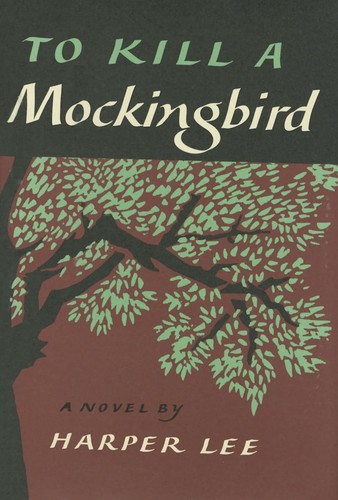
Published in 1960 and awarded the Pulitzer Prize the next year, Lee’s novel looks at a Depression-era Alabama town through the eyes of Scout Finch. The plot that made the book famous is a courtroom fight over a Black man accused of a crime he did not commit. The texture that keeps people rereading is smaller: summer boredom, neighbor myths, a father who tries to teach fairness in a place organized against it.
It earns a place here because it is still one of the most widely encountered American novels, and because it sits at the crossroads of childhood story and civic argument. Some adult readers now find the moral framing simpler than later books on race and law. That complaint is useful rather than fatal. The novel remains a clear, emotionally immediate entry point to questions of justice, courage and the stories towns tell about themselves. Readers who want a more fractured or adult-centered treatment of similar material may prefer Morrison or Achebe later on this list.
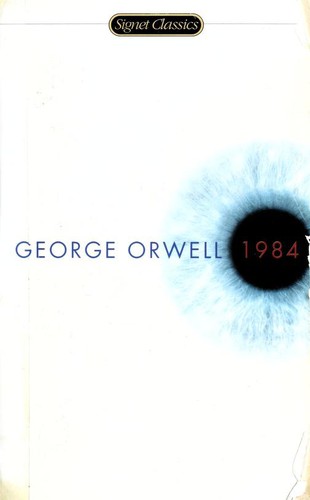
1984
Orwell’s 1949 novel follows Winston Smith, a minor worker in a state that polices memory as tightly as it polices speech. The Party rewrites records, watches private rooms and treats independent thought as a crime. The plot is a slow tightening rather than a chase: Winston tries to keep a private inner life and discovers how little room the system leaves for one.
The book stays on nearly every “best fiction” list because its inventions entered ordinary language: Big Brother, doublethink, Newspeak. Readers on forums still recommend it when they want political fiction that does not hide its argument. It is leaner and colder than The Handmaid’s Tale later on this list, and less intimate than Never Let Me Go. The limitation is the same as the strength. Characters exist to demonstrate a machine. If you want lush interiority, this is the wrong Orwell. If you want to see how a novel can make surveillance feel physical, it remains one of the clearest examples in English.
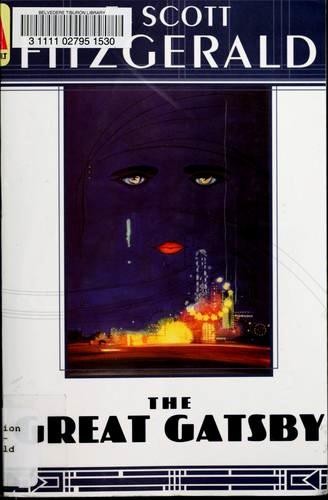
The Great Gatsby
Fitzgerald’s 1925 novel is short enough to read in a sitting and polished enough that people still quote it by the paragraph. Nick Carraway narrates a summer among the rich on Long Island, where Jay Gatsby throws luminous parties and aims his whole invented life at Daisy Buchanan. The book is a love story, a class story and a study of how glamour hides waste.
It belongs here because it is one of the few American novels that is both a school staple and a genuine stylistic feat. Community discussions often split in a predictable way: some readers find the characters hollow; others argue that hollowness is the subject. Compared with East of Eden, Gatsby is miniature and jeweled rather than sprawling and earthy. It rewards readers who care about sentence rhythm and social atmosphere more than plot machinery. Anyone hoping for warm, companionable characters may bounce off it. Anyone who wants to see desire collide with money in compressed form rarely forgets the book.
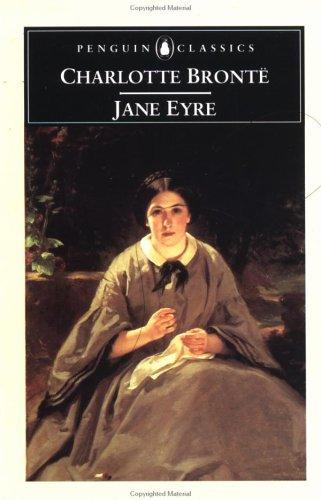
Jane Eyre
First published in 1847, Jane Eyre follows an orphan who refuses to accept the small life assigned to her. Jane survives a harsh childhood, takes work as a governess at Thornfield Hall and meets Edward Rochester, a employer whose house holds more than a difficult temperament. The novel is a romance, a gothic mystery and a declaration of self-respect spoken by a woman with no fortune and no interest in becoming decorative.
It earns its place among the best fictional books to read because it still feels personally urgent. Where Pride and Prejudice sparkles, Jane Eyre burns. Readers often come for the love story and leave talking about voice: Jane’s insistence that emotional hunger and moral independence can exist in the same person. The gothic furniture will delight some and feel theatrical to others. Readers who want a quieter, more socially panoramic nineteenth-century novel should wait for Middlemarch. Readers who want a heroine who argues for her own soul will find Jane hard to replace.
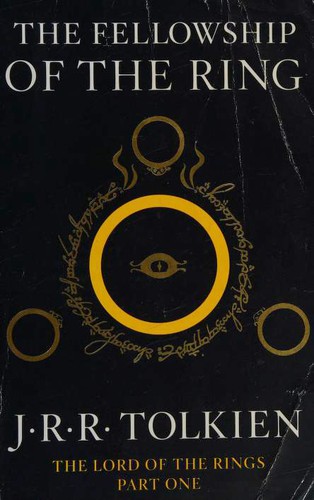
The Fellowship of the Ring
- Series
- The Lord of the Rings
Tolkien’s 1954 opening volume sends a hobbit named Frodo Baggins out of a peaceful Shire with a Ring that must not be used and cannot safely be kept. A mixed company forms around him: hobbits, a wizard, men, an elf, a dwarf. The book invented much of the furniture later fantasy still lives in, but it is also a walking novel, full of meals, songs, weather and the slow change from local adventure into a continental crisis.
It is here because any honest list of the best fictional books has to account for the twentieth century’s most influential quest narrative. Reader conversations are consistent: some people stall in the early rural chapters or the poetry; others call those pages the reason the later danger matters. Unlike the compressed dread of 1984, this is world-building as hospitality. The Fellowship is only the first part of a three-volume story, so it is a beginning rather than a closed case. Readers who want lean contemporary fantasy may find the pace old-fashioned. Readers who want a secondary world with moral weight and landscape that feels lived-in still start here.

Frankenstein
Shelley began the story as a teenager in 1816 and published it in 1818. Victor Frankenstein, a gifted student, becomes obsessed with creating life and succeeds in assembling a being from the dead. The creature is abandoned at the moment of awakening and goes into the world looking for recognition that never comes. The novel is framed through letters and nested narrators, so sympathy keeps shifting between maker and made.
It belongs on this list because it is both a foundational science-fiction novel and a durable ethical argument. Popular culture turned the creature into a mute monster; the book itself is eloquent about loneliness, responsibility and the cost of treating a person as an experiment. Compared with later speculative titles here, Frankenstein is colder in landscape and hotter in rhetoric. Some first-time readers are surprised by how little laboratory detail there is and how much conversation. That is the point. The horror is social as much as scientific.

Things Fall Apart
- Series
- The African Trilogy
Achebe’s 1958 debut is set in the Igbo community of Umuofia in the late nineteenth century. Okonkwo is a wrestler and farmer who has built status through severity, in part to escape the memory of a father he thought weak. The first half of the novel lets the village’s laws, harvests, gods and family arrangements stand on their own. Only later do British colonial officers and Christian missionaries arrive and begin to unmake that world.
The book is essential on a list of the best fictional books to read because it changed what English-language fiction about Africa could be. Achebe wrote against the habit of treating African societies as backdrop. The prose is spare, proverb-rich and unsparing about Okonkwo as well as about conquest. Readers who know the title from school sometimes remember only the collision with empire. The novel’s force comes equally from the portrait of a man whose strengths become liabilities when the ground shifts. It is shorter than the Russian and Victorian epics here and just as serious.
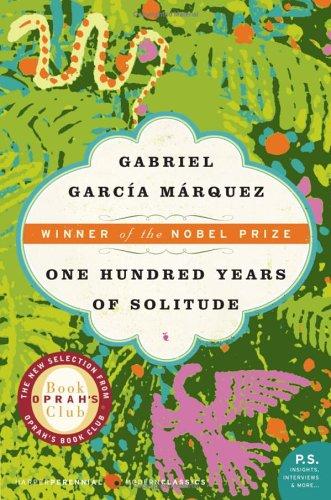
One Hundred Years of Solitude
García Márquez’s 1967 novel follows the Buendía family across seven generations in the invented town of Macondo. Time loops. Names repeat. Rain, war, inventions and love affairs arrive with the logic of folklore rather than the timetable of realism. Gregory Rabassa’s English translation helped carry the book into a worldwide readership and a Nobel Prize for its author.
It is on this list because magical realism rarely had a more complete demonstration, and because readers still treat the novel as either a revelation or a test of patience. Forum complaints are specific: the repeating names confuse, and the book resists a single protagonist. Those are features of its design. Where Tolkien builds a map, García Márquez builds a family weather system. The novel is richer and stranger than the political dystopias here, and less emotionally single-minded than Beloved. Readers who need a straight plotline may stall. Readers willing to be carried by cadence and recurrence often call it one of the peaks of twentieth-century fiction.
Beloved
Morrison’s 1987 novel, which won the Pulitzer Prize, is set after the American Civil War and is haunted by the years before it. Sethe has escaped enslavement and made a life in Ohio, but the house at 124 Bluestone Road is crowded with a past that will not stay buried. A young woman called Beloved arrives, and the novel turns memory into a presence as demanding as any living guest.
Beloved sits near the top of recent critic polls of novels in English for reasons that have little to do with comfort. Morrison writes slavery as intimate wreckage rather than as distant historical scenery. The book is more viscerally difficult than To Kill a Mockingbird and more formally daring than most historical fiction. Reader discussions often warn that the opening is disorienting and that the emotional weather is severe. Those warnings are fair. The novel is still one of the best fictional books to read because it makes love, motherhood and survival feel as dangerous as they were costly. It is not a first classic for a tentative reader. It is a book that changes the scale of what a novel can hold.

Crime and Punishment
First serialized in 1866, the novel follows Rodion Raskolnikov, a destitute former student in St. Petersburg who talks himself into a murder and then cannot live inside the theory that justified it. The book is a psychological thriller before that label existed: fever, pawnshops, family letters, a patient investigator and a city that seems to close around one man’s skull. The Pevear and Volokhonsky translation is a widely recommended modern English version.
It belongs here because few novels make guilt feel so physical. Readers who like tidy detective work sometimes expect a puzzle and instead get a conscience on the run. That mismatch is useful. Dostoevsky is interested in the arguments people invent to place themselves above ordinary morality, then in what happens when the body refuses the argument. The book is more claustrophobic than Anna Karenina and less socially panoramic than Middlemarch. It is also more immediately gripping than either for readers who can handle misery, crowding and long interior monologue.
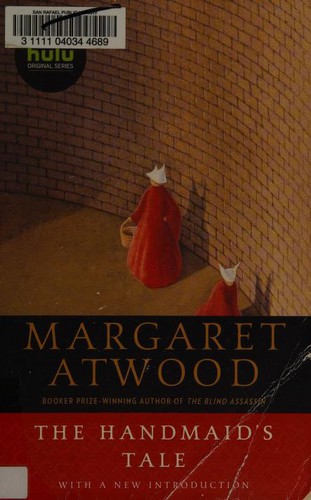
The Handmaid's Tale
Atwood’s 1985 novel is narrated by Offred, a woman forced into reproductive servitude in the Republic of Gilead, a theocratic regime that rose after environmental and political collapse in the United States. The book is built from restricted movement, reconstructed memory and the small negotiations required to stay alive when even a name has been taken. A later companion novel exists; this one stands alone.
It belongs among the best fictional books to read because it turned speculative politics into an intimate voice. Compared with 1984, Atwood is more interested in how power writes itself onto women’s bodies and friendships. The Hulu adaptation widened the audience and also flattened some of the novel’s irony and historical framing, so the book is still the sharper object. Readers looking for an action-driven resistance plot may find the narrator’s limited knowledge frustrating. That limitation is the design. The novel is most powerful as a study of constrained perception.
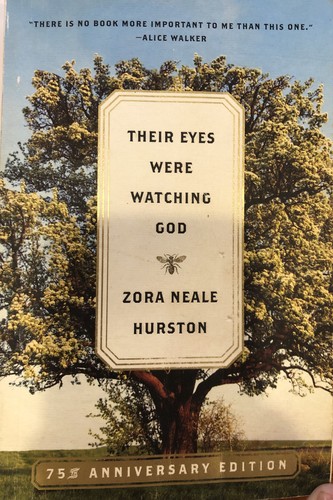
Their Eyes Were Watching God
Hurston published the novel in 1937. It follows Janie Crawford through early-twentieth-century Florida as she searches for a life that is not merely survival inside other people’s plans. The book is famous for its voice: spoken Black Southern English rendered with musical confidence, and a heroine who keeps revising what love and freedom should sound like. After decades out of print, it returned to a wide readership in the late twentieth century and has stayed there.
It earns this slot because it offers a different classic American itinerary than Gatsby or Mockingbird: a Black woman’s self-making told without apology and without treating her life as a civic lesson first. Some early critics wanted protest documentary; Hurston wrote a novel of desire, work, talk and weather. Readers who struggle with dialect on the page sometimes need a chapter to find the rhythm. After that, the book is swift. It is warmer than Beloved, less public than To Kill a Mockingbird and one of the best fictional books to read if you want language that feels alive in the mouth.
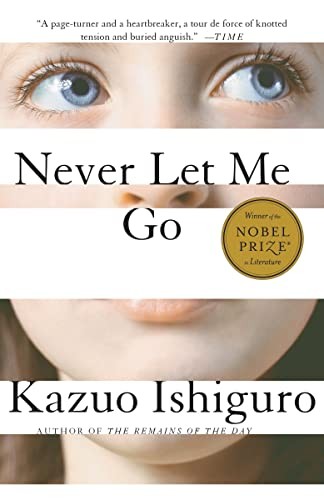
Never Let Me Go
Ishiguro’s 2005 novel is narrated by Kathy H., who looks back on a sealed English boarding school and the friendships that formed there. Hailsham seems, at first, like any closed world of cliques, art lessons and half-understood rules. The book withholds its premise in the way memory withholds things: not as a twist for its own sake, but because the characters themselves learned the truth in pieces.
It belongs here as a twenty-first-century novel that already reads like a lasting one. Where Orwell and Atwood confront the reader with the machinery of the state, Ishiguro studies how people adapt to a fate they only half name. The speculative idea is grave; the surface is mild, even pastoral. That contrast is why the book unsettles readers who expected either a thriller or a conventional school story. It is quieter than most dystopias and more devastating than its polite sentences suggest. Readers who need high plot velocity may call it slow. Readers who listen for what is not being said often rank it among their best fictional books.
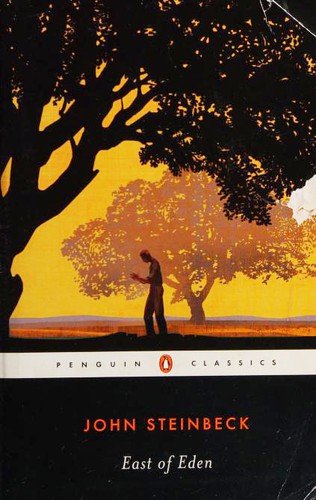
East of Eden
Steinbeck published the novel in 1952 and later described it as the book he had been practicing to write. Set largely in California’s Salinas Valley, it braids the Hamilton and Trask families across decades and keeps returning to the Cain and Abel story as a pattern people cannot quite escape. The novel is big enough for farms, brothels, inventions, sermons and the question of whether a person can choose not to inherit a family’s worst instinct.
Reader threads mention it with unusual heat: people call it the book that pulled them out of a slump, or the Steinbeck they loved after finding other titles too dusty. That reputation is why it belongs among the 18 best fictional books to read even though it is less officially “canonical” than Gatsby in some classrooms. It is messier and more generous than Gatsby, less stylistically condensed, more interested in talk and land. The length will deter anyone wanting a weekend book. The payoff is a family epic that treats moral choice as something you practice, not a slogan you inherit.
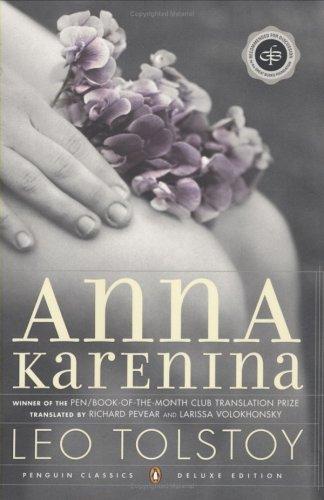
Anna Karenina
Tolstoy’s novel, completed in the 1870s, is larger than the affair that made it famous. Anna’s break with a respectable marriage is one plot. Levin’s attempt to live honestly on the land is another. Between them Tolstoy moves through ballrooms, railway stations, farms, infant nurseries and political salons until private feeling and public Russia occupy the same page. The Pevear and Volokhonsky translation is a standard modern English choice.
It is here because “best fictional books” lists that omit Tolstoy are dodging the question. Faulkner called it the best novel ever written; whether or not that verdict holds, the book remains a high-water mark for realism that can still sprint. Compared with Crime and Punishment, Anna Karenina is airier and more socially populated. Compared with Middlemarch, it is more passionate and less locally English. The obstacle is obvious: it is long. Readers who sample only the Anna chapters miss the novel’s argument, which is that no single life, however vivid, accounts for a whole world.
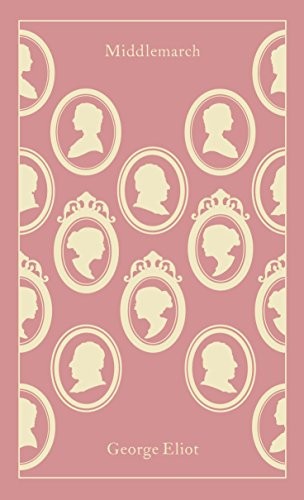
Middlemarch
Eliot’s 1871–72 novel is a portrait of a provincial English town at a moment when politics, medicine, scholarship and marriage are all in motion. Dorothea Brooke wants a life of use and meaning and walks into a marriage that cannot hold that hope. Tertius Lydgate wants to reform medicine and underestimates how money and pride can wreck a vocation. Around them, Eliot tracks gossip, reform bills, religious respectability and the small collisions that decide a life.
The Guardian’s 2026 poll of authors and critics placed Middlemarch first among novels published in English, which is a useful signal rather than a command. The book is on this list because it is the fullest demonstration here of fiction as moral attention. It is funnier than its reputation and more cutting than a “improving classic” label suggests. It asks for time. Readers who bounced off Victorian novels because of ornament may be surprised by Eliot’s clarity. Readers who want plot above all may find the middle stretch too interested in everybody. That interest is the art.
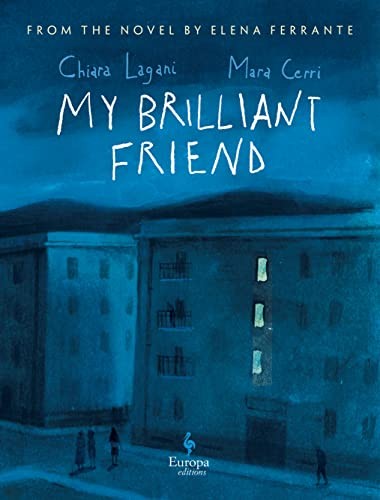
My Brilliant Friend
- Series
- Neapolitan Novels
Ferrante’s 2011 novel, published in English in 2012 in Ann Goldstein’s translation, begins in a poor neighborhood on the edge of postwar Naples. Elena Greco looks back on her childhood bond with Lila Cerullo, a friendship made of rivalry, admiration, fear and the shared wish to get out without losing each other. The book is the first of four, but it has a complete emotional shape of its own: two girls discovering that intelligence is both a ladder and a weapon.
It closes this list because the best fictional books to read should include a twenty-first-century novel that already feels necessary. The New York Times critics’ survey of the century placed it at the top of one major tally. Reader conversations dwell on the friendship’s volatility and on how local the book feels without becoming small. Compared with Austen, Ferrante is rawer. Compared with Hurston, she is more obsessed with class escape and intellectual competition. The Neapolitan dialect-inflected Italian reaches English as blunt, propulsive prose. Readers who need likable stability in their heroines may bristle. Readers who recognize the way a friend can invent you and endanger you often continue straight into the rest of the quartet.
How to choose among these 18
If you want a first classic that still entertains, start with Pride and Prejudice, The Great Gatsby or Their Eyes Were Watching God. If you want politics with a blade, choose 1984 or The Handmaid’s Tale. If you want a world to live inside, take The Fellowship of the Ring. If you want a family novel that people still press into friends’ hands, East of Eden is the crowd favorite on this list.
Save Beloved, Middlemarch, Anna Karenina and One Hundred Years of Solitude for moments when you can read slowly. They are not harder because they are “better.” They are harder because they ask for a different kind of attention. A good reading life is not a race through famous titles. It is a habit of picking the book whose difficulty matches your current stamina.
Frequently asked questions
What are the best fictional books to read if I am just getting back into novels?
Begin with shorter, highly readable titles from this list: The Great Gatsby, Pride and Prejudice, Things Fall Apart or Never Let Me Go. They introduce major traditions without the page count of Tolstoy or Eliot. Once one of those clicks, use the tone notes above to pick a longer book in the same emotional neighborhood.
Do the best fiction books have to be old classics?
No. Classics dominate lists because they have had time to be argued over. Living writers still belong in the conversation. My Brilliant Friend and Never Let Me Go are here because critics and readers already treat them as durable, not because they are antique. A useful mix is older books that still speak and newer books that already refuse to fade.
Which of these 18 fictional books is the most difficult?
Difficulty depends on the reader. One Hundred Years of Solitude confuses people who need a single hero and a linear calendar. Beloved is emotionally and formally demanding. Middlemarch and Anna Karenina are long and densely peopled. Crime and Punishment is shorter than those two but psychologically heavy. If a book stalls you, switching titles is not failure; it is matching form to attention.
Should I read The Fellowship of the Ring if I do not usually like fantasy?
Only if you can accept songs, walking and a slow widening of scale. Tolkien is the root of modern quest fantasy, but he writes like a folklorist, not like a contemporary action novelist. Readers who dislike invented languages and maps will be happier with Frankenstein or Never Let Me Go, which use the fantastic more sparingly.
Is there a single best fictional book of all time?
No responsible list can name one. Critic polls in recent years have put Middlemarch, Beloved and other titles at the top, while reader conversations often crown different books, from East of Eden to 1984. “Best” in practice means a novel that keeps finding new readers and still supports argument. That is a group of books, not a crown.
These 18 fictional books do not form a curriculum so much as a set of strong doors. Walk through the one that fits the week you are actually living. The novels will still be there when you have the appetite for a harder room.