This article contains affiliate links. We may earn a commission if you purchase through them, at no extra cost to you.
A lifetime reading list is not a ranking of the greatest novels ever written. It is a short set of books that keep turning up when readers, teachers, and critics try to name the work that changed how they see justice, power, love, grief, or ordinary time. The keyword 13 books you need to read in your life points to that practical problem: if reading time is limited, which titles repay the hours.
The thirteen books below appear again and again on public polls, publisher must-read lists, and reader discussions. They are not interchangeable. One is an ancient homecoming story. One is a private notebook by a Roman emperor. Several are novels assigned so often that adults forget they were written for adults. A few are hard on purpose. Together they cover different continents, forms, and reasons to keep reading after school ends.
What a lifetime reading list is actually for
Lists like this exist because no one can read everything, and popularity alone is a weak filter. The useful test is whether a book still does work after the plot is known: whether it gives language for an experience, or makes a familiar idea harder to dismiss. That is why the same titles return across decades of surveys even when tastes shift.
Community discussions tend to split in a predictable way. Readers who want cultural literacy start with school-canon novels. Readers who want consolation reach for memoir and philosophy. Readers who want the world outside a North Atlantic classroom push for Achebe, García Márquez, and Morrison. A serious short list has to hold all three impulses without pretending one book can do every job.
13 books you need to read in your life
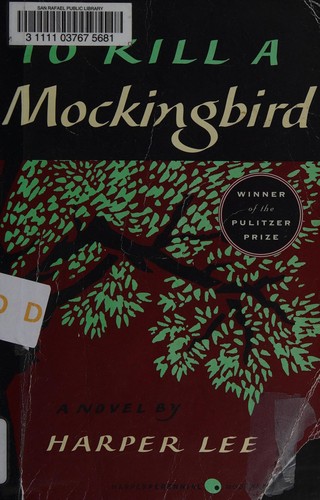
To Kill a Mockingbird
Harper Lee’s 1960 novel remains on lifetime lists because it is both an easy entry point and a stubborn argument about conscience. Through Scout Finch’s childhood in a small Alabama town, the book watches an adult legal crisis from a height that makes cruelty look ordinary and courage look costly. That double vision is why so many readers meet it young and return later with less patience for the town’s comforts.
The novel belongs here as American civic literature, not as a complete account of race in the United States. It is strongest on how a community talks itself into injustice while still calling itself decent. Readers who know only the film often miss the humor, the neighbor-plot texture, and the limits of the narrator’s understanding. Those limits are part of the book’s value: it shows how a moral story can be moving and still incomplete.
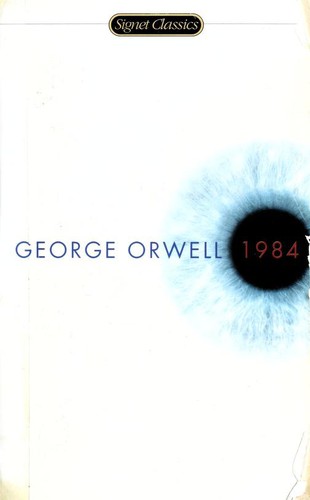
1984
George Orwell’s 1949 novel earned its place on almost every books-to-read-before-you-die list because its political vocabulary leaked into daily speech. Big Brother, Newspeak, and doublethink survive as shorthand for surveillance and language control. The story follows Winston Smith inside a state that wants not only obedience but rewritten memory. That pressure, more than the gadgets, is why the book still feels current.
It is not subtle, and that is a feature. Orwell wrote a warning, not a puzzle box. Readers coming from later dystopias sometimes find the prose plain and the romance thin. The payoff is diagnostic: the novel trains you to notice when institutions demand that you call a fact by the wrong name. Pair it with a different warning novel if you want contrast; do not skip it because the title feels overquoted.

Pride and Prejudice
Jane Austen’s 1813 novel is the rare comedy of manners that still functions as social analysis. Elizabeth Bennet’s first impressions of Fitzwilliam Darcy, and his of her, sit inside a world where marriage is both feeling and economic strategy. The pleasure is the dialogue. The lasting use is the way Austen shows pride, embarrassment, and family noise shaping adult choice.
Lifetime lists keep this book because it teaches attention. Readers who arrive expecting only a costume romance discover how much of the plot is about money, reputation, and who gets to speak. Readers who bounce off older English prose can start here more easily than with many nineteenth-century novels. If you already know the adaptations, the novel is still worth the hours for the precision of its judgments and the sharpness of its jokes.
The Great Gatsby
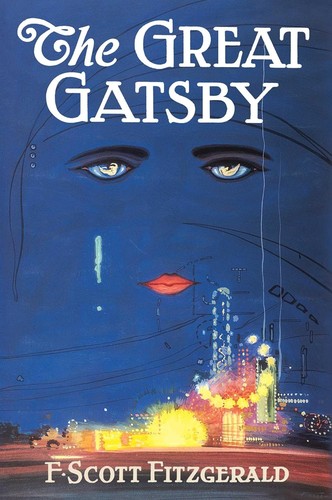
F. Scott Fitzgerald’s 1925 novel is short enough to finish in a sitting and dense enough to reward rereading. Nick Carraway watches Jay Gatsby try to turn money, parties, and a rehearsed past into a second chance with Daisy Buchanan. The book is often sold as a glittering Jazz Age postcard. On the page it is cooler than that: a study of longing, class gates, and the stories people tell about success.
It belongs on a life list because it is one of the clearest American fables about wanting the wrong thing with total sincerity. High-school assignment fatigue is real, and some readers find the characters thin. The counterargument is the prose and the structure. Few novels this brief leave such a precise afterimage of a time, a shoreline, and a hope that cannot survive contact with the people who inspired it.

Frankenstein
Mary Shelley’s 1818 novel is more argument than monster movie. Victor Frankenstein assembles a living being and then refuses the moral work that creation requires. The creature’s education, loneliness, and demand to be answered are the engine of the book. Readers who know only green makeup and bolts meet a colder story about responsibility, scientific ambition, and what a person becomes when every door is shut.
This is the title that earns a lifetime slot as the ancestor of modern science fiction and as a durable ethics case. It is framed through letters and nested narration, so it can feel slower than pop culture versions. That slowness is useful. Shelley asks who owes care to the thing they make, long before laboratories and platforms made the question feel contemporary. Read an annotated edition if you want the 1831 text and context without getting lost.

Crime and Punishment
Dostoevsky’s 1866 novel follows a poor St. Petersburg student who talks himself into a crime and then cannot live inside the theory that justified it. The book is a psychological chase as much as a police story. Raskolnikov’s pride, fever, charity, and self-contempt share the same rooms. That mixture is why reader communities still name this among the books that should be read at least once.
It is on this list because it shows, at novel length, how an idea can become a wound. The pages can feel hot and repetitive; that is the method, not a defect you need to apologize for. A modern translation such as Richard Pevear and Larissa Volokhonsky’s helps the voices stay distinct. If Russian fiction intimidates you, this is still a demanding start, but it is more contained than War and Peace or The Brothers Karamazov and just as serious about guilt.

The Odyssey
Homer’s epic is the oldest title on this list and still one of the most practical. After the war at Troy, Odysseus spends years trying to get home to Ithaca while his household waits under pressure. The poem is an adventure catalog—storms, hosts, monsters, disguises—but its subject is return: how a person comes back to a life that has continued without them. That is why it keeps landing on educated-person and before-you-die lists.
Choose a readable verse translation. Robert Fagles’s Penguin edition is a common modern starting point because it is built for the ear as well as the page. The poem can feel episodic if you expect a tight modern plot. Read it as a sequence of tests about cunning, hospitality, loyalty, and storytelling itself. You do not need Greek. You do need patience for repetition, which is part of how oral epic thinks.

Meditations
Meditations is not a novel and not a polished treatise. It is the private notebook of a second-century Roman emperor reminding himself how to stay decent under pressure. Marcus Aurelius writes about death, anger, reputation, and the difference between what happens and what you add on top of what happens. Reader threads about books to read once in a life mention it constantly because it is short, reusable, and unusually honest about self-command.
Gregory Hays’s Modern Library translation is widely recommended for contemporary English that keeps the notes abrupt instead of churchy. The book will frustrate anyone expecting a system or a story. Its use is daily and local: a few pages when you need a check on panic or self-importance. That is a different kind of lifetime book from a novel, which is exactly why it belongs on a list that is supposed to serve a whole life, not one taste.

The Diary of a Young Girl
Anne Frank’s diary is the most widely read personal document of the Holocaust, and it earns that reach without becoming only a symbol. Written in hiding in Amsterdam, it records a teenager’s voice under narrowing conditions: school memories, family friction, ambition to write, and the daily management of fear. The Definitive Edition restores material omitted from earlier publications and is the text to seek if you are reading it as an adult.
The book belongs on a life list because it refuses to let history stay abstract. Readers sometimes worry that a famous diary will feel like an assignment. On the page it is specific, funny, and unfinished in the way real journals are unfinished. That incompleteness is part of its force. Read it as a document of a person, not as a tidy moral. Pair it later with other firsthand accounts if you want a wider historical frame.

Things Fall Apart
- Series
- The African Trilogy
Chinua Achebe’s 1958 novel is the book many lifetime lists use to correct a habit: talking about Africa only through European narrators. In Umuofia, Okonkwo builds status through strength and fear of weakness. The first movement of the novel is a portrait of Igbo social life with its own rules, arts, and conflicts. Only then does colonial power arrive and begin to break the terms of that world.
Achebe’s prose is controlled and unsentimental. Readers who expect either pastoral nostalgia or a simple resistance tale miss the tragedy inside the community as well as the tragedy imposed from outside. The novel is short, which makes it a practical starting point, and it is the first volume of Achebe’s African Trilogy if you want to continue. It belongs here because a life of reading that never leaves Europe and the United States is an unfinished education.
One Hundred Years of Solitude
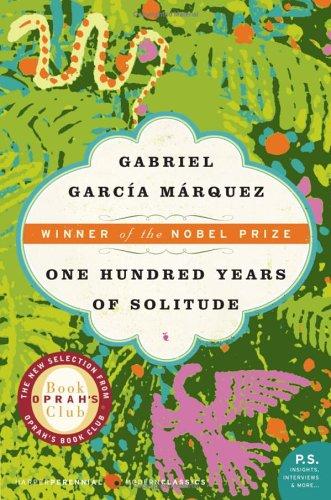
Gabriel García Márquez’s 1967 novel follows the Buendía family through generations in the invented town of Macondo. The book is the standard introduction to magical realism for many English-language readers: extraordinary events sit beside civil war, banana-company power, insomnia, love, and repetition. Names recur on purpose. History in Macondo does not move in a straight line, and that is the point.
It belongs on a lifetime list because it changed what a family saga could hold. Some readers find the genealogy confusing and the miracles either enchanting or distancing. Keep a family tree nearby if you need one; the confusion is also thematic. Gregory Rabassa’s English translation is the widely read version. If most of your classics shelf is realist and temperate, this is the book that loosens the rules without becoming disposable fantasy.
Beloved
Toni Morrison’s 1987 novel is among the most frequently named American books of the last half-century, and it is not an easy comfort read. Sethe has escaped enslavement and built a fragile free life in Ohio, but the past is not past. A haunting gathers around the household. Morrison writes memory as something that occupies rooms, bodies, and language, not as a flashback chapter you can skip.
The novel is on this list because a lifetime of reading should include a work that treats slavery as lived interior life rather than backdrop. The style is lyrical and demanding. Readers who want a linear historical novel may struggle at first. Stay with the voices. Beloved won the Pulitzer Prize and sits near the center of modern American fiction for reasons that become obvious once the book’s method clicks: it makes the cost of survival impossible to keep at a safe distance.
Man's Search for Meaning
Viktor Frankl’s book combines a concentration-camp memoir with a short account of logotherapy, the idea that people can endure severe conditions if they can hold onto a why. Frankl, a psychiatrist imprisoned by the Nazis, writes less as a catalog of atrocity than as a study of what remained possible in attitude when almost nothing else remained. A Library of Congress reader survey later placed it among the most influential books in American life.
It is the nonfiction close to this list because so many “books that change your life” conversations return to it. The memoir section is the part readers carry. The clinical section is brief and dated in places, but the central claim is plain. This is not a substitute for history or for other Holocaust testimonies. It is a particular argument about meaning, written by someone who had every reason to call meaning a luxury and refused to.
How to choose where to start
If you want a book you can finish this week, start with The Great Gatsby, To Kill a Mockingbird, or Meditations. If you want the title that most often changes a reader’s map of the world, many discussions point to Things Fall Apart, Beloved, or Man’s Search for Meaning. If you want technique and talk-back value, Pride and Prejudice and 1984 still generate the most shared language.
Do not treat the list as a syllabus you must complete in order. A better method is to pair contrast: a familiar school novel with a book from outside that classroom, or a story with a notebook. Skip a title that is wrong for your current bandwidth. The point of a lifetime list is not punishment. It is to keep a few durable books within reach when you are ready for them.
Frequently asked questions
Is there a single set of books everyone needs to read?
No. These thirteen titles recur across polls and reader conversations, which makes them a strong shared starting set. They are not a moral exam. Local canons, languages, and lives will add other necessary books.
Should I reread classics I was assigned in school?
Often yes, especially To Kill a Mockingbird, The Great Gatsby, and Pride and Prejudice. Adult attention changes the politics, the jokes, and the limits of each narrator. A first reading at fifteen is not the same book as a reading at forty.
Which of these is the hardest?
Beloved and Crime and Punishment are the most demanding for different reasons: Morrison’s language and subject, Dostoevsky’s length and psychological heat. One Hundred Years of Solitude is easier sentence by sentence but harder to track. Meditations is simple English and still resists binge reading.
Do I need special editions or translations?
For Homer, Dostoevsky, and Marcus Aurelius, yes, translation quality matters. Fagles for The Odyssey, Pevear and Volokhonsky for Crime and Punishment, and Hays for Meditations are widely used modern options. For Anne Frank, choose the Definitive Edition.
Why include memoir and philosophy beside novels?
A life is not only fiction. Man’s Search for Meaning and Meditations appear on the same reader lists because people ask books for help with suffering and conduct, not only for stories. Leaving them out would satisfy a narrower keyword than the one people actually search.
These 13 books you need to read in your life will not make anyone complete. They will give you a shared set of reference points and a few private ones: a town that fails its own story about fairness, a state that steals language, a family that cannot stop repeating itself, a notebook that tells you to do the next decent thing. Read the ones that meet you now, and leave a mark in the margin when a sentence still works years later.
Sources and further reading
- Harper Lee official book page
- Open Library
- Penguin Random House
- Scribner / Amazon authorized Gatsby edition
- Harper Perennial
- Vintage / Bookshop.org
- Penguin Classics
- Beacon Press
- Modern Library
- BBC The Big Read
- r/books lifetime reading thread compilation
- Business Insider well-rounded lifetime list
- Pan Macmillan must-read list