This article contains search links to Goodreads and Amazon so you can verify editions. It is not sponsored, and no retailer paid for placement.
By early September 2026, the year’s reading conversation had settled into a smaller set of titles than the spring preview lists promised. Editors, book-club readers, and online discussion threads kept returning to the same fourteen books: novels that tested friendship and family, crime stories with a strong sense of place, one blistering debut satire, and two works of nonfiction that refused to stay in the background.
This is not a ranked best-of list and not a claim that these are the only books worth finishing. It is a practical answer to the search behind the phrase “14 books read this year”: fourteen titles published in 2026 that readers have actually been talking about, buying, and recommending to one another. Every bibliographic detail below was checked against publisher pages and library records. Descriptions stay spoiler-free.
What “14 books read this year” usually means
People who type that phrase are rarely looking for an abstract theory of reading. They want a finite list they can finish before December, with enough range that a literary novel, a mystery, a family saga, and one piece of nonfiction can sit on the same table. The number matters. Fourteen is large enough to mix genres and small enough to stay specific.
The 2026 calendar favored returning authors with long gaps between books. Min Jin Lee, George Saunders, Marlon James, Maggie O’Farrell, and Ann Patchett all published work readers had been waiting on. At the same time, a debut like Caro Claire Burke’s Yesteryear cut through the noise because its premise mapped onto a live cultural argument. Community discussions tend to split between books people finished in a weekend and books they needed weeks to metabolize. Both kinds belong here.
Fourteen 2026 books worth finishing
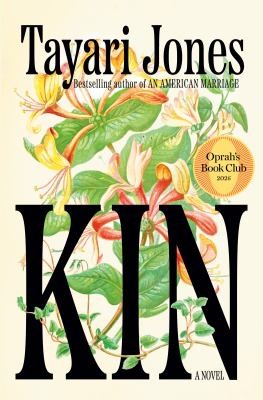
Kin
Kin is the book that spent the first half of 2026 at the center of American literary conversation: an Oprah’s Book Club selection, Amazon editors’ top pick of the year so far, and a novel readers keep describing as a story of chosen sisterhood rather than a period piece. Jones follows Vernice and Annie, two motherless girls raised as neighbors in fictional Honeysuckle, Louisiana, whose adult lives pull apart even as the bond formed in childhood keeps claiming them. The Jim Crow setting is not window dressing. It shapes schools, manners, money, and the limited maps available to Black women who want more than survival.
What distinguishes Kin from Jones’s earlier An American Marriage is scale and texture. The novel moves from a small Southern town to the charged social world of Spelman College without losing the intimacy of two people who know each other’s worst habits. Readers who wanted a contemporary legal drama will not find one. Readers who wanted a friendship novel with moral weight, humor, and a tragedy that arrives without cheap surprise have been passing this one along all year.
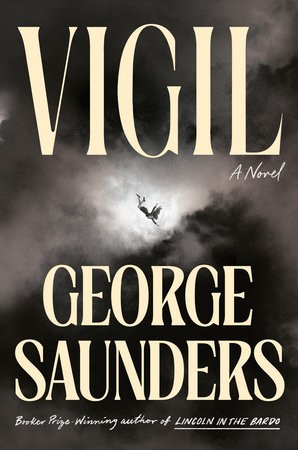
Vigil
Saunders’s second novel is short, crowded, and deliberately uncomfortable. It takes place on the last night of oil executive K.J. Boone’s life, with a spirit guide named Jill “Doll” Blaine trying to usher him from one world into the next. Ghosts, animals, former colleagues, and fragments of a damaged climate keep interrupting the deathbed. If Lincoln in the Bardo made the afterlife feel like a civic meeting, Vigil makes it feel like an audit.
The book belongs on a 2026 reading list because it is one of the few literary novels this year that treats corporate denial as a spiritual problem without turning into a tract. Some readers have found the moral accounting too on-the-nose. Others call it the first book they finished in January and still argued about in summer. At 192 pages it asks for an evening, not a month, which is part of why it keeps showing up in “what I actually read this year” wrap-ups.
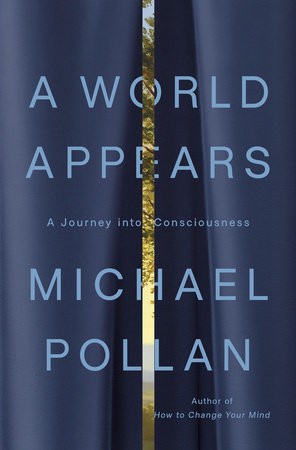
A World Appears: A Journey into Consciousness
Pollan’s first major book of 2026 leaves farms and kitchens for the harder target of consciousness itself: what it is, who might have it, and why science still cannot close the case. He moves from laboratory debates over neural correlates to plant intelligence, philosophy, literature, spiritual practice, and the ways psychedelic experience changes what people are willing to count as a mind. The through-line is first-person experience, the part of life that remains awkward for instruments.
This is the nonfiction title that gives the list balance. Readers who followed How to Change Your Mind will recognize the method: a curious generalist walking into specialist rooms and translating the argument without pretending the argument is finished. It will frustrate anyone who wants a single theory of mind. It rewards anyone who wants a readable map of why the question keeps returning in an age of AI and collapsing attention.
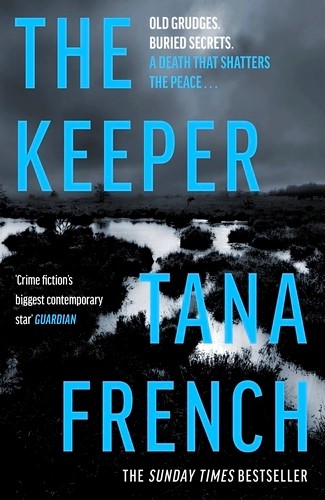
The Keeper
- Series
- Cal Hooper
French closes the Cal Hooper trilogy in the West of Ireland village of Ardnakelty, where a young woman who was about to become engaged is found dead in the river. Retired Chicago detective Cal Hooper has built a quieter life with Lena and the once-feral teenager Trey Reddy. The death splits the town along old grudges, land deals, and loyalties that look like friendship until they are tested. French’s gift is still atmosphere: weather, talk, and the way a small place can make a private grief public.
Readers who bounced off the Dublin Murder Squad books for procedural density often prefer this rural trilogy. The Keeper is not a clean puzzle. It is a novel about what happens when an outsider with a badge-shaped past decides he owes the village something, and the village decides it may not want the debt collected. Come for the mystery; stay for the sentences about land, rumor, and the cost of staying put.
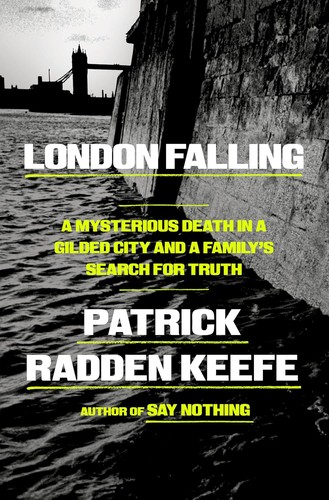
London Falling: A Mysterious Death in a Gilded City and a Family's Search for Truth
Keefe’s latest narrative nonfiction begins with surveillance footage: in November 2019, nineteen-year-old Zac Brettler paces a balcony of a luxury Thames-side tower and goes over the edge. His parents discover that their son had been performing a second life, presenting himself as the child of a Russian oligarch and drifting into a London underworld of enforcers, dirty money, and men who treat the city as a laundry. The book is a death investigation, a family portrait, and an indictment of a capital that sells glamour while looking away from the invoice.
Readers of Say Nothing and Empire of Pain will recognize the method: patient reporting, a refusal to flatten complicated people, and a widening lens that turns one case into a civic argument. It is not comfort reading. It is the 2026 nonfiction title people recommend when they want a book that behaves like a thriller without inventing scenes.
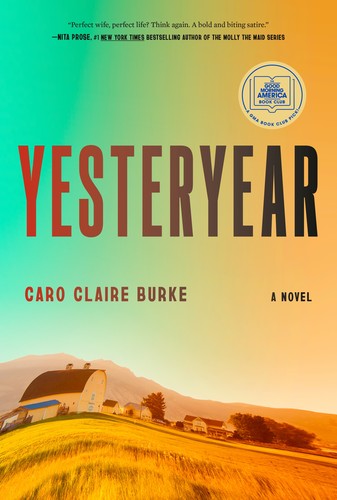
Yesteryear
Burke’s debut is the loudest conversation book of spring 2026: a tradwife influencer who sells raw milk, sourdough, and wifely perfection to millions wakes up in what appears to be 1855. Natalie Heller Mills has to decide whether she is the victim of a hoax, a reality show, a religious test, or something worse, while the actual labor of nineteenth-century womanhood strips the brand off the lifestyle. The premise is high concept. The execution is meaner and funnier than the social-media discourse that surrounded it.
Community reaction has been split in a useful way. Some readers wanted a neater allegory and felt the later turns overreached. Others called it the rare satire that understands both the hunger for tradition and the theater required to sell it. Either way, it earned a place on this list because people finished it and immediately needed to argue. It is a GMA Book Club pick and a book that will date itself to this exact cultural moment, which is also why it belongs among the year’s most-read titles.
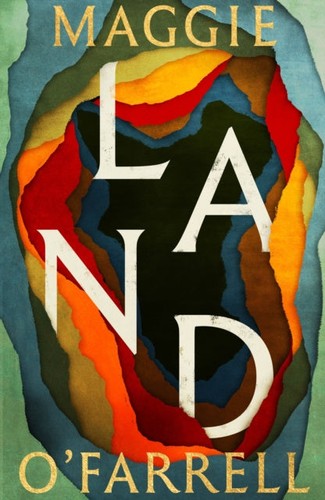
Land
O’Farrell’s tenth novel is the title that appeared on more summer 2026 lists than almost any other work of fiction. In 1865, Tomás and his reluctant son Liam work for the Ordnance Survey, mapping a western Irish peninsula still emptied by the Great Hunger. An encounter at an ancient spring changes Tomás, and the official work of measuring land becomes a private argument about what maps erase. Folklore, buried histories, and a fiercely loyal dog share the page with colonial paperwork.
Readers coming from Hamnet will find the same attention to parental love and landscape, pointed at a different century and a different kind of loss. Land is slower than a plot-forward historical thriller and richer than a simple famine novel. It is the book people recommend when they want 2026 reading that feels built to last past the news cycle.
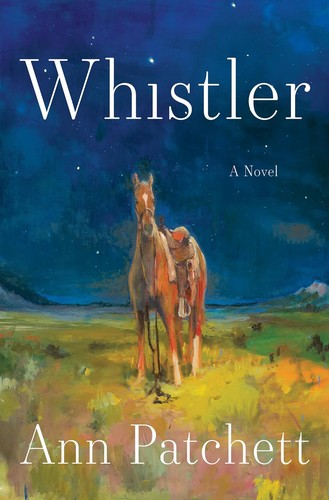
Whistler
Patchett’s tenth novel begins in the Metropolitan Museum of Art, where Daphne Fuller and her husband notice an older man following them through the galleries. He is Eddie Triplett, the stepfather who was married to Daphne’s mother for a little more than a year when Daphne was nine. They have not seen each other since a defining rupture in that brief household. The reunion is not a thriller hook. It is an opening into memory, kindness, and the strange durability of being truly seen by one person.
Among 2026’s big-name novels, Whistler is the gentlest and the most likely to be finished in a sitting. Some readers wanted more plot. Many others called it the book that restored their faith in adult fiction about decency. The horse on the cover is a narrative delayed gratification, not a Western. Come for Patchett’s clarity; stay for a novel that treats chosen family as a serious subject rather than a slogan.
Cool Machine
- Series
- Harlem Trilogy
Whitehead ends the Harlem Trilogy in the 1980s, when Ray Carney is a successful furniture dealer who still knows how to move stolen goods. New York is crawling out of fiscal collapse into Reagan-era real estate and a harsher street economy. The novel, like its predecessors, arrives in three linked movements: a Waldorf heist born of a refused bank loan, a missing African mask that sends the older criminal Pepper into the East Village, and a later tangle of family obligation and municipal rot. The city is the other main character.
You can read Cool Machine alone, but it is richer if you already know what Carney has survived. It is funnier and swaggering where Land and Whistler are hushed, which is why it earns a different kind of spot on a yearly reading list. Readers who wanted another Underground Railroad will not get one. Readers who wanted a crime novel that is also a neighborhood chronicle of class, race, and the joke of respectability have the closing chapter they asked for.
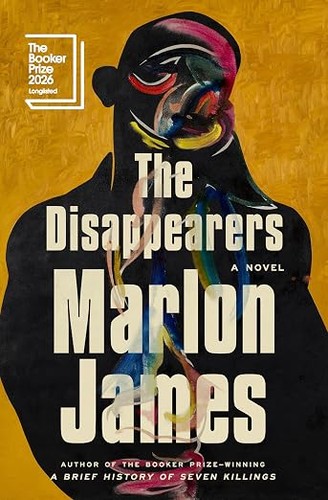
The Disappearers
James returns to Jamaica with a 640-page novel longlisted for the 2026 Booker Prize. In 1988 Kingston, eight gay men gather to rehearse a prison play and are attacked by a homophobic mob. One man is killed. Two others vanish from the survivors’ lives so completely they become the title. The book follows the aftermath across years, voices, and geographies, with humor and sex sitting beside rage because that is how the men stay alive.
This is the most demanding novel on the list and the one readers warn each other about before recommending. It is long, polyphonic, and unsparing about violence. It is also the book several critics have already called James’s finest work. If your year of reading has room for only one maximalist novel, this is the one that is actually changing the conversation rather than waiting for a prize announcement to do it.
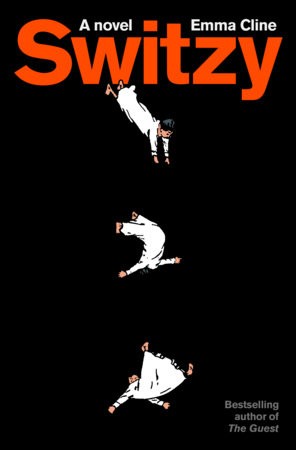
Switzy
Cline’s third novel, longlisted for the 2026 Booker Prize, follows David Hastings, a retired executive with Alzheimer’s, on a last trip toward a Swiss clinic where he intends to end his life. He flies with an assistant, stops in London to see his daughter, and keeps losing the plot of his own mind in short, looping paragraphs that make consciousness feel like a flickering radio. The destination is known. The interest is what a life looks like when the calendar has a hard stop.
Switzy is the opposite of a cozy 2026 read, which is why it belongs here. People are finishing it because Cline changed register: less cool girl adrift, more interior portrait of a diminished man who was never especially large to begin with. Readers who need uplift should skip it. Readers who want a precise account of memory failure and controlled exit will find it hard to shake.
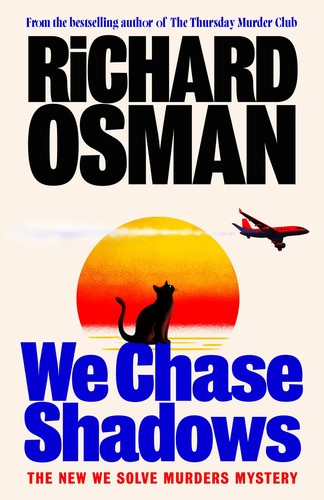
We Chase Shadows
- Series
- We Solve Murders
Osman returns to bodyguard Amy Wheeler, her father-in-law Steve, and novelist Rosie D’Antonio for a second We Solve Murders case. A body is found at sunrise on the steps of an Italian villa, a note attached, and the trio take the job even though their client would rather keep the police out of it. The chase moves through Italy, Barcelona, Palm Springs, and Steve’s village pub, collecting an ex-wife, a business rival, and a Swedish criminal along the way. The pleasures are talk, timing, and the joke of three mismatched people who keep surviving their own competence.
This is the list’s commercial counterweight. It will not satisfy readers hunting for the year’s most serious novel. It will satisfy readers who want a 2026 crime book they can finish on a plane. Coming after the Thursday Murder Club phenomenon, the series is breezier and more international. Start with We Solve Murders if you can; the sequel still explains the trio quickly enough for latecomers.
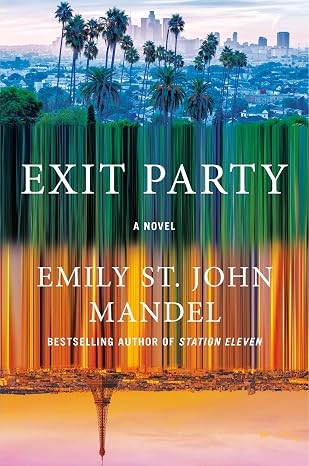
Exit Party
Mandel’s new novel opens in Los Angeles in 2031, after the United States has fractured and a curfew in the Republic of California has finally lifted. Ari Waker, recently released from prison, walks through a battered city to a party. The host vanishes. A guest seems to appear twice. A painting leaves the wall. From that night the book fans outward across decades and locations: a domed Paris, a Greek coast used by weapons dealers, even a lunar colony. The party is the lock. The rest of the novel is the set of keys.
Readers who loved Station Eleven and Sea of Tranquility will recognize Mandel’s interest in art, aftermath, and the thin places between timelines. Exit Party is more of a puzzle than Whistler and less earthbound than Kin. It is one of the fall titles people were adding to Goodreads shelves before they had finished the summer books, which is as clear a signal as 2026 publishing gets.
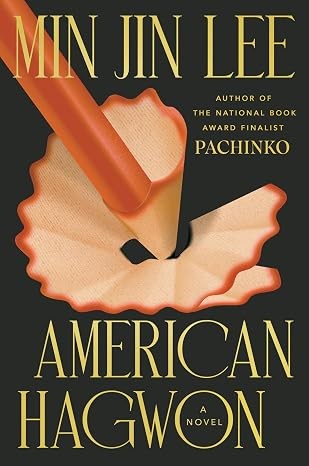
American Hagwon
Lee’s first novel since Pachinko follows the Koh family—John, Helen, and their children Bo, DH, and Mido—from Seoul to Sydney to Southern California after betrayal and the 1997 Asian financial crisis erase the middle-class life they thought they had secured. Education becomes the family religion. Hagwons, the after-school academies that structure so much Korean and Korean American ambition, sit at the center of the plot not as sociology but as workplaces, pressure cookers, and sometimes places of unexpected vocation. The book is long on purpose. Lives this crowded refuse a tidy 300 pages.
This is the fall 2026 novel with the widest anticipatory audience, and early critical notes emphasize scene-by-scene patience over thesis statements. Readers who wanted another colonial-Korea epic will find a different diaspora story: late-century, transpacific, obsessed with grades and duty. It closes this list because it is the book many people are still lining up to read rather than the book they finished in June, and a yearly reading article that ignored it would be incomplete.
How to choose among these fourteen
If you want one book that matches the year’s mainstream conversation, start with Kin or Whistler. If you want the title that dominated critic lists in early summer, choose Land. If you read faster when a plot pulls you, The Keeper and We Chase Shadows are the cleanest on-ramps. Yesteryear is the argument book; Vigil and Switzy are the short, heavy ones.
Save The Disappearers and American Hagwon for weeks when you can give a long novel full attention. Pair London Falling or A World Appears with fiction if you want the year to include nonfiction that is not a memoir dump. Cool Machine and Exit Party scratch different itches—street-level crime versus speculative architecture—and neither is a substitute for the other.
Frequently asked questions
Do these 14 books all have to be 2026 publications?
For this keyword, yes. The phrase “books read this year” can include older titles a person happened to finish in 2026, but a useful public list should privilege books the year actually produced. Every title here was first published in 2026.
Which of these can I read without starting a series?
Most of them. The exceptions are The Keeper, which closes Tana French’s Cal Hooper trilogy, Cool Machine, which closes Colson Whitehead’s Harlem Trilogy, and We Chase Shadows, the second We Solve Murders novel. Each can be followed without the earlier books, but the French and Whitehead novels are richer in order.
What if I only finish four books before December?
Pick one intimate literary novel (Whistler or Kin), one book with forward motion (The Keeper or Yesteryear), one long fall title if you have the appetite (American Hagwon or The Disappearers), and one nonfiction title (London Falling or A World Appears). That mix covers the year’s actual conversation better than four books from a single genre.
Which titles are the hardest emotionally?
Switzy centers dementia and assisted dying. The Disappearers contains homophobic violence and murder. London Falling investigates a teenager’s death. Vigil is a deathbed novel. Those four ask more of a reader than Whistler, We Chase Shadows, or Cool Machine.
Are Goodreads ratings included on purpose?
No. Ratings move, and they are a weak proxy for whether a book will fit a particular reader. Publication facts and critical context are stable enough to verify; crowd scores are not.
Fourteen is an artificial number, but it is the number the search asks for, and 2026 supplied more than fourteen books worth defending. The useful test is not whether a title won a prize in June. It is whether, in September, people were still handing it to friends. These are the books that survived that test long enough to earn a place on a finite list.
Sources and further reading
- Amazon Editors Best Books of 2026 So Far
- Penguin Random House book pages
- Kirkus Reviews
- Literary Hub summer 2026 list compilation
- The New York Times book reviews
- Publishers Weekly
- Hachette / Cardinal announcement for American Hagwon
- BuzzFeed / Reddit-origin 2026 reader roundup
- Wikipedia pages for Land, The Keeper, Cool Machine, and The Disappearers
- George Saunders Substack announcement