This article contains affiliate links. Purchases made through those links may earn a commission at no extra cost to you.
A Christmas reading list works best when it matches the kind of December you actually have. Some years call for ghosts and plum pudding. Others call for a locked-room murder, a two-hour novella, a picture book reread with kids, or a romance that starts in the snow.
The 13 Christmas books below are grouped only by the fact that Christmas is central to their setting, plot or atmosphere. Lengths range from a single evening to a long weekend. Tones range from comic to quietly severe. The point is choice, not a single idea of festive cheer.
What Counts as a Christmas Book
Searchers looking for Christmas books to read usually want stories set during Advent or Christmas itself, not generic winter fiction with a wreath on the cover. The strongest titles use the holiday as pressure: family reunions, money worries, church calendars, commercial frenzy, or the hope that one season might repair something.
Readers on book blogs and discussion boards return to the same split every year. Classics still dominate because they are short, public-domain or cheap, and easy to reread. Contemporary picks cluster around cozy romance, comic family novels and a smaller group of darker literary books set at Christmas. Picture books stay on adult lists because many households treat them as ritual rather than children's-only reading.
13 Christmas Books Worth Reading
A Christmas Carol
- Series
- Christmas Books
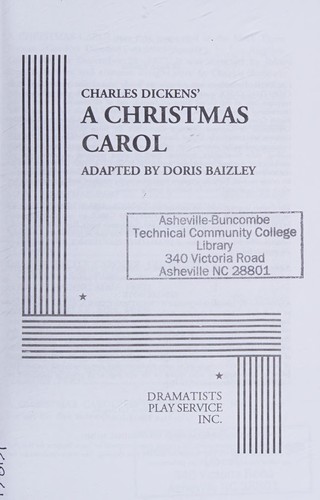
First published on 19 December 1843, this novella is still the book most people mean when they say they want a Christmas story. Ebenezer Scrooge is a London miser who treats the holiday as an interruption. On Christmas Eve he is forced to look at the life he has built, the life he refused, and the future that follows from both.
The supernatural frame is simple on purpose. Ghosts give Dickens a way to move quickly through memory, poverty, office life and family obligation without turning the book into a tract. The language is Victorian, but the length is modest, which is why so many readers make it an annual habit rather than a once-in-a-lifetime classic.
It belongs on this list because later Christmas fiction keeps answering it: redemption plots, miser plots, ghost-of-Christmas plots, and arguments about whether generosity can be commanded. If the prose feels dense at first, read it aloud. That is how Dickens intended it to travel.
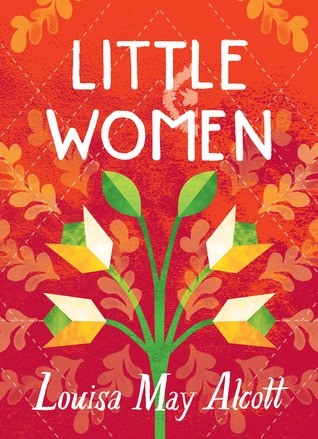
Little Women
- Series
- Little Women
Alcott’s 1868 novel opens with a complaint that Christmas will not be Christmas without presents. That line is why the book keeps landing on holiday lists even though it is a full coming-of-age story, not a seasonal novella. The March sisters spend the war years in genteel poverty, trying to be good, ambitious, patient or fashionable, often all at once.
Christmas scenes bookend the story and give the household its moral weather: charity, scarcity, music, and the question of what a family owes one another when money is short. The rest of the year matters just as much. Readers who only want snow and stockings may find the middle chapters more domestic than festive.
It earns a place here because so many households treat it as a December reread, and because it shows a Christmas that is made of work and compromise rather than spectacle. Choose an edition that includes both original volumes if you want the complete novel rather than the first half alone.
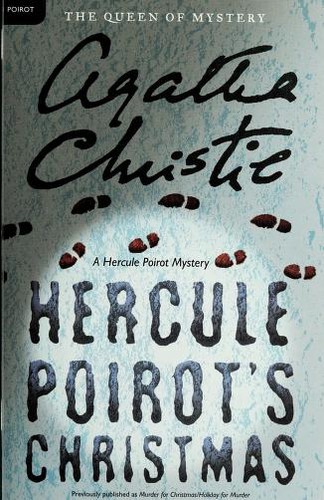
Hercule Poirot's Christmas
- Series
- Hercule Poirot
Published in 1938, this is Christmas as a pressure cooker. A wealthy, disliked patriarch gathers his scattered family at Gorston Hall. The reunion is already sour before a locked-room killing turns the house into a set of alibis, grudges and rewritten wills. Hercule Poirot is on hand to sort the wreckage.
Christie uses the holiday for crowding and obligation, not tinsel. People who would not share a house in July are trapped together in December, which gives the detective novel its extra snap. The puzzle is fair by Golden Age standards: clues, timing, and family history all matter.
Pick this if you want a Christmas book that refuses sentiment. Discussion threads often recommend it to readers who are tired of cocoa-and-meet-cute fiction but still want the season on the page. It is a full mystery, so the body count is the point, not an unfortunate side note.

Small Things Like These
Keegan’s 2021 book is short enough to finish on a winter evening and heavy enough that many readers do not call it cozy. In New Ross, Ireland, in 1985, coal merchant Bill Furlong works through the busy weeks before Christmas. Deliveries, family meals and town gossip sit beside a moral problem he can no longer pretend not to see.
The Christmas setting is not decoration. The season makes charity official and silence convenient. Keegan’s sentences stay plain on purpose. That restraint is why the book is repeatedly recommended in the same breath as Dickens, then immediately contrasted with him: this is a holiday story about complicity, not conversion on cue.
It belongs here because contemporary Christmas lists need at least one book that treats December as a test. Readers looking for comfort should choose something else on this list. Readers looking for a compressed, carefully made novella will understand why it keeps circulating in December.

Letters from Father Christmas
From 1920 to 1943, Tolkien wrote illustrated letters to his children in the voice of Father Christmas. They were published after his death, first in 1976 as The Father Christmas Letters and later in expanded editions under this title. The North Pole is a working household full of accidents, polar bears, elves and occasional goblin trouble.
The pleasure is cumulative. Handwriting, stamps, drawings and yearly updates matter as much as plot. Readers who know The Hobbit will recognize the same appetite for invented logistics: how a sleigh operation might actually fail, and how a father might turn that failure into a gift.
This is the Christmas book for households that like to look at pages together. It is gentler than most of Tolkien’s fiction and less syrupy than many Santa stories. Later editions restore letters omitted from the first publication, so a post-1999 printing is the better starting point.
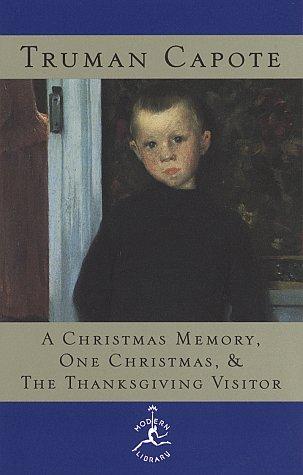
A Christmas Memory
Capote first published this autobiographical story in 1956. In rural Alabama, a young boy called Buddy and his elderly cousin Sook prepare for Christmas the only way they can afford: fruitcakes, a handmade gift, a small ritual of weather and kitchen work. The holiday is homemade because it has to be.
The piece is brief and often bound with Capote’s other holiday stories, “The Thanksgiving Visitor” and “One Christmas.” Readers praise the exactness of the details—whiskey, pecans, a dog named Queenie—more than any plot twist. It is nostalgic without pretending the household is safe or prosperous.
Include it when you want a Christmas book that can be read in one sitting and still feel complete. It is a strong counterweight to both Dickensian spectacle and modern rom-com sparkle: love here looks like labor shared by two people the rest of the family does not take seriously.
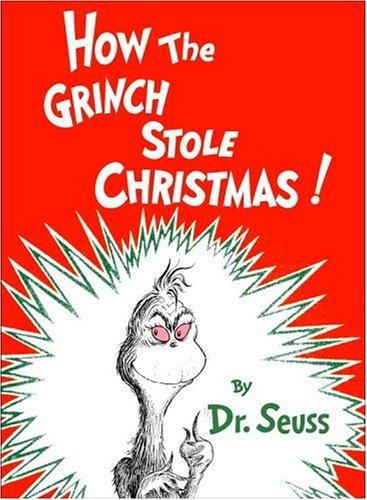
How the Grinch Stole Christmas!
Theodor Geisel published this verse story in 1957, and it has been part of December reading piles ever since. The Grinch lives above Who-ville and decides the Whos’ Christmas is too loud, too bright and too full of stuff. His plan is theft. The book’s argument is that the holiday can survive the loss of its props.
Seuss’s rhyme and drawings do the narrative work. Adults often come for the cultural reference and stay because the book is sharper about commercial Christmas than its reputation as a children’s cartoon source suggests. The text is short enough to read aloud without losing the room.
It is on this list as a family book that also functions as satire. If you only know the later screen versions, the original is leaner and less padded. It will not replace a novel, but it is one of the few Christmas stories almost every age group can share.

The Polar Express
Van Allsburg wrote and illustrated this picture book in 1985. On Christmas Eve a boy boards a train bound for the North Pole. The trip is quiet, ceremonial and a little uncanny; the prize at the end is less a gadget than a test of whether wonder still has a sound.
The Caldecott-winning art is the reason many adults keep a copy after their children have grown. Dark skies, lamplight and still faces give the story more gravity than the later film adaptation. The text is spare, which is why it works as a ritual reading rather than a plot-heavy adventure.
Choose it when the brief is “Christmas book” in the household sense: something to take off the shelf each December. Readers who want character psychology or romance should look elsewhere on this list. Readers who want atmosphere will understand why it keeps appearing beside Dickens on general holiday roundups.

The Lion, the Witch and the Wardrobe
- Series
- The Chronicles of Narnia
Published in 1950, this is the first Narnia book Lewis released and the one most often reread in winter. Four siblings evacuated from wartime London step through a wardrobe into a country where it is always winter and never Christmas. The White Witch’s rule makes the holiday itself a political event.
Current HarperCollins numbering places the novel second in internal chronology, after The Magician’s Nephew. Many readers still start here, and the book stands alone. Father Christmas appears, but the story is broader than a seasonal tale: loyalty, betrayal, thaw and the cost of putting a world right.
It is included because Christmas is the crack in the Witch’s winter, and because families keep reading it in December even when they do not think of it as “a Christmas book.” Readers who want only festive realism will bounce off the talking animals and battles. Readers who want winter magic will not.

Skipping Christmas
Grisham published this comic novel in 2001. After sending their daughter abroad, Luther and Nora Krank decide not to host, decorate or spend another December on Hemlock Street. They book a cruise instead. The neighborhood treats that decision as a civic emergency.
The joke is social enforcement. Christmas, in Grisham’s version, is a set of obligations neighbors police with casseroles, decorations and outrage. Some readers find the satire relieving. Others find Luther unpleasant company and the slapstick closer to the later film adaptation, Christmas with the Kranks, than to literary comedy.
Use this when you want a fast, secular, adult Christmas book with no ghosts and no meet-cute. It is shorter than Grisham’s legal thrillers and lighter than the darker titles on this list. It will not convert a skeptic into a sentimentalist, and it does not try to.

One Day in December
Silver’s 2018 novel begins with a missed connection on a snowy December day in London. Laurie sees a man through a bus window and decides, against her own better judgment, that the glimpse matters. The story then follows years of near-meetings, friendships and timing that refuses to cooperate.
Christmas returns as a marker rather than a single setting. That structure is why the book is loved and argued over. Some readers want the festive meet-cute to resolve quickly. Others like the decade-long ache and the way friendship complicates the central pull. It was a Reese’s Book Club pick and remains one of the most cited contemporary holiday romances.
Put this on the list when the request is Christmas romance with city weather and adult mess, not a two-week small-town rescue. It is longer than the novellas here and less purely seasonal than a Hallmark-style plot. If you need a guaranteed soft ending by page 50, this is the wrong book.
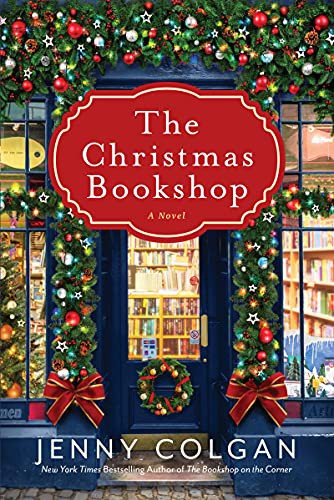
The Christmas Bookshop
- Series
- Christmas Bookshop
Colgan’s 2021 novel sends Carmen Hogan to Edinburgh after she loses her department-store job. She lands in her sister’s spare room and in a failing Old Town bookshop that needs to survive the Christmas rush. The city, the shop and a complicated family household do most of the atmospheric work.
This is the cozy end of the list: displays, customers, sibling friction and a romance that shares space with the business of keeping a shop open. A sequel, Midnight at the Christmas Bookshop, followed in 2023, but the first book is written to stand alone. Readers who want grit should look at Keegan instead.
It is here because “Christmas books to read” searches heavily favor comforting contemporary fiction, and Colgan is one of the writers those searches actually lead to. The book is frank about money stress and family irritation, which keeps it from being only window dressing. It is still, by design, a soft landing.
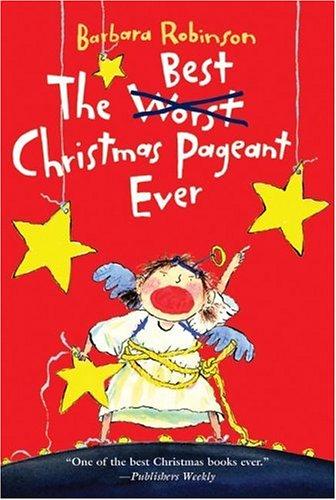
The Best Christmas Pageant Ever
- Series
- The Herdmans
Robinson’s 1972 children’s novel follows the six Herdman siblings, locally famous as the worst kids in town, after they claim every major role in the church Christmas pageant. The narrator is another child in the congregation, which keeps the comedy grounded in lunchroom politics and adult panic.
The book works because the Herdmans do not become instantly polite. They ask blunt questions about a story everyone else recites by habit. That device is why teachers, churches and families have kept the title in circulation for decades, and why it was adapted again for film in 2024. Two later Herdman books exist, but this one is the holiday entry.
Read it with children or on your own if you want Christmas comedy that still has a point. It is shorter and ruder than most inspirational pageant stories. Readers who need reverence from the first page may bristle; that friction is the joke and the engine.
How to Choose Among These 13
If you have one evening, start with A Christmas Carol, A Christmas Memory, Small Things Like These, or a picture book. If you want company for a whole weekend, Little Women, One Day in December or The Christmas Bookshop will last longer. Mystery readers should go to Christie; satire readers to Grisham or Seuss.
Do not force a cozy book if you want moral seriousness, and do not expect Keegan or Christie to deliver cocoa. Family reading favors Tolkien, Van Allsburg, Seuss, Robinson and Narnia. Adult-only December stacks usually mix Dickens with one contemporary novel so the season does not flatten into a single mood.
Frequently asked questions
What are the best short Christmas books on this list?
A Christmas Carol, Small Things Like These and A Christmas Memory can all be finished in a sitting or two. How the Grinch Stole Christmas! and The Polar Express are even shorter and work as read-alouds.
Are Little Women and The Lion, the Witch and the Wardrobe really Christmas books?
They are not Christmas-only novels. Little Women begins and ends with Christmas, which is why it is treated as a holiday reread. Narnia uses “always winter and never Christmas” as a central image, so it belongs on winter lists even though the plot is larger than the holiday.
Which Christmas book should I read if I dislike romance?
Choose A Christmas Carol, Hercule Poirot's Christmas, Small Things Like These, Skipping Christmas or Letters from Father Christmas. One Day in December and The Christmas Bookshop are the romance-forward titles.
What is a good Christmas book for a darker mood?
Small Things Like These is the most somber recommendation here. Hercule Poirot's Christmas is chilly rather than tragic. A Christmas Carol is darker in its middle staves than its reputation as a cozy classic suggests.
Which of these work for reading with children?
How the Grinch Stole Christmas!, The Polar Express, Letters from Father Christmas and The Best Christmas Pageant Ever are the most straightforward family choices. The Lion, the Witch and the Wardrobe suits older children. A Christmas Carol is often read aloud in abridged form.
Thirteen titles will not cover every kind of Christmas, but they cover the requests that actually show up each December: a classic, a mystery, a short literary book, a comfort novel, a romance and something to read with other people in the room. Pick by length and temperament, not by the idea that a holiday book must be gentle.