This article may contain affiliate links. If you buy a book through one of them, we may earn a small commission at no extra cost to you.
A short book is not a lesser book. It is a complete experience that fits the hours you actually have: a quiet evening, a long train ride, a Sunday that keeps getting interrupted. Readers looking for short books to read in one sitting usually want two things at once—a story they can finish before the mood breaks, and a story that still feels finished.
The twelve titles below are all compact enough for a single session for most adult readers. Page counts vary by edition, but each one is widely treated as a novella or a slim novel rather than a project. They differ in tone, era, and demand. Some are almost frictionless. Others are short and heavy. That range is the point.
What “one sitting” actually means
There is no official page limit. In practice, books that readers finish in one sitting tend to run under 200 pages, often closer to 100–150, and they waste little time on setup. Reading speed still matters. A spare 120-page novella can take two hours. A dense 140-page philosophical novel can take four. Treat “one sitting” as an unbroken stretch of attention, not a race.
Community discussions keep returning to the same uses for these books: breaking a slump, resetting after a long novel, traveling without a brick in the bag, or wanting the satisfaction of a last page the same day as the first. The frequent complaint is also consistent. Short does not mean light. Several of the best compact books are emotionally expensive. Choose for stamina as well as length.
12 short books worth finishing today
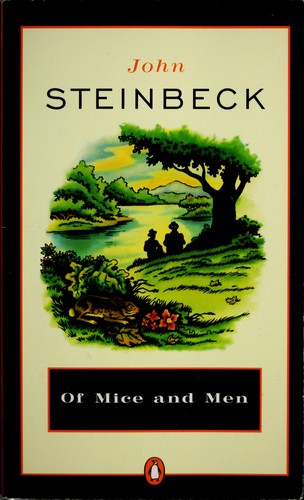
Of Mice and Men
Steinbeck’s 1937 novella is the model many readers still use for a one-sitting book: few scenes, a tight pair of central characters, and a plot that never stalls. George and Lennie drift through Depression-era California ranch work with a shared plan that is modest and almost impossible. The prose is plain on purpose. Dialogue carries most of the weight, which is why the book moves so quickly even when the subject is grim.
It belongs on this list because it is short without being slight. The friendship is the engine, not a subplot, and the social world around the bunkhouse is sketched in just enough detail to make every choice feel costly. Readers who bounced off it in school often find the adult reread colder and cleaner. It is a poor pick if you want comfort. It is an excellent pick if you want a complete tragic arc before dinner.

The Old Man and the Sea
Hemingway’s last major work published in his lifetime follows an aging Cuban fisherman far out into the Gulf Stream. The action is simple: a man, a boat, a fish, and the long work of bringing a catch home. What makes the book sit-down readable is the narrow frame. There are almost no side plots. The sentences stay short. Time is measured in hunger, cramp, and changing light.
The novella earned the Pulitzer Prize and helped secure Hemingway’s Nobel, but it also divides readers. Some find the repetition hypnotic. Others find it thin. That split is useful here. If you like physical ordeal stories and unadorned prose, this is one of the cleanest one-sitting classics in English. If you need social texture or a large cast, look elsewhere on this list. The book is short enough that the disagreement itself does not cost you a week.

Animal Farm
Orwell published this political fable in 1945 as a short “fairy story” about farm animals who overthrow their owner and try to run the place themselves. The plot is linear and easy to hold in one sitting. The animals speak, hold meetings, rewrite slogans, and discover how quickly a revolution can harden into a new hierarchy. The famous line about equality is earned, not planted as a poster.
The book is on every short-book list for a reason: it is brief, clear, and still argued over. Some readers treat it as a history lesson about Stalinism. Others read it as a reusable warning about any group that starts policing language and memory. Either way, the fable form keeps the pages turning. A Signet paperback can look longer than the story itself because of introductions and notes. The narrative remains a true afternoon book.

Small Things Like These
Keegan’s 2021 novel is one of the shortest books ever shortlisted for the Booker Prize. In a small Irish town in 1985, coal merchant Bill Furlong makes his Christmas deliveries and notices what the town has agreed not to notice at the local convent. The book is not a puzzle and not a tract. It watches one decent man decide whether decency is enough.
Readers recommend it constantly as a one-sitting book because the sentences are controlled and the scene count is small. The aftertaste is not small. People often finish it in an evening and then spend days turning over the moral problem it leaves behind. That combination—speed plus residue—is rare. Skip it only if you want comedy or a plot that stays safely historical. The Magdalene laundry system is the ground under the story, even when Keegan refuses to lecture.

The Stranger
Camus’s 1942 novel, published in English as The Stranger, follows Meursault, an office worker in Algiers whose reactions to death, heat, and other people refuse the script around him. The book is short enough to finish in a sitting and famous enough that many readers think they already know it. The Matthew Ward translation for Vintage is the standard American edition and keeps the sentences blunt.
It earns a place here because length and difficulty are not the same thing. The plot events are few. The demand is in the tone: flat reportage that becomes unbearable as the social machine closes in. Community threads often suggest it as a one-day read and then warn that it is not a palate cleanser. If you want warmth, choose The Little Prince or Convenience Store Woman instead. If you want a compact novel that still argues with you after midnight, this is the one.

Convenience Store Woman
Murata’s international hit, translated by Ginny Tapley Takemori, is the most contemporary comic novel on this list. Keiko Furukura has worked in the same Tokyo convenience store for eighteen years. The job gives her a script that school and family never did. Relatives and coworkers keep asking when she will become a normal adult. The store keeps asking her to restock rice balls.
At roughly 160–180 pages depending on edition, it is longer than Steinbeck and still a true one-sitting book because the voice is addictive and the chapters are short. Readers praise the deadpan humor and the relief of a protagonist who does not want the life she is told to want. The limitation is real: if you need high plot or romance payoff, Keiko will not provide it. The pleasure is watching a person defend a small, exact way of living.

Train Dreams
Johnson’s novella first appeared in The Paris Review and was published as a standalone book in 2011. It follows Robert Grainier, a laborer in the early-twentieth-century American West, across decades that look huge on a map and small on the page. Railroad work, a cabin in the woods, and a life thinned by accident give the book its shape. The prose is lyrical without becoming soggy.
At about 116 pages, it is one of the purest one-sitting recommendations in recent American fiction. Readers who bounce off Johnson’s longer, more chaotic novels often love this one because the scale is human and the chapters behave. It is not a comfort read. Fire, isolation, and the violence of frontier work sit close to the surface. It is the right choice if you want a short book that still feels like a whole life, not a single anecdote.
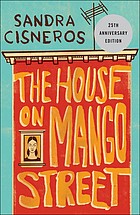
The House on Mango Street
Cisneros’s 1984 book is a coming-of-age novel told in short vignettes from the point of view of Esperanza Cordero, a girl growing up in a Chicago Latino neighborhood. Each piece can stand alone. Together they build a voice, a block, and a wish to leave without erasing the place that made her. The language is plain and musical at the same time.
The vignette structure makes this one of the easiest one-sitting books on the list, and also one you can pause without losing the thread. That flexibility is why it works for tired readers as well as classroom ones. It is not a plot machine. If you need a single mystery to pull you through, Chronicle of a Death Foretold will serve you better. If you want a short book that sounds like a person thinking out loud, start here.
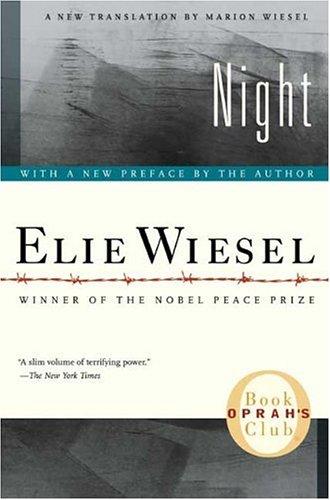
Night
- Series
- Night Trilogy
Wiesel’s memoir of being deported as a teenager from Sighet to Auschwitz and Buchenwald is short by design. The 2006 Hill and Wang edition, newly translated by Marion Wiesel, runs about 120–144 pages including the author’s later preface. The narrative itself is leaner than that. There is no ornament and no attempt to make the camps legible as adventure.
It is included because readers repeatedly name it as a book they finished in one sitting and could not treat as casual. That is a different kind of one-sitting experience from Convenience Store Woman. Do not pick Night to pad a reading challenge or to “get through something quick.” Pick it if you have the attention and the aftercare a Holocaust testimony requires. The shortness is part of its force. It does not linger on explanation. It records.
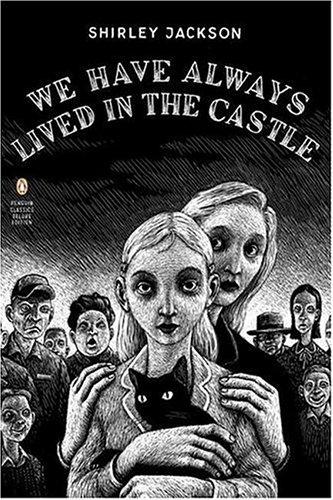
We Have Always Lived in the Castle
Jackson’s 1962 novel is narrated by Mary Katherine Blackwood, called Merricat, who lives with her sister Constance and their uncle in a sealed-off family house after a poisoning that the town has not forgotten. Cousin Charles arrives and disturbs the sisters’ private order. The book is a gothic without needing ghosts. The menace comes from ritual, food, gossip, and a childlike voice that is not childish.
Penguin editions sit around 160 pages, which is still a single evening for most readers. It is the most atmospheric title here and one of the least wholesome. Fans of The Haunting of Hill House often prefer this one for its intimacy and black humor. Readers who want likable narrators should stay away. Merricat is the reason to read it and the reason some people bounce off it by page forty.
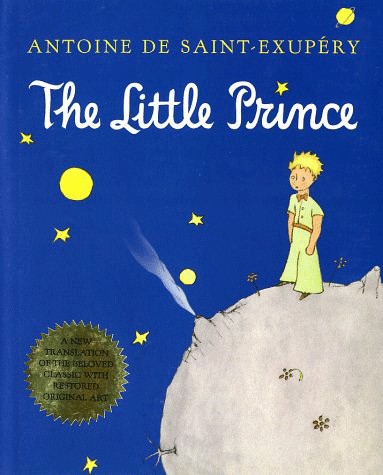
The Little Prince
Saint-Exupéry’s 1943 fable begins with a pilot stranded in the Sahara and a boy who has left a tiny asteroid and a difficult rose. The chapters are short, the drawings are part of the text, and the whole book can be finished in well under two hours in the Richard Howard translation published by Mariner and Clarion. It is the shortest widely loved title on this list.
Adults often misfile it as only a children’s book. The better reading is that it is a compact satire of grown-up habits—ownership, authority, counting—wrapped in a story simple enough to finish between dinner and bed. Rereaders treat it as a touchstone rather than a plot delivery system. If you want grit, this will feel too tender. If you want a one-sitting book that children and adults can share without talking down, it is still unmatched.
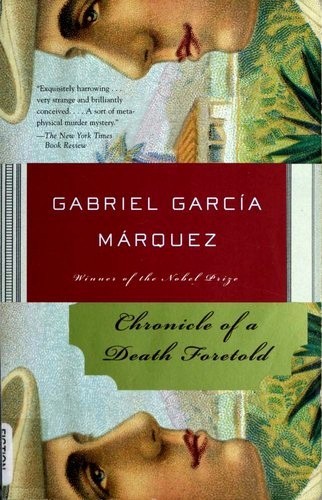
Chronicle of a Death Foretold
García Márquez compresses a murder everybody in town saw coming into a 128-page reconstruction. A narrator returns decades later to ask why Santiago Nasar died when so many people knew the Vicario brothers intended to kill him. The wedding, the returned bride, and the honor code of the town are all on the table from the start. Suspense comes from the gap between knowledge and action.
Vintage’s English edition, translated by Gregory Rabassa, is short enough for one sitting and dense enough that you may want to reread the last third immediately. It is the most plot-forward literary book here after Of Mice and Men. Readers who find One Hundred Years of Solitude too large often use this novella as a first García Márquez. It is not a cozy mystery. Honor violence is the subject, not a garnish.
How to pick among these twelve
Match the book to the kind of sitting you have. For easy momentum, choose Convenience Store Woman, The House on Mango Street, or The Little Prince. For a classic with a hard finish, choose Of Mice and Men or The Old Man and the Sea. For a modern literary punch, choose Small Things Like These or Train Dreams. For unease, choose We Have Always Lived in the Castle or The Stranger.
Length is only the first filter. Night and Small Things Like These can be finished in an evening and still wreck the evening. Animal Farm and Chronicle of a Death Foretold ask you to think while you read. If you are climbing out of a slump, start with Murata or Cisneros, not Wiesel. If you want the satisfaction of a last page and a moral argument, Keegan and Orwell will not waste the hours.
Frequently asked questions
How many pages can most people read in one sitting?
For many adult readers, 100 to 180 pages is realistic in two to four hours, depending on prose density and interruptions. A 250-page book can be a one-sitting read for a fast reader and a two-day book for everyone else. Use page count as a clue, not a guarantee.
Is a novella the same thing as a short novel?
Publishers use both labels loosely. A novella is usually shorter than a novel and longer than a short story, often in the range of about 20,000 to 40,000 words. Several books on this list are marketed as novels even when they behave like novellas. What matters for a one-sitting read is narrative compression, not the word on the cover.
Are short books less serious than long ones?
No. Animal Farm, The Stranger, Night, and Small Things Like These are all short and none of them is minor. Length measures how much room a writer took, not how much the book can do. The risk with short books is different: they have less space to recover if the voice does not click.
What if I want a short book that was not assigned in school?
Start with Convenience Store Woman, Small Things Like These, or Train Dreams. They show up in current reader discussions more than in old syllabi. We Have Always Lived in the Castle is taught sometimes, but many adults still meet it first as a recommendation rather than homework.
Can a sad book still work as a one-sitting read?
Yes, if you budget for the comedown. Night, Of Mice and Men, and Small Things Like These are frequently finished in one go because they are short, not because they are soothing. Save those for a night when you do not need the book to cheer you up.
A one-sitting book is a complete circuit: start, middle, last page, and enough leftover thought to justify the hours. The twelve here are not interchangeable. They share only a usable length and a refusal to stall. Pick the tone you can live with tonight, finish the book while the spell holds, and let the long novels wait until you want a project again.