This article contains search links to retailers and book databases. Purchases made through some links may earn a commission at no extra cost to you.
No single shelf can hold every book worth reading, and lists that claim otherwise usually flatten taste into a contest. What this one tries to do is narrower. These are twelve books that keep turning up when readers, critics, and booksellers argue about work that changes how a person sees power, love, home, guilt, or time.
The set mixes ancient epic, the first modern novel, social comedy, gothic science, psychological crime, American realism, dystopia, African and Latin American classics, a novel of slavery’s afterlife, and one short work of testimony. They are not interchangeable. Some are short. Some ask for stamina. A few are hard in subject rather than in style. Together they cover enough of human life that finishing them is a reasonable answer to the phrase “books to read before you die.”
What “books to read before you die” actually means
Searchers using this phrase are rarely asking for the longest canon or the highest exam score. They want a short list they can act on: books that keep being recommended across decades, that still argue with living readers, and that do not feel like homework once the first chapter lands. Community threads often praise the same core titles, then complain that many lifetime lists are too Western, too male, or padded with books people abandon.
A useful list therefore has to be honest about difficulty. Don Quixote and Crime and Punishment take time. Beloved and Man’s Search for Meaning ask for emotional room. Pride and Prejudice and The Great Gatsby look lighter and are not. The point is not to finish twelve trophies. It is to spend finite reading years on books that keep talking after you close them.
Twelve books worth the years you have left
The Odyssey
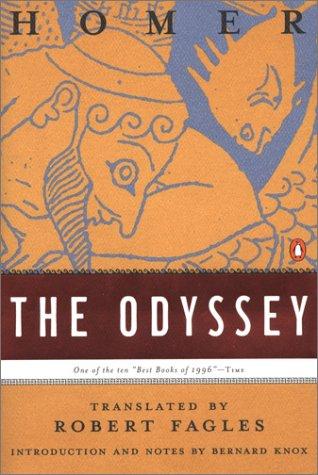
Homer’s homecoming poem is the oldest title on this list and still one of the most practical. After the war at Troy, Odysseus spends years trying to reach Ithaca while gods, storms, hosts, and his own cunning keep moving the target. The poem is about delay as much as adventure: what it costs to get home, and what home has become in the meantime.
Readers who only know film versions are often surprised by the domestic half of the story. Hospitality, marriage, memory, and the politics of a household under strain matter as much as monsters. A modern verse translation such as Robert Fagles’s keeps the pace spoken and clear. The Odyssey belongs here because so many later books about exile, cunning, and return are answering it, whether they admit that or not.

Don Quixote
Cervantes published the two parts of Don Quixote in 1605 and 1615, and the book still reads like a joke that grew a soul. An aging gentleman reads so many chivalric romances that he rides out as a knight-errant, dragging the farmer Sancho Panza into a world that refuses to match the stories. The comedy is famous. The aftertaste is the point: what happens when a private dream collides with other people’s reality.
Edith Grossman’s English version is the edition most contemporary readers are pointed toward because it keeps both the slapstick and the ache. The novel is long, episodic, and worth taking in stretches rather than as a sprint. It earns a place on a lifetime list as the work often called the first modern novel: self-aware, cruelly funny, and unexpectedly tender about friendship and delusion.

Pride and Prejudice
Austen’s 1813 novel is easy to underestimate because it is witty and widely adapted. Under the balls and proposals is a sharp study of how money, class, and first impressions shape a life. Elizabeth Bennet has to revise her reading of other people, and of herself, without becoming either cynical or naive. That moral work is why the book survives costume-drama packaging.
The courtship is the engine, not the whole machine. Family embarrassment, female economic precarity, and the difference between charm and character do as much work as romance. Readers who bounce off “classics” often finish this one because the sentences move and the social comedy still cuts. It belongs on a before-you-die list as the rare novel that teaches attention: to speech, to motive, and to the cost of being wrong about someone.

Frankenstein
Mary Shelley drafted the core of Frankenstein in 1816 and published it in 1818; the 1831 text is the version most modern editions follow. The novel is not the green-skinned shorthand of later films. It is a nested set of testimonies about a student who makes a living being and then refuses the obligations that follow. Ambition, abandonment, and the hunger to be recognized matter more than laboratory gadgetry.
The book stays on lifetime lists because it keeps changing as science and ethics change. Readers looking for jump scares may find the pace older than they expected. Readers interested in responsibility, creation, and what a person owes the life they set in motion usually find it colder and sadder than the pop-culture monster. Read it as an argument, not as a Halloween prop.

Crime and Punishment
Published in 1866, Crime and Punishment follows an impoverished former student in St. Petersburg who talks himself into a theory of extraordinary people and then has to live with the act that theory seemed to justify. The plot is a crime story. The experience is closer to a fever: cramped rooms, chance meetings, and a conscience that will not stay theoretical.
English readers are often steered to the Pevear and Volokhonsky translation for its energy and range of voice. The novel is demanding in mood more than in puzzle. People who want a tidy detective plot can feel stranded; people interested in guilt, poverty, and the wish to stand above ordinary rules rarely forget it. It is on this list because few books make the inside of a moral crisis this physically present.
The Great Gatsby
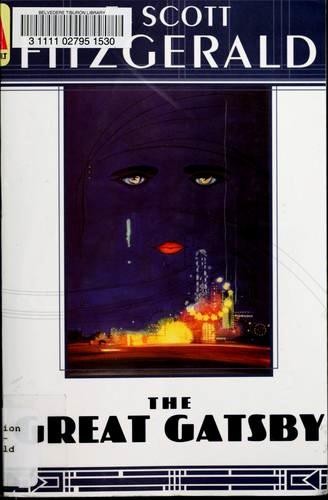
Fitzgerald’s 1925 novel is short enough to finish in a sitting and dense enough to reread for the rest of a life. Nick Carraway watches Jay Gatsby try to recover a lost love through money, spectacle, and a version of the past that will not hold. The parties are bright. The book is about waste: of time, of feeling, of a country’s favorite story about self-invention.
The Scribner text is the widely circulated authorized edition. Because the novel is taught so often, some readers arrive already tired of it. Coming to it as an adult, without the worksheet, usually restores the shock of how cold and beautiful the sentences are. It belongs here as a compact warning about desire that cannot tell the difference between a person and a dream.
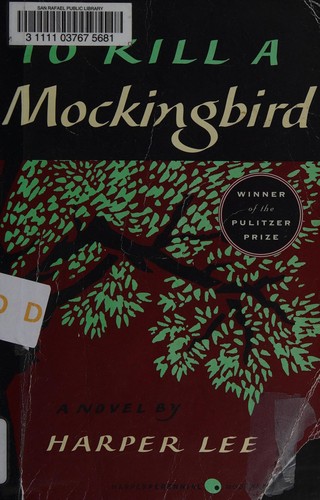
To Kill a Mockingbird
Harper Lee’s 1960 novel, which won the Pulitzer Prize the following year, is told through Scout Finch in a small Alabama town as a criminal case exposes the racial order everyone already knows. The book is often remembered for Atticus Finch’s courtroom stance. The lasting power is the child’s-eye view of how a community teaches belonging, fear, and the difference between manners and justice.
It remains one of the most widely read American novels, which means it also attracts fair criticism: about sentiment, about whose pain is centered, about the limits of a white child’s narration. Those arguments are part of why it still belongs on a lifetime list. Read it as a book about watching adults fail and sometimes refuse to fail, not as a finished answer to American racism.
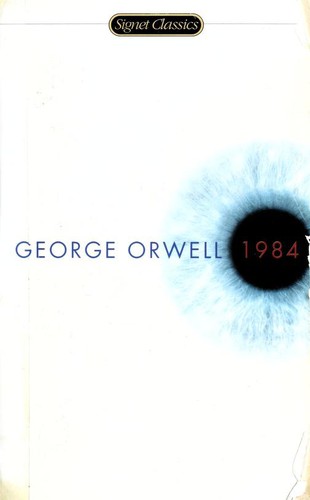
1984
Orwell published Nineteen Eighty-Four in 1949. Winston Smith works inside a state that rewrites the past, polices private thought, and treats language as a tool for shrinking what a person can even name. The novel’s slogans have been worn smooth by politics. The book itself is still a study of how power gets inside ordinary days: work, love, memory, the diary you think no one will find.
The Signet mass-market text is one of the most common English editions. Readers sometimes arrive expecting a thriller and meet a colder, more procedural nightmare. That is the point. 1984 belongs on a before-you-die list not because every government is Oceania, but because the novel trains attention on propaganda, surveillance, and the moment a person starts repeating a lie in order to stay safe.

Things Fall Apart
- Series
- The African Trilogy
Achebe’s 1958 debut follows Okonkwo, a driven Igbo leader in a late-nineteenth-century community that has its own law, art, and fault lines long before British colonial power arrives. The first movement is a portrait of a world from the inside. The second is what happens when that world is interrupted and misread by missionaries, courts, and a story told in someone else’s language.
The novel is short, plainspoken, and structurally exact. It is often assigned in schools, which can hide how carefully Achebe refuses the older European habit of treating African life as backdrop. Things Fall Apart belongs on this list because a lifetime of reading that never leaves London, Paris, and New York is an incomplete education. It is also the start of Achebe’s African Trilogy, though it stands cleanly on its own.
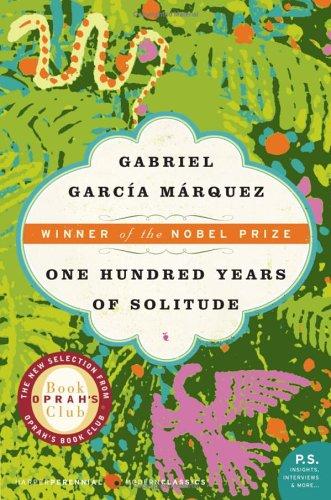
One Hundred Years of Solitude
García Márquez published Cien años de soledad in 1967; Gregory Rabassa’s English translation is the standard path into Macondo. The novel follows generations of the Buendía family through love, war, invention, and forgetting. Strange events arrive without drumroll. The effect is not decoration. Time loops, names repeat, and a town’s memory becomes as fragile as any character.
Readers who want a single hero and a clean timeline can feel lost. A family tree in the front of many editions helps. The book is on lifetime lists because it changed what a novel could sound like in the late twentieth century and because it treats solitude as a family inheritance, not only a mood. It is the most lavish reading experience on this list and the one that most rewards patience.
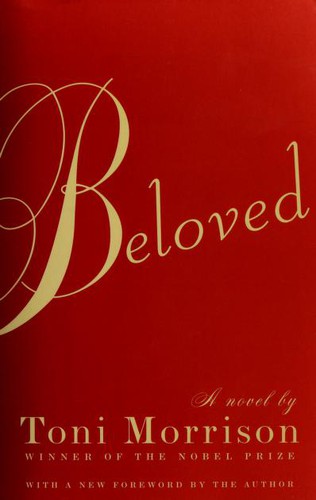
Beloved
Morrison’s 1987 novel, which won the Pulitzer Prize, begins after the Civil War with Sethe, a woman who escaped enslavement and still cannot call herself free. A house in Ohio holds a presence tied to a child and to a choice made under terror. The novel moves in circles of memory rather than a straight line, because that is how the past arrives for people who were not allowed a safe present.
Beloved is the most demanding book on this list in subject, and sometimes in method. Sentences can turn lyrical without warning. The history is specific, not metaphorical. It belongs among books to read before you die because American literature without it is thinner, and because Morrison insists that the dead and the living keep claims on one another. Set aside time. This is not a book to squeeze between errands.
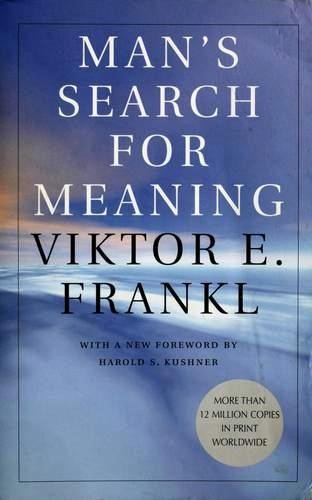
Man's Search for Meaning
Frankl’s book, first published in German in 1946 and later expanded, is the only work of nonfiction on this list. The first part is a psychiatrist’s account of imprisonment in Nazi camps, including Auschwitz. The second outlines logotherapy, his argument that the primary human drive is not pleasure or power but a reason to continue. The Library of Congress has long listed it among books American readers named as life-changing.
It is short, direct, and easy to misread as comfort literature. Frankl does not claim suffering is noble. He claims that even when circumstance strips almost every choice, a person may still choose an attitude and a task. Readers looking for a novel’s architecture will not find it. Readers asking what a book is for, near the end of a life or in the middle of one, often keep this title within reach.
How to choose among these twelve
If you want a book you can finish this week, start with The Great Gatsby, Things Fall Apart, or Man’s Search for Meaning. If you want social intelligence and sentences that still snap, start with Pride and Prejudice. If you want the oldest pattern of getting home against the odds, start with The Odyssey in a modern verse translation.
Save Don Quixote, Crime and Punishment, One Hundred Years of Solitude, and Beloved for stretches when you can read slowly. They reward continuity. 1984 and Frankenstein are the sharpest warnings about systems and makers. To Kill a Mockingbird is the book many readers already think they know; returning to it as an adult is often the real first reading. None of these twelve is mandatory. Each one has a distinct job.
Frequently asked questions
Is there one official list of books to read before you die?
No. Publishers, newspapers, and readers keep making different lists. The overlap is real—Austen, Orwell, Morrison, Homer, and a handful of others return constantly—but any set of twelve is a judgment, not a law.
Should I read these in a set order?
Not unless you want a historical path from epic to testimony. A better method is to match stamina and subject. Alternate a short book with a long one, and do not save every heavy title for last.
Which of these is the hardest to finish?
Don Quixote is the longest and most episodic. Crime and Punishment is emotionally relentless. One Hundred Years of Solitude asks you to track repeating names. Beloved is the most painful in content and the least linear. Difficulty here is not the same as quality.
Do translations matter for Homer, Cervantes, Dostoevsky, and García Márquez?
Yes. A weak translation can make a living book feel dusty. Fagles for The Odyssey, Grossman for Don Quixote, Pevear and Volokhonsky for Crime and Punishment, and Rabassa for One Hundred Years of Solitude are widely recommended starting points.
Why include a Holocaust memoir on a list of mostly novels?
Because the keyword is about a life, not a syllabus. Frankl’s book is short, widely cited as life-changing, and aimed directly at the question implied by “before you die”: what remains worth doing when time and control are limited.
Twelve books will not complete an education, and they should not flatten your taste into a checklist. They can, however, give a finite reading life a stronger center: homecoming, self-knowledge, guilt, justice, power, memory, and meaning. Pick one that fits the week you actually have, then let the next title argue with the last.
Sources and further reading
- Penguin Random House
- 100 Books to Read Before You Die
- Reedsy Discovery
- Pan Macmillan
- r/suggestmeabook
- r/booksuggestions
- Penguin Classics / Penguin Random House
- Ecco / HarperCollins listings
- Penguin Classics
- Penguin Classics
- Vintage / Penguin Random House
- Scribner
- Harper Perennial
- Signet Classics listings
- Anchor / Penguin Random House
- Harper Perennial
- Vintage
- Beacon Press