This article contains book titles and retailer search queries for reader convenience. If a site later adds affiliate links, purchases may earn a commission at no extra cost to you.
Fall is when publishing puts its heaviest titles on the table and readers start looking for books that match shorter days, colder evenings, and a sharper appetite for story. The keyword 15 fall books to read points to a list, not a single review: people want a mix of new hardcover releases and books that already feel like the season.
This list keeps that split in view. Eleven titles are 2026 fall books now appearing on major preview lists. Four are perennial autumn rereads that keep showing up when readers ask for foliage, candlelight, campus gloom, or a carnival at the edge of town. Every entry was checked against publisher pages, Kirkus, and bibliographic records. Descriptions stay spoiler-free.
What readers mean by fall books
Searchers use fall books in two ways. One group wants the season’s new releases: the September-to-November hardcovers that dominate awards chatter and bookstore tables. The other wants atmosphere. On reading forums, that usually means New England campuses, harvest light, witches, dark carnivals, small-town unease, and books that reward a blanket and a long evening.
Those two desires overlap more than they clash. A new Min Jin Lee novel belongs here because fall is when literary events land. The Secret History belongs here because Vermont foliage and a closed circle of students still define the seasonal mood for a large share of readers. The list below treats both kinds of request as legitimate and keeps the count at exactly 15.
15 fall books to read now
American Hagwon
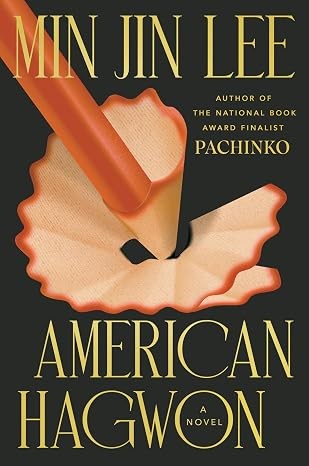
Min Jin Lee’s first novel since Pachinko follows the Koh family after a betrayal and the 1997 Asian financial crisis push them from Seoul toward Sydney and then Southern California. The title points at hagwon culture: the private academies that concentrate Korean hopes about education, status, and a safer future for the next generation.
This is a fall book because it is built for the long-read season. Kirkus places the story across 1992 to 2007 and calls the hardcover more than 650 pages. The scale is the point. Lee writes family life as a sequence of practical decisions that become moral ones: where to live, what to sacrifice, how much pressure a child can carry.
Readers who want pumpkin-spice coziness should look elsewhere on this list. American Hagwon earns its place as the season’s major literary event, a diaspora novel about ambition that does not pretend education is a simple good.
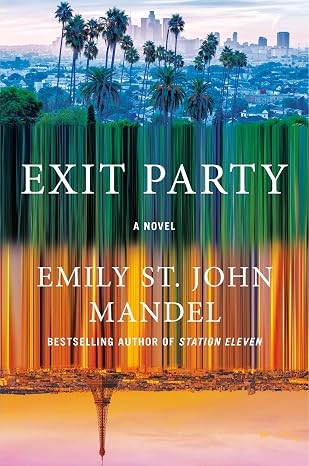
Exit Party
Emily St. John Mandel’s new novel opens in Los Angeles in 2031, after civil war has fractured the United States and a curfew in the Republic of California has just been lifted. Ari Waker goes to a party. The host vanishes. Other guests appear doubled. The night does not stay in one timeline.
Knopf dates the U.S. hardcover to September 15, 2026. The book is shorter than American Hagwon, about 320 pages, and closer to Sea of Tranquility than to a conventional dystopia. Mandel uses collapse as weather, then spends her energy on art, surveillance, doubles, and the aftertaste of a single unexplained evening.
Fall previews keep grouping Exit Party with the year’s prestige fiction because it is both a puzzle and a mood. It suits readers who want speculative structure without a military-campaign plot, and it will frustrate anyone looking for a closed mystery with one answer.
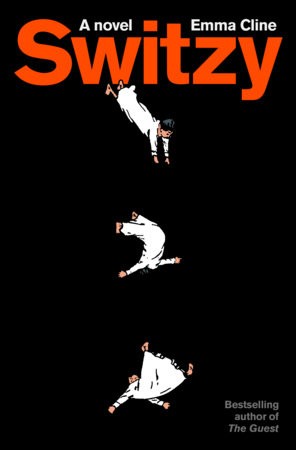
Switzy
Emma Cline leaves the restless young women of The Girls and The Guest for David Hastings, a retired executive flying toward a Swiss clinic with his assistant, Cody. Memory is already slipping. The itinerary includes a stop with his daughter and a last look at an old friendship before a planned death.
Random House published the U.S. edition on September 8, 2026. The novel has been longlisted for the Booker Prize. Cline’s sentences stay close to a mind that cannot be trusted and will not admit how much help it needs. The title itself is a private mangling of Switzerland, which tells you how the book hears language under strain.
This is autumn reading of a colder kind: short days, last visits, the pressure of a date that will not move. It is a poor match for anyone wanting escape, and a strong match for readers who like controlled literary dread without a conventional thriller twist.
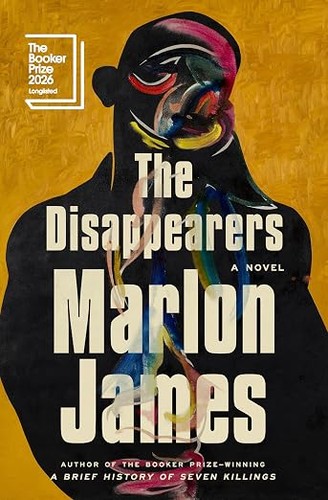
The Disappearers
Marlon James returns to Jamaica after his Dark Star fantasy novels with a 640-page book about eight gay men attacked during a 1988 Kingston rehearsal. One man is murdered. The rest live with injury, silence, rumor, and the long work of staying visible in a place that wants them gone.
Riverhead published the U.S. edition on September 1, 2026. The novel was longlisted for the 2026 Booker Prize. James writes the aftermath as both crime story and group portrait: some men look for payback, some vanish, some try to pretend the night can be folded away.
It belongs on a fall list because it is one of the season’s major literary events, not because it is cozy. Readers should know the book is long, polyphonic, and explicit about homophobic violence. Those who want a gentle seasonal romance should skip to later entries.

Taipei Story
R.F. Kuang’s seventh novel is not another Babel or Yellowface. Lily, a Yale freshman born in China and raised in the United States, spends a summer in a Taipei language program hoping to recover Mandarin and a version of home that will sit still long enough to be questioned.
William Morrow dates the hardcover to September 8, 2026. Publisher Weekly’s review sketches a coming-of-age plot built from classroom humiliation, a rumor after an awkward encounter, and a grandfather’s death that closes the chance to ask the questions Lily kept postponing. Kuang has said the book grew from a 2023 language-school stay and from grief.
On a fall syllabus this functions as the campus-adjacent title that is not dark academia. It is shorter than Lee or James, more comic on the surface, and more interested in mistranslation than in magic systems. Fantasy readers who only know Kuang from The Poppy War should adjust expectations.
Partita
Barbara Kingsolver’s first novel since Demon Copperhead centers on Livia, a gifted pianist from rural Tennessee whose career ends and whose later life as a farmer’s wife and local teacher still answers to music she did not get to keep. A call from the past reopens the split between the life she trained for and the life she has.
Harper scheduled the U.S. publication for October 6, 2026. Kirkus describes a dual timeline around a brother’s suicide, a damaged hand, and the work of making separate movements feel like one piece, which is what a partita is. Kingsolver is writing about class, art, and whether beauty is only for people who leave town.
This is a fall novel in the older sense: harvest country, midlife inventory, a serious hardcover from a writer whose audience treats October as reading weather. It will feel slow to anyone chasing plot twists and generous to readers who want craft and place more than spectacle.
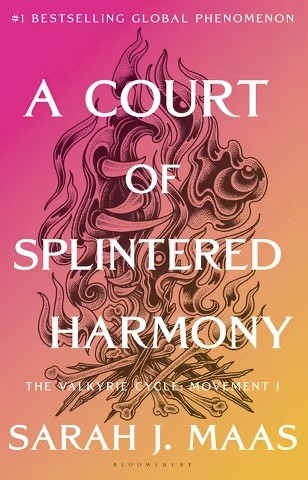
A Court of Splintered Harmony
- Series
- A Court of Thorns and Roses
The sixth ACOTAR novel begins what Maas is calling the Valkyrie Cycle. After the Hybern War, Koschei the Deathless stirs at his mountain lake and old claims on human lands start to move again. The Night Court has to rebuild alliances that the last war did not leave intact.
Bloomsbury’s U.S. hardcover is listed for October 27, 2026, with ISBN 9781639739134. Maas has framed this book as Movement I of a longer continuous story; A Court of Forgotten Melody follows in January 2027. New readers cannot start here. The series is romantasy with established couples, political courts, and a villain who has been waiting in the wings.
It is on this list because fall 2026 previews treat it as one of the season’s commercial engines. Community conversation around Maas often splits between devotion to the world and fatigue with wait times and series bloat. Both reactions are reasonable. This is the entry for readers who already live in Prythian.
Dead Beat
- Series
- Ninth House
Dead Beat closes the Ninth House trilogy. Alex Stern has been to hell and left the door ajar. Demons move through New Haven and Yale. Lethe House is compromised. Darlington is back in a body that is no longer only human, and the people around Alex finally have to work as a unit she has never trusted.
Flatiron dates the hardcover to September 15, 2026, ISBN 9781250884312. This is dark academia with teeth: secret societies, ritual magic, and a campus that looks ivy-covered until you notice what it costs to keep the dead in line. It is not a starting point. Ninth House and Hell Bent come first.
Fall reading culture already treats Yale-after-dark as seasonal furniture. Bardugo’s version is pulpier and more occult than Tartt’s. Readers who want seminars and moral rot without demons should choose The Secret History instead. Readers who want the trilogy’s bill paid should start here only if the first two books are done.
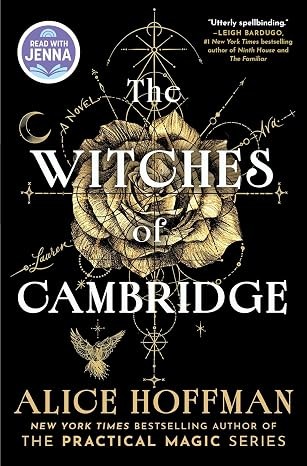
The Witches of Cambridge
Alice Hoffman’s new novel sends two Radcliffe students, Ava and Lauren, into the Lilith Society, a secret circle of witches in 1950s Cambridge. One young woman already knows her lineage. The other only knows that ordinary campus life does not fit. Girls from the society begin to go missing.
Scribner’s hardcover carries ISBN 9781668074640. Publisher and bookseller pages list an August 11, 2026 on-sale; later coverage treats it as a September book-club title. Either way it is sitting on fall tables. Hoffman is not rewriting Practical Magic so much as moving witchiness into McCarthy-era classrooms and New England history.
Seasonal readers keep asking for witch books that are atmospheric rather than slasher-loud. This is that lane, with a warning: Hoffman writes wonder and harm in the same register. It is a better October companion than a beach book, and a gentler entry than Bradbury’s carnival.
Music Against the Night
- Series
- The Nocturne Trilogy
Yiyun Li opens a planned Nocturne Trilogy with a historical novel about two musicians: John Field, the Irish pianist-composer pushed toward prodigy status, and Adelaide Percheron, whose hunger for music carries her from French India toward Paris and Moscow. Their paths meet in a marriage that will not be simple.
Farrar, Straus and Giroux lists the U.S. hardcover for October 13, 2026, ISBN 9780374613051. Publishers Weekly describes a book about the cost of genius to families and to the artists who are afraid of being forgotten. Li is inventing from real nineteenth-century figures rather than writing a documentary.
Fall is full of music novels this year; Kingsolver’s Partita is the American rural counterpart. Li’s book is wider geographically and more interested in apprenticeship, exile, and the night-piece form Field helped make famous. It is for readers who like biographical fiction with psychological pressure, not for readers hunting a fast plot.
Peck & Peck
Bonnie Garmus follows Lessons in Chemistry with Batter Gray, a young man in early-1980s New York who loves poetry enough to take a mail-room job at Peck & Peck, a famous and badly run journal staffed by dozens of editors with sharp elbows. He wants a life that looks nothing like doctor-lawyer-broker, and the institution makes that wish expensive.
Scribner’s hardcover ISBN is 9781668251065. Trade listings place publication in October 2026. Publishers Weekly flags workplace farce, a moldy basement, and Batter’s talent for landing in trouble while still taking poems seriously. Garmus is again writing about people who believe a calling is worth the ridicule.
On a fall list this is the lighter literary option: New York rooms, eccentric colleagues, language as a job. It will not scratch a horror itch. It will suit readers who want warmth and institutional satire after denser books earlier on this list.

The Secret History
Donna Tartt’s 1992 debut remains the book people name when they want fall to look like a New England campus in full color and feel like a closed room. Richard Papen joins a tiny classics circle under a magnetic professor. The group wants a life apart from ordinary students. That wish has a body count, which Tartt announces early enough that naming it is premise, not spoiler.
The standard Vintage paperback is ISBN 9781400031702. The novel is long, cold, and more interested in beauty, class anxiety, and self-invention than in police procedure. Seasonal lists and forum threads still treat its Vermont setting as shorthand for dark academia.
It is here to represent the reread half of 15 fall books to read. New 2026 titles can disappear in a year. This one keeps getting pulled off shelves when the leaves turn. Readers who dislike slow dread, campus privilege, or morally rotten narrators will not be converted by foliage.
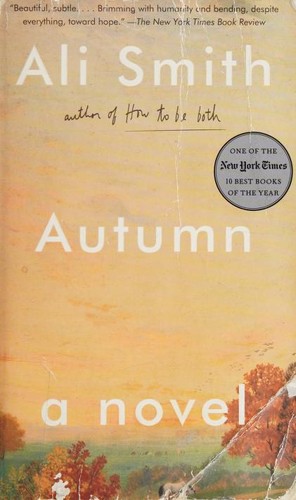
Autumn
- Series
- Seasonal Quartet
Ali Smith’s Autumn is the rare novel that is actually about the season in its title. Elisabeth Demand and her much older friend Daniel Gluck move through art, memory, and a country arguing with itself after a once-in-a-generation vote. Daniel is very old. Elisabeth keeps showing up. The book thinks in fragments the way early fall light changes in an afternoon.
The widely available Vintage paperback uses ISBN 9781101969946. Autumn was a 2017 Booker finalist and the first of four standalone seasonal novels. You do not need the later volumes to read this one. Smith is playful on the sentence level and serious about how public meanness seeps into private life.
If the rest of this list is furniture for October, Autumn is the one that tries to describe the season as a way of thinking: leftover warmth, sudden cold, things not yet finished. It is short enough to finish in a weekend and unusual enough that plot-first readers may bounce off it.
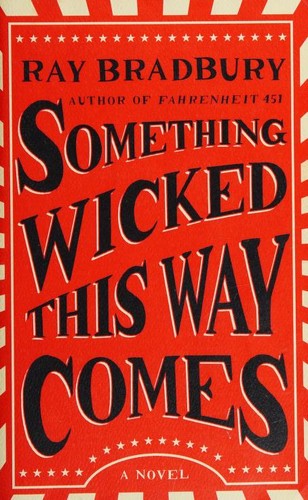
Something Wicked This Way Comes
- Series
- Greentown
Ray Bradbury’s 1962 novel still does more Halloween work than most books published to land on an October table. Two boys in a Midwestern town watch a carnival arrive and discover that its bargains are aimed at the exact wishes people should not speak aloud. The prose is theatrical on purpose. October is not backdrop. It is the engine.
The current Simon & Schuster trade paperback uses ISBN 9781501167713. The book sits as the middle volume of Bradbury’s Greentown sequence after Dandelion Wine, but it can be read alone. Community lists reach for it whenever someone asks for autumn that is spooky without becoming torture horror.
Compared with Hoffman, Bradbury is more carnival than coven. Compared with Bardugo, he is lyrical rather than procedural. The limitation is real: midcentury gender roles and a boy-centered point of view will feel dated to some readers. The strength is atmosphere that later seasonal lists keep failing to replace.
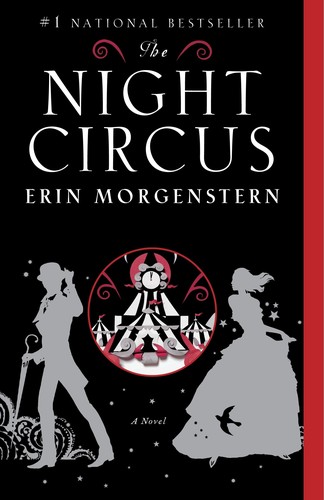
The Night Circus
Erin Morgenstern’s 2011 novel remains the fall fantasy people recommend when they want magic that looks like black-and-white tents against a cold sky. Le Cirque des Rêves appears without warning and opens only at night. Behind the spectacle, Celia and Marco have been trained for a contest their teachers designed and they did not choose.
The standard Anchor paperback is ISBN 9780307744432. The book is often tagged as romance because the central pair fall in love inside a game that is supposed to leave one standing. The better description is atmospheric fantasy with a love story welded to a clockwork plot. Readers still argue about whether the ending pays the buildup. That argument is part of why the book stays in circulation.
It closes this list as the sensory opposite of Switzy or The Disappearers: velvet, spice, night air, set pieces. If you want political family saga, start with Lee. If you want a book that feels like walking a fairground after dark, this is the one.
How to choose among these 15
If you want the 2026 conversation novels, start with American Hagwon, The Disappearers, Switzy, or Exit Party. If you want series payoffs, only A Court of Splintered Harmony and Dead Beat require homework. Taipei Story and Peck & Peck are the more approachable new hardcovers.
If you want the season as a feeling rather than a publication date, read Autumn, The Secret History, Something Wicked This Way Comes, The Night Circus, or The Witches of Cambridge. Kingsolver and Li share a music motif but not a temperature: Partita is Appalachian and present-tense in spirit, Music Against the Night is historical and itinerant. Match the book to the evening you actually have, not to a generic idea of fall.
Frequently asked questions
Do fall books have to be set in autumn?
No. Many searches for fall books mean new September-to-November releases. Others mean atmosphere: campuses, harvest light, witches, carnivals, or quieter literary novels that suit long evenings. This list includes both.
Which of these 15 can I read without prior books?
Most of them. The exceptions are A Court of Splintered Harmony, which is ACOTAR book six, and Dead Beat, which closes the Ninth House trilogy. Autumn is first in a quartet but stands alone. Music Against the Night is billed as the first Nocturne book.
What if I want cozy rather than heavy?
Peck & Peck, The Night Circus, The Witches of Cambridge, and Ali Smith’s Autumn are the gentler or more atmospheric options. The Disappearers, Switzy, and Dead Beat are not cozy, even though they are fall releases.
Why include older books on a current fall list?
Forum threads about books that feel like fall still return to Tartt, Bradbury, Morgenstern, and Smith. A list made only of 2026 hardcovers would ignore a large share of the search intent behind 15 fall books to read.
When do most fall books come out?
In U.S. trade publishing, the dense stretch runs from early September through November. Several titles here land in that window. The Witches of Cambridge arrived in late summer and is still being read as a fall book-club title.
Fifteen is enough to cover the season without pretending one mood fits every reader. Use the 2026 novels for what is actually new on the table. Use the older four when you want October to happen on the page. Then stop adding books until one of these is finished.