This article contains affiliate links. If you buy through them, we may earn a commission at no extra cost to you.
People searching for 15 books to read for self improvement are rarely looking for a random stack of motivational titles. They want a short, mixed reading list that covers habits, mindset, focus, relationships, money and meaning, without pretending every bestseller is equally useful.
The titles below come from long-running recommendations on publisher lists, library demand and reader discussions. The set is deliberately varied. Some books are systems manuals. Others are philosophy, memoir or research. That mix matters, because a habit book will not solve a meaning problem, and a mindset book will not protect your attention by itself.
What self-improvement reading can and cannot do
Self-improvement books work best as tools for a specific bottleneck: inconsistent routines, scattered attention, fragile confidence, money anxiety or strained relationships. Readers who treat them as interchangeable often finish a book feeling inspired and then change nothing. Communities that discuss these titles keep returning to the same gap: insight is cheap, practice is not.
A useful list also has limits. Several popular books recycle the same advice at greater length. A few classics use dated examples or contested psychology. The fifteen titles here were chosen because each one still answers a distinct question, and because readers regularly name them when they talk about books that changed how they act, not only how they feel.
15 books to read for self improvement
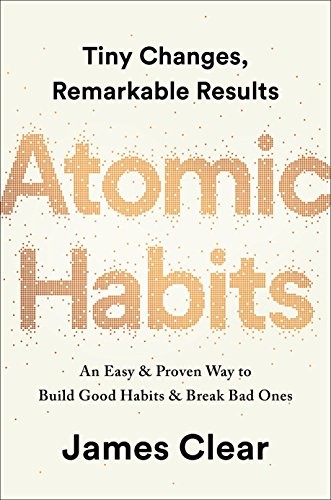
Atomic Habits: An Easy & Proven Way to Build Good Habits & Break Bad Ones
This is the most common starting point for people who want behavior change rather than a pep talk. Clear’s argument is that results follow systems, and that systems are built from small, repeatable actions tied to identity. The book is useful because it turns vague goals into design problems: make the cue obvious, the action easy, the reward satisfying and the environment hard to fight.
Readers praise the 2-minute rule and habit stacking because those tactics lower the cost of starting. The recurring complaint is that the core ideas could fit a long essay, and that the famous 1 percent compounding line is cleaner math than real skill growth. It still belongs here as the clearest modern habit manual, provided the reader picks one or two habits instead of tracking everything at once.
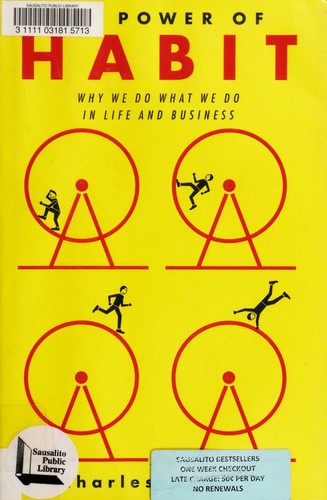
The Power of Habit: Why We Do What We Do in Life and Business
Duhigg’s book is the reporting-heavy counterpart to Atomic Habits. It explains the cue-routine-reward loop through cases from hospitals, sports teams, companies and social movements. That narrative style helps readers see habits as patterns with a replaceable middle, not as moral failures.
It belongs on this list because many people understand their loops better after seeing them in other lives first. Compared with Clear, Duhigg is stronger on diagnosis and weaker on a personal playbook. Some later readers find the corporate chapters less transferable than the personal ones. Use this book to map a single stubborn routine, then pair it with a more tactical guide if you need daily instructions.
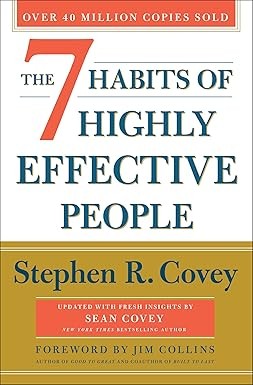
The 7 Habits of Highly Effective People
First published in 1989, Covey’s book is still one of the few self-improvement titles that tries to build character before technique. The seven habits move from personal responsibility to working with other people, then to renewal. The 30th-anniversary edition keeps the original framework and adds later commentary from Sean Covey.
Its value is structural. Begin with the end in mind and put first things first give readers a way to plan a week around principles instead of inboxes. The limitation is tone and length: the prose can feel corporate and the examples dated. Readers who want a quick hack list often bounce off it. Readers who need a values-based operating system still find it more durable than trend-driven productivity books.

Mindset: The New Psychology of Success
Dweck’s research-based book popularized the difference between a fixed mindset and a growth mindset: the belief that ability is a static trait versus a quality that can be developed through effort, strategy and feedback. Later editions address a problem the first wave created, which Dweck calls a false growth mindset, praise for effort that ignores actual learning.
It earns a place here because so many self-improvement plans collapse when a first attempt fails. The book is strongest for students, coaches, managers and parents who shape other people’s effort. It is weaker as a solo how-to manual; some readers want more exercises and fewer classroom examples. Treat it as a lens for interpreting setbacks, not as a complete change program.
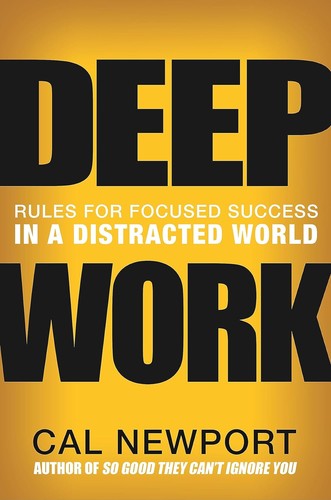
Deep Work: Rules for Focused Success in a Distracted World
Newport argues that the ability to concentrate on cognitively hard work is both rare and valuable. The first half makes the economic and personal case for depth. The second half offers four rules: work deeply, embrace boredom, quit social media and drain shallow work. Official author and publisher pages list the 2016 Grand Central hardcover under this ISBN.
This book belongs on a self-improvement list because attention is the constraint behind many habit and career problems. Readers who work in knowledge jobs often say it named a problem they already felt. The common limitation is rigidity. Quitting social platforms or blocking long daily focus sessions is easier in some jobs than others. Use the scheduling ideas even if you reject the more absolute rules.
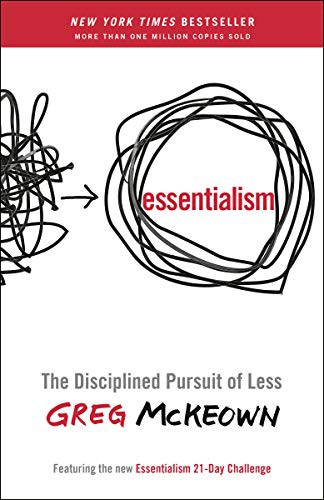
Essentialism: The Disciplined Pursuit of Less
McKeown’s book is not about doing more in less time. It is about choosing a few high-contribution activities and cutting the rest. The structure is explore, eliminate and execute. Later paperback printings add a short challenge for practicing the method. Publisher listings from Crown and Penguin Random House confirm the widely circulated 978-0804137409 paperback.
It complements Deep Work and Atomic Habits by attacking overload at the level of commitments rather than minutes. Readers stretched across work, family and side projects often find the permission to decline more useful than another productivity system. The tradeoff is repetition. Some chapters restate the same filter. The book is a better fit for people with too many options than for people with too few resources.
How to Win Friends and Influence People
Carnegie’s 1936 classic remains one of the most borrowed self-improvement books in public libraries because it treats social skill as a trainable craft. The advice is simple: become interested in other people, avoid cheap criticism, remember names and argue less. Simon & Schuster’s 2022 edition, supervised by Donna Dale Carnegie, restores material from the original text while updating language for current readers.
It belongs here because many personal-development plans ignore other people. Careers, friendships and family life all improve when someone can listen without immediately correcting. The limitation is obvious to modern readers: some anecdotes feel old, and charm can be misused. The book works when the interest is genuine. It fails when it is treated as a script for manipulation.
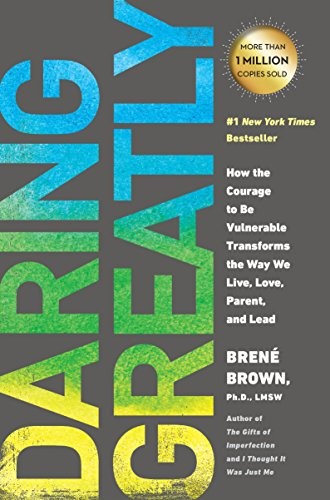
Daring Greatly: How the Courage to Be Vulnerable Transforms the Way We Live, Love, Parent, and Lead
Brown’s research on shame and vulnerability argues that the willingness to be seen is a condition of courage, not a weakness to hide. The book applies that claim to work, parenting and relationships. The widely available Avery paperback uses ISBN 978-1592408412; the original 2012 hardcover is 978-1592407330.
This title fills a gap the habit and productivity books leave open. People can build routines and still stall because they fear looking imperfect. Readers often say Brown gives language for patterns they already live with. Some find the research-plus-personal-story style repetitive if they have already read The Gifts of Imperfection. It is a better fit for emotional courage than for tactical time management.
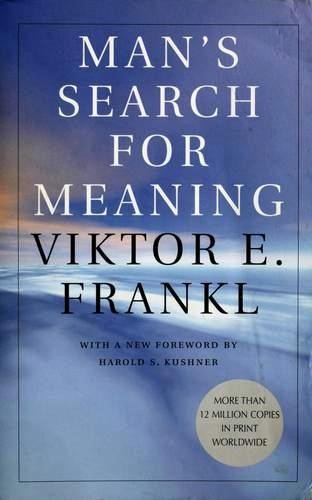
Man's Search for Meaning
Frankl’s book is part Holocaust memoir and part introduction to logotherapy, the idea that people can endure hardship when they can find a purpose in it. The 2006 Beacon Press paperback with a foreword by Harold S. Kushner is the standard English edition most readers buy. It is short, severe and unusually durable on lists of books that changed lives.
It is included because self-improvement that only chases comfort collapses under real difficulty. Readers often say this book recalibrates what counts as a problem. It is not a habit guide and should not be sold as one. The camp chapters are harrowing, and the psychological second half is more formal than modern self-help. Approach it as a book about responsibility and meaning, not as a productivity text.

Meditations
Meditations is a Roman emperor’s private notebook, not a book written for an audience. The entries return to a few Stoic practices: control what you can, accept what you cannot, examine your impressions and do the next just act. Gregory Hays’s Modern Library translation is the edition many contemporary readers recommend for plain English. The paperback ISBN is 978-0812968255; the hardcover is 978-0679642602.
It belongs on this list because it trains temperament rather than tactics. People use it as a morning or night reread, not as a system to finish once. The limitation is structure. There is no plot and no workbook. Some translations feel stiff. Hays is the practical choice for most first-time readers who want Stoicism without a modern intermediary book.
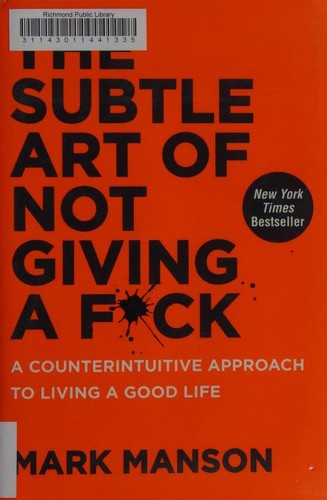
The Subtle Art of Not Giving a F*ck: A Counterintuitive Approach to Living a Good Life
Manson’s 2016 book is a blunt argument against endless positivity. The useful claim is not that nothing matters. It is that attention is limited, so people should choose a smaller set of values and accept the pain that comes with them. HarperOne published the hardcover under 978-0062457714.
It is on this list because many readers arrive at self-improvement exhausted by comparison and self-esteem slogans. The voice is casual and profane, which either makes the ideas stick or becomes the whole point. Critics call it a blog post with attitude. That is fair as a style note and incomplete as a verdict. The book is a corrective, not a complete life system, and it works best after a more constructive habit book, not instead of one.
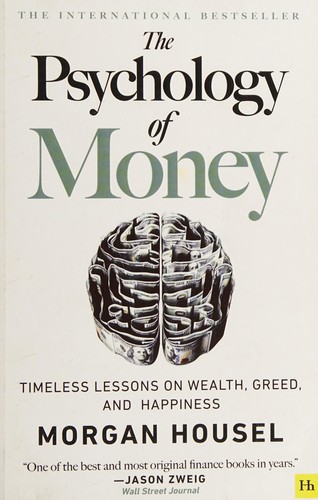
The Psychology of Money: Timeless Lessons on Wealth, Greed, and Happiness
Housel’s book treats money as behavior under uncertainty, not as a set of formulas. Nineteen short chapters cover luck, compounding, enough, savings rate and the difference between being rich and looking rich. Harriman House published the standard 2020 paperback under 978-0857197689.
Money anxiety is one of the most common self-improvement problems, and this is the rare finance book that belongs on a general list. It will not teach stock picking. It will challenge the idea that more information automatically produces better financial decisions. Readers who want spreadsheets should pair it with a practical budgeting guide. Readers who keep sabotaging good plans with comparison or lifestyle creep will get more from this than from another tactics manual.

The Four Agreements: A Practical Guide to Personal Freedom
- Series
- A Toltec Wisdom Book
Ruiz presents four rules of conduct drawn from his account of Toltec wisdom: be impeccable with your word, do not take anything personally, do not make assumptions and always do your best. Amber-Allen’s trade paperback, ISBN 978-1878424310, is the long-running edition most stores stock. The book is short and aphoristic.
It earns a place because interpersonal friction and self-talk derail more improvement plans than a lack of morning routines. The agreements are easy to remember and immediately testable in a tense conversation. The limitation is evidence and texture. Readers who want psychology studies or detailed practice plans may find it thin or spiritually framed. It works as a compact code of conduct, not as a complete theory of the self.
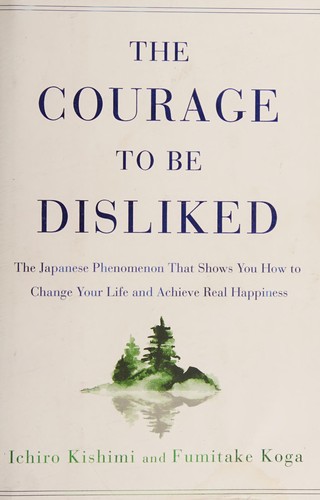
The Courage to Be Disliked: The Japanese Phenomenon That Shows You How to Change Your Life and Achieve Real Happiness
- Series
- Courage To
Written as a dialogue between a philosopher and a young man, this book popularizes Adlerian ideas: people are not imprisoned by their past, interpersonal problems sit under many personal problems, and freedom includes the willingness to be disliked. The 2018 Atria hardcover ISBN is 978-1501197277. Later trade paperbacks use other ISBNs from the same publisher family.
It is here because people-pleasing is a major self-improvement complaint, and the separation-of-tasks idea gives readers a clean way to stop carrying other people’s opinions. The format is polarizing. Some readers find the dialogue sticky; others find the young man grating and the arguments one-sided. Its claims about trauma are contested and can feel dismissive. Use it as a philosophy of agency, not as clinical advice.
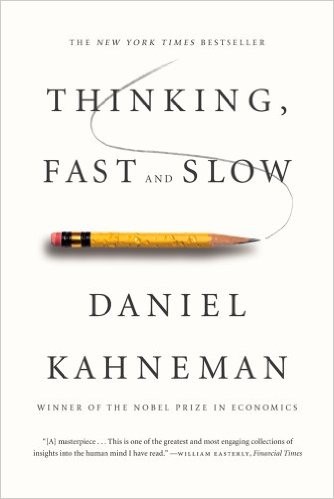
Thinking, Fast and Slow
Kahneman, a psychologist and Nobel laureate, describes two modes of thought: a fast, associative System 1 and a slower, effortful System 2. The book shows how those systems produce biases in judgment, overconfidence and forecasting. The standard Farrar, Straus and Giroux paperback is 978-0374533557.
This is the most demanding title on the list and the one that most improves decision quality. It helps readers notice when intuition is doing work it cannot support. It is not a workbook, and later scrutiny showed that some social-priming studies Kahneman cited did not replicate; he publicly acknowledged that those sections were too confident. His own work with Amos Tversky has held up better. Read it for judgment, not for morning routines, and skip or treat cautiously the priming chapters.
How to choose among these 15 books
Match the book to the bottleneck. If the problem is starting and repeating, begin with Atomic Habits or The Power of Habit. If the problem is scattered attention or too many commitments, use Deep Work or Essentialism. If the problem is other people, start with Carnegie, Brown or Ruiz. If the problem is meaning, temperament or judgment, start with Frankl, Marcus Aurelius or Kahneman.
Do not read all fifteen in a row. One applied book beats five unfinished ones. A practical pattern used by many readers is one systems book, one people book and one meaning book in a year. Skip titles that depend on a tone you already dislike. A blunt book will not help a reader who needs warmth, and a spiritual book will not help a reader who only wants a checklist.
Frequently asked questions
Which of these 15 books to read for self improvement should a beginner start with?
Start with Atomic Habits if you want a method you can use this week. Start with How to Win Friends and Influence People if your main friction is other people. Start with Man’s Search for Meaning or Meditations if you want perspective before tactics.
Is Atomic Habits better than The Power of Habit?
They do different jobs. Duhigg is stronger on how habits form and why they persist. Clear is stronger on personal tactics such as stacking, environment design and making a habit tiny enough to start. Many readers use Duhigg to understand a loop and Clear to change it.
Do self-improvement books actually work?
They work when a reader applies one idea long enough to test it. They fail when they are collected as motivation. Reader discussions keep returning to the same point: the useful books are the ones that change a schedule, a conversation or a decision rule, not the ones that only change mood for a weekend.
Are classic self-help books too dated?
Some examples in Carnegie and Covey feel old. The underlying claims about attention, character, speech and reciprocity are still usable. Read those books for principles and discard any anecdote that no longer maps onto your life.
How many self-improvement books should someone read at once?
One primary book is enough. A second title can sit nearby if it serves a different job, such as pairing a habit book with a short philosophy text. Parallel how-to books tend to cancel each other because they compete for the same morning.
A good self-improvement reading list is a toolkit, not a personality. These fifteen books cover the jobs people actually hire this genre to do: build a practice, protect attention, deal with other people, handle money and keep a sense of purpose. Pick the title that matches the problem in front of you, apply one idea for a month, and only then decide whether another book is required.
Sources and further reading
- James Clear / Avery listing for Atomic Habits
- Simon & Schuster / FranklinCovey
- Beacon Press / Penguin Random House
- Cal Newport official book page
- Penguin Random House
- Crown / Penguin Random House
- Simon & Schuster
- Amber-Allen Publishing
- Atria / Simon & Schuster
- Farrar, Straus and Giroux / Macmillan
- Open Library
- r/selfimprovement discussion of durable recommendations
- Forbes self-help roundup
- The Atlantic on Kahneman