This article contains search links to retailers and catalog sites. If you buy through a retailer, that store may pay a commission at no extra cost to you.
“Anime books” usually means light novels: short, illustrated Japanese novels that feed many of the shows people already watch. The twelve titles below are English-licensed series with anime adaptations or the same narrative DNA—isekai resets, school power games, palace mysteries, and travel stories built on banter.
The list is not a ranking. It is a spread of tones so a reader who wants merchant-road romance is not sent to a death-loop isekai by default. Every entry starts at volume one, stays spoiler-free, and notes who it will frustrate as well as who it will satisfy.
What people mean by anime books
In English-language search, “anime books” almost always points to light novels rather than original English fiction that merely “feels like anime.” Light novels are written in a fast, scene-driven style, usually published in short volumes, and often illustrated. Many begin as web novels, then move to print imprints such as Dengeki Bunko, MF Bunko J, or Hero Bunko before an anime studio picks them up.
Readers look these up for two practical reasons. The books often continue past the anime, and they usually give more interior monologue than a 12-episode season can carry. They are not manga. They are prose with occasional art, which means pacing, jokes, and character thought work differently than a comic page. The titles here were chosen because they match that search, have verifiable English editions, and cover distinct corners of the medium instead of twelve near-identical isekai openers.
12 anime books to read
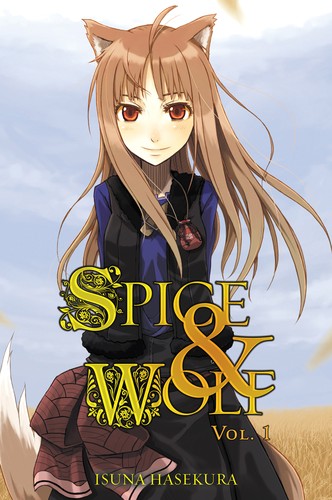
Spice and Wolf, Vol. 1
- Series
- Spice and Wolf
Kraft Lawrence is a traveling merchant with a cart, a horse, and a habit of thinking in prices. His circuit changes when he finds Holo, a harvest goddess in the shape of a young woman with wolf ears and a tail, asleep among his goods. She wants a ride north. He wants an edge in trade. They strike a deal.
The first volume is less about saving a kingdom than about reading a market. Grain, currency, church pressure, and rumor all matter. Holo’s teasing and Lawrence’s caution turn logistics into character work, which is why this series sits apart from sword-first fantasy on most anime-book lists. Readers who want constant combat will bounce off it. Readers who like conversation, travel, and a romance that moves at the speed of a trade route usually stay.
It belongs here because it is one of the clearest examples of an “anime book” that is still first a novel: the pleasure is in how two people talk while money changes hands.
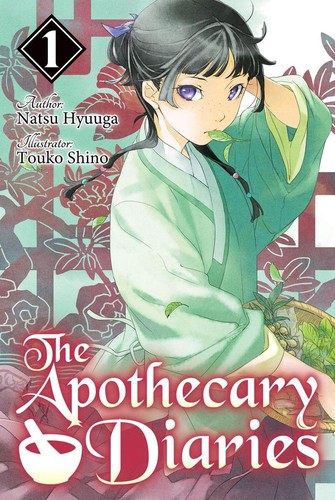
The Apothecary Diaries: Volume 1
- Series
- The Apothecary Diaries
Maomao is an apothecary’s daughter sold into service in an imperial rear palace. She wants a quiet life and a supply of useful plants. What she has instead is a sharp eye for poison, illness, and the small lies people tell when a body starts to fail. The palace’s beautiful head eunuch, Jinshi, notices that skill and puts it to work.
Volume 1 is a court mystery dressed as workplace fiction. Cases arrive through food, medicine, cosmetics, and gossip rather than through a detective’s office. The setting is an East Asian-inspired inner palace with rigid ranks, and the pleasure is watching Maomao refuse to perform gratitude while still solving the problem in front of her. Romance is present as tension, not as the engine.
This is the current mainstream answer to “anime books to read” for people who dislike generic isekai. It is slower than a battle series and denser than a rom-com, which is exactly why palace-mystery readers keep recommending it.

Re:ZERO -Starting Life in Another World-, Vol. 1
- Series
- Re:ZERO -Starting Life in Another World-
Subaru Natsuki is a teenager pulled from a convenience-store run into a fantasy city. He has no sword skill and no grand destiny speech. What he does have is a power that returns him to an earlier point after he dies, with his memories intact. The first volume uses that hook to turn a standard isekai arrival into a problem of information, trust, and cost.
The prose spends more time in Subaru’s head than the anime can. That is the reason to read it even after watching. He is loud, grateful, and often wrong, which makes the reset mechanic feel like a trap instead of a cheat code. The supporting cast is introduced through incomplete first impressions, so the book rewards attention more than skimming.
It earns a place on a twelve-book anime list because it is the opposite of comfort isekai: same doorway, much colder room. Readers who want a light adventure should pick Konosuba or Slime instead.

Konosuba: God's Blessing on This Wonderful World!, Vol. 1
- Series
- Konosuba
Kazuma Sato dies in embarrassing circumstances and is offered a rebirth in a fantasy world under siege. He can take one thing with him. He takes Aqua, the goddess handling his case. That choice sets the series tone immediately: the party is mismatched, broke, and convinced the world owes them a better tutorial.
Volume 1 is a parody that still functions as an adventure. Quests go sideways. Skills are specialized in the least helpful ways. Kazuma’s modern cynicism collides with Aqua’s pride and the rest of the party’s tunnel vision. The jokes are crude more often than clever, which is a real split among readers. People who want sincere heroism find it thin. People who are tired of chosen-one speeches find it a relief.
It is on this list because it is the standard comic counterweight to Re:Zero and Mushoku Tensei. Same genre doorway, opposite attitude.

Toradora! Vol. 1
- Series
- Toradora!
Ryuuji Takasu has a kind temperament and a face that makes strangers assume he is dangerous. Taiga Aisaka is small, wealthy, and feared at school as the Palmtop Tiger. They live next door, sit too close in the same classroom, and immediately collide. Each is interested in someone else. That arrangement becomes the book’s engine.
Unlike the fantasy titles around it, Toradora! is contemporary high-school fiction with almost no speculative furniture. The “anime book” quality comes from timing, interior panic, and character contrast: domestic competence against pride, softness against a short fuse. Volume 1 is complete enough to test the voice, and the full novel series is finite, which makes it a practical first light novel for romance readers.
It belongs here as the non-isekai control case. If someone likes anime rom-coms but not game worlds, this is the cleanest match on the list.

Sword Art Online 1: Aincrad
- Series
- Sword Art Online
In 2022, players log into Sword Art Online, a full-dive VRMMORPG. The logout button does not work. Death in the game means death outside it. Kirito, a solo player who understands the system better than most, has to survive a castle of a hundred floors with tens of thousands of trapped people.
The first English volume covers the Aincrad opening that made the franchise a gateway title. It is lean, game-literal, and focused on rules: how parties form, how information spreads, how a death game changes ordinary social habits. Later arcs in the series shift settings and divide readers. Volume 1 is still the cleanest place to see why the premise traveled so far.
Include it on an anime-book list because it is the reference point other trapped-in-a-game stories answer. Readers who already dislike the anime’s character writing may not be converted. Readers who want the original rule-set and interior strategy usually get more from the novel than from memory of the adaptation.

Classroom of the Elite (Light Novel) Vol. 1
- Series
- Classroom of the Elite
Tokyo Metropolitan Advanced Nurturing High School promises elite futures and unusual freedom. Students spend points. Classes compete. Rank can move. Kiyotaka Ayanokouji arrives in the lowest group, Class D, looking uninterested. Suzune Horikita wants Class A and treats most people as obstacles. The school’s real lesson is not on the syllabus.
Volume 1 is a psychological school story, not a magic academy. The hook is information control: who is pretending, who is spending, and who benefits if a class fails in public. Ayanokouji’s narration is flat on purpose. That can feel cold if you want a warm classmate ensemble. It works if you like watching a closed system punish sloppy social math.
It is here because current sales and adaptations keep sending anime viewers to the novels, and because it offers a no-magic “anime book” that still has the high-concept school frame people expect from the medium.

Ascendance of a Bookworm: Part 1 Volume 1
- Series
- Ascendance of a Bookworm
A book-obsessed young woman dies and wakes as Myne, a frail five-year-old in a poor soldier’s household. The new world has almost no books. Those that exist are luxury objects. Myne’s response is practical and slightly unhinged: if the library does not exist, she will have to invent the supply chain that makes one possible.
Part 1, Volume 1 is domestic isekai. Magic exists later in the larger series, but the opening pleasure is paper, ink, illness, family budgets, and a protagonist whose expertise is bibliographic rather than martial. That makes it a useful contrast to Slime and Mushoku Tensei on the same list. The child-body premise will not work for every reader, even when the tone stays industrious rather than titillating.
It belongs here because it is one of the few widely recommended anime books whose fantasy wish is not power. It is literacy.

Mushoku Tensei: Jobless Reincarnation (Light Novel) Vol. 1
- Series
- Mushoku Tensei: Jobless Reincarnation
A 34-year-old shut-in dies and is reborn as Rudeus Greyrat, an infant in a sword-and-magic world, with his previous memories intact. He treats the new life as a chance to do the work he avoided before: learn, train, and stay connected to other people. Volume 1 covers early childhood through the first stage of that education.
The series is frequently called a foundation text for modern isekai because it follows a whole life rather than a single dungeon loop. Worldbuilding is granular. Magic has study hours. Family is messy. It is also the most contested book on this list. The protagonist keeps adult memories while living in a child’s body, and early volumes include sexual content and assault-related material that many readers reject even when they like the later coming-of-age arc.
It is included because omitting it would misrepresent how English-language anime readers actually talk about isekai. It is not the gentlest starting point, and it should not be handed over as if it were.

86–EIGHTY-SIX, Vol. 1
- Series
- 86–EIGHTY-SIX
The Republic of San Magnolia says its war against the Giadian Empire’s autonomous Legion is clean: drones versus drones. That story is false. Beyond the eighty-five official districts is the Eighty-Sixth Sector, where young people stripped of citizenship pilot the “unmanned” units. Handler Vladilena Milizé speaks to them from a distant command room. On the ground, Shin Nouzen leads a squadron that the Republic has already written out of the human count.
Volume 1 is military science fantasy with a moral argument baked into the setting. Radio conversation does a lot of the character work. The book is blunt about propaganda, race, and disposable soldiers. It is also more solemn than most titles on this list, which is the point of including it. Not every “anime book” is a power fantasy.
Read this if the appeal of anime for you is large-scale pathos and political worldbuilding, not party banter.

That Time I Got Reincarnated as a Slime, Vol. 1
- Series
- That Time I Got Reincarnated as a Slime
Satoru Mikami, a lonely 37-year-old salaryman, is killed and wakes in a fantasy world as a slime. He cannot see in the usual way. He can absorb, analyze, and talk. The first volume follows him as he meets other monsters, names them, and accidentally starts building a community instead of a solo boss run.
Slime is comfort isekai with a management streak. Combat happens, but the distinctive pleasure is nation-founding: skills, diplomacy, and a protagonist whose first instinct is to make the local ecosystem less miserable. Compared with Re:Zero it is gentle. Compared with Bookworm it is broader and more gamelike. The series gets large quickly, so volume 1 is the test for whether you like Rimuru’s easy competence.
It is here because it is one of the most widely adapted and widely finished-feeling entry points for readers who want monster-side fantasy without a grimdark contract.

Overlord, Vol. 1
- Series
- Overlord
Momonga is the last active member of a powerful guild in the dying VR game Yggdrasil. He stays logged in until shutdown and finds the game world still there, with his skeletal sorcerer avatar and a tomb full of NPC servants who now have wills of their own. He takes the guild’s name, Ainz Ooal Gown, and starts mapping a reality that uses his old rules without asking his permission.
Volume 1 is an isekai inversion: the player is not a weak hero climbing a ladder. He is already a final-boss shape dropped into someone else’s world. The book spends time on inventory, NPC loyalty, and the gap between how Ainz sees himself and how everyone else sees an undead king. That gap is the series’ long joke and its long threat.
It closes this list because it gives the power-fantasy slot a different moral temperature than Slime. Readers who want a kind protagonist should not start here. Readers who like strategy, dungeon politics, and an uncomfortable amount of control will.
How to pick among these twelve
Start with tone, not popularity. Toradora! and Spice and Wolf are the lowest-combat entries. The Apothecary Diaries and Classroom of the Elite are puzzle boxes. Konosuba and Slime are the easiest isekai on-ramps. Re:Zero, 86, Overlord, and Mushoku Tensei are heavier and should be chosen on purpose.
If you already watched an adaptation, the novels still pay off when you want interior monologue or the story past the anime’s current stopping point. If you have never read a light novel, a short complete-feeling series such as Toradora! or a talky standalone-feeling first volume such as Spice and Wolf is a safer test than a 20-volume chronicle. Skip any title whose content notes conflict with your limits rather than hoping the anime smoothed them away.
Frequently asked questions
What counts as an anime book?
In English-language search, it usually means a light novel that was adapted into anime or written in the same illustrated, volume-by-volume style. It does not usually mean a Western fantasy novel that merely has fast action or a chosen-one plot.
Should I watch the anime before reading the light novel?
Either order works. Watching first can make character voices easier to picture. Reading first usually gives more interior detail and, in long series, story that the anime has not reached. If you are sensitive to content, check the novel notes rather than assuming the show filtered everything.
Which of these is best for a first light novel?
Toradora! is the most contained romance. Spice and Wolf is the most conversation-driven fantasy. Konosuba is the most comic isekai. The Apothecary Diaries is the strongest current crossover for readers who like mystery more than battle systems.
Are light novels the same as manga?
No. Manga is sequential art. Light novels are prose with occasional illustrations. A series can exist in both forms, but the novel will carry more narration and the manga will carry more visual blocking.
Do I need to read every volume in publication order?
Yes for these series. Side stories and numbered split volumes exist, but volume 1 is the correct start in each case. For Bookworm, begin with Part 1, Volume 1, not a later part.
These twelve anime books to read are not interchangeable. They share a publishing pipeline and, often, an adaptation, but they ask for different appetites: trade-route talk, palace deduction, death-loop endurance, school math, or monster-nation bookkeeping. Pick the volume whose limits you can live with, then let the series earn the next one.