This article may contain affiliate links. Purchases made through those links can support the site at no extra cost to you.
Korean fiction in English has moved from a specialist interest to a regular presence on prize lists and bookstore tables. Han Kang’s 2024 Nobel Prize accelerated that shift, but the books themselves were already circulating: feminist reportage novels, Gwangju histories, assassin capers, therapy memoirs, and the quieter “healing fiction” that now sells strongly abroad.
This list keeps to the number in the search: 15 Korean books to read, all originally written in Korean and available in English. The mix favors widely discussed titles that readers actually finish, then balances them with books that answer different moods. Some are short and plain. Others are violent, surreal, or openly political. None of the plot notes below give away endings.
What readers usually mean by Korean books
Most English-language searches for Korean books point to South Korean writing in translation, not textbooks or Korean-American novels written in English. That distinction matters. Pachinko is frequently recommended beside these titles, but Min Jin Lee wrote it in English. The books here come from Korean authors and reached English through named translators.
Community threads tend to split into three camps. One wants the prize books and historical weight. Another wants comfort after work: bookshops, dreams, gentle conversation. A third wants crime, horror, or queer city fiction that does not flatten Seoul into scenery. The 15 titles below cover those lanes without pretending they feel the same.
15 Korean books to read
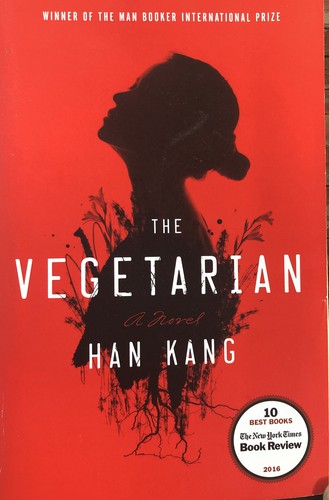
The Vegetarian
Yeong-hye stops eating meat after violent dreams. The decision looks small from the outside and quickly becomes a family crisis. Han Kang tells the story in three linked parts, each from someone close to Yeong-hye rather than from Yeong-hye herself. That structure is the novel’s pressure system: the people who claim to know her keep talking while her refusal grows harder to contain.
Deborah Smith’s English translation, first published in the United Kingdom in 2015 and in the United States in 2016, made Han Kang the first Korean novelist many English readers met. The book later won the International Booker Prize. It belongs on this list because it still shapes how Korean fiction is marketed abroad, and because it is not interchangeable with Han’s later historical novels. The prose is spare. The imagery is not. Readers who want a warm entry point should start elsewhere; readers who want a short, severe study of control over a woman’s body will find the book doing that work without consolation.
Human Acts
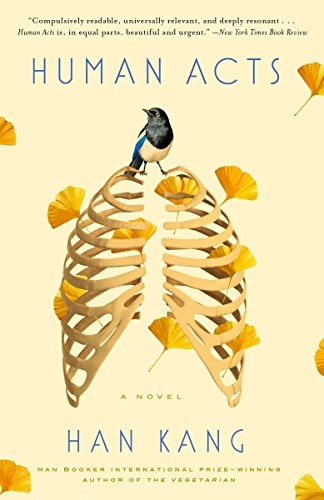
After The Vegetarian, many readers expect another private metamorphosis. Human Acts is public. It follows the aftermath of the May 1980 Gwangju Uprising, when South Korean troops crushed a civilian protest. A boy named Dong-ho is killed. The novel then moves among the living and the dead who remain attached to that event: students, workers, editors, prisoners, and a writer years later.
Han Kang grew up in Gwangju and has said the massacre stayed in her work. The English edition, translated by Deborah Smith, arrived after The Vegetarian and is often the book Korean readers tell English readers to start with if they want history rather than allegory. It is the right second Han Kang title here because it shows a different method: linked testimonies instead of a single household. The language stays exact. The subject is mass death, so the book is harrowing by design. It is not a textbook, but it does assume the reader can sit with political violence without being eased away from it.
Kim Jiyoung, Born 1982
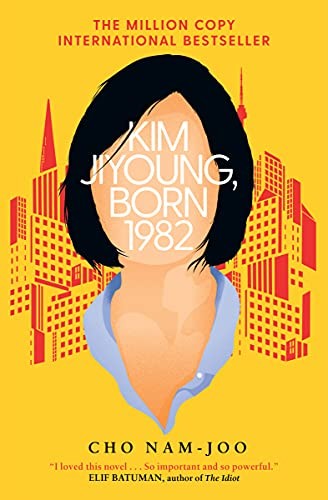
Kim Jiyoung is an ordinary name for a girl born in South Korea in 1982. Cho Nam-joo uses that ordinariness as the point. The novel follows one woman through childhood, school, work, marriage, and early motherhood, then records how everyday rules accumulate until they look like fate. The prose is flat on purpose. Jamie Chang’s translation keeps that report-like register instead of dressing it as lyric fiction.
The book sold more than a million copies in Korea and was longlisted for the U.S. National Book Award for Translated Literature. Readers on forums often call it the most accessible Korean novel in English, then warn that accessibility is not the same as comfort. It belongs here because it answers a common question: what does contemporary Korean feminism look like on the page? The answer is statistical as much as dramatic. Some readers find the style dry. That dryness is the method. If you want metaphor, read Han Kang. If you want a ledger of ordinary harm, this is the ledger.
Please Look After Mom
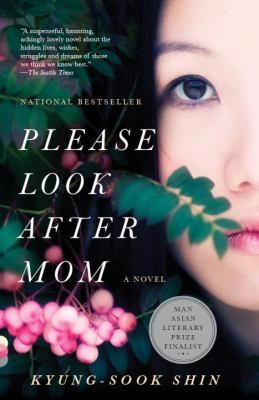
So-nyo, sixty-nine, vanishes in a Seoul subway station after becoming separated from her husband. Her adult children paper the city with flyers and start to reconstruct a woman they thought they already knew. Kyung-sook Shin rotates the telling among daughter, son, husband, and mother. The missing-person plot is the frame. The real subject is the unpaid labor and hidden interior life of a rural woman who held a family together.
Chi-Young Kim’s English translation introduced Shin to a large international audience. The novel won the Man Asian Literary Prize and sold millions in Korea before that. It remains one of the few Korean books that book clubs reliably finish. Compared with Kim Jiyoung, Born 1982, it is warmer and more melodramatic. Compared with Human Acts, it is domestic rather than civic. Readers who dislike second-person address should know the English text uses it. Readers looking for a family novel about migration from countryside to city will find that story here without needing prior Korean-history homework.
Almond
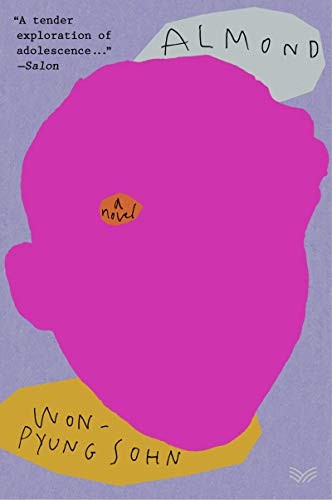
Yunjae has alexithymia: he cannot easily identify or show emotion. His mother and grandmother teach him scripts for ordinary life. Then a sudden act of violence removes that safety net, and a volatile classmate named Gon forces Yunjae into contact he has spent years avoiding. Sohn Won-pyung, a filmmaker as well as a novelist, writes the story as a coming-of-age novel rather than a case study.
Sandy Joosun Lee’s translation reached English in 2020 from HarperVia and found a large young-adult and crossover audience, including K-pop readers who circulated the book online. It is here because it is one of the few widely available Korean novels that younger readers consistently finish and recommend. The science is used as a character premise, not as a lecture. The book still contains street violence and family trauma, so it is not a gentle miracle-of-friendship story even when the marketing leans that way. Readers who want experimental prose should look at Han Kang or Bora Chung instead.
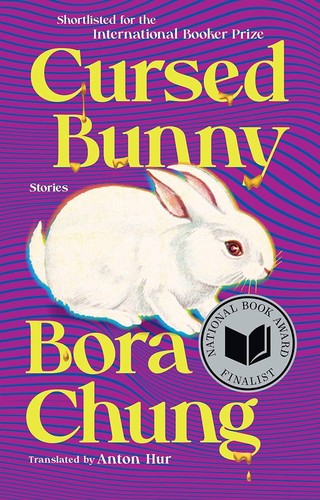
Cursed Bunny
Cursed Bunny is a story collection, not a novel, and that is why it belongs on a general Korean reading list. Bora Chung moves through fairy tale, body horror, science fiction, and office dread without settling into one lane. Household objects misbehave. Medical systems turn predatory. Money grows teeth. Anton Hur’s translation keeps the tonal snap that made the book travel: a sentence can be funny and nauseating in the same breath.
Honford Star published the English edition in 2021; Algonquin issued the U.S. edition in 2022. The collection was shortlisted for the International Booker Prize and was a National Book Award finalist for translated literature. Reddit threads often recommend it to readers who bounced off quieter Korean fiction. The stories are uneven by design, which means you can stop after a tale that lands and skip one that does not. It is a poor choice if you want realism or healing. It is a strong choice if you want Korean writing that treats capitalism and patriarchy as engines of the uncanny.
Welcome to the Hyunam-dong Bookshop
Yeongju leaves a respectable career and a failed marriage, then opens a small bookshop in a Seoul neighborhood. Customers drift in with their own stalled lives: a lonely barista, a restless coffee roaster, a writer watching the shop from the side. Hwang Bo-reum lets conversations about work, rest, and reading carry the book. There is no twist engineered to punish anyone for wanting a quieter life.
Shanna Tan’s translation helped turn the novel into an international bestseller and a flagship of Korean healing fiction. A 2026 Literature Translation Institute survey found translated editions among the strongest overseas sellers of recent Korean fiction. That popularity is the reason it is on this list. It is also the reason some readers bounce off it. If you want plot machinery, look at The Plotters. If you want a book that treats a shop counter as a place to recover from burnout, this is the plainest current example in English. The pace is slow on purpose.

I Want to Die but I Want to Eat Tteokbokki
- Series
- I Want to Die but I Want to Eat Tteokbokki
This is a memoir built from recorded sessions with a psychiatrist. Baek Sehee, then a young publishing professional, talks through persistent low mood, self-consciousness, and the gap between a competent public self and a private sense of collapse. The title’s joke is also the book’s thesis: appetite and despair can sit in the same day. Anton Hur’s 2022 English translation made the conversations travel far beyond Korea.
The book is here because English readers keep asking for Korean nonfiction that is not a history primer. It is not a novel and not a treatment manual. Some readers find the dialogue repetitive; that repetition is how therapy often sounds. A sequel exists. The first volume is the one most people mean. Approach it as a document of dysthymia and self-observation, not as a story with a tidy recovery arc. If you are looking for fiction about Seoul nightlife, Love in the Big City is the better neighbor on this list.
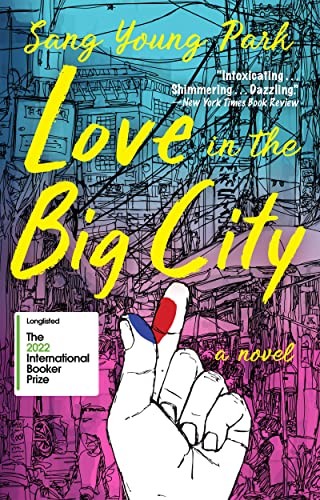
Love in the Big City
Young is a gay student and later a young worker in Seoul, moving between classrooms, cheap bars, Tinder beds, and the apartment he shares with his best friend Jaehee. Sang Young Park writes the city as a sequence of nights that feel endless until they do not. Friendship does as much structural work as romance. When circumstances change, Young is left with family duty, money trouble, and the question of whether love in a big city can be more than a series of rooms.
Anton Hur’s translation was longlisted for the International Booker Prize. In Korea the book was a major debut; in English it is still one of the few widely distributed queer Korean novels. That is why it is on this list. It is funnier and more bodily than the prize literary titles above, and more specific about gay life in Seoul than marketing copy usually admits. Readers who want a chaste healing novel should pick the bookshop book instead. Readers who want soju, cigarettes, and the morning after will recognize the temperature immediately.
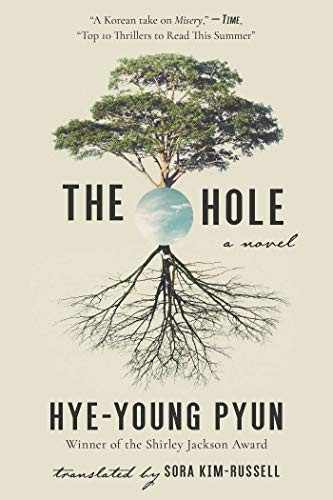
The Hole
Oghi wakes from a car crash that killed his wife and left him paralyzed and barely able to communicate. His mother-in-law becomes his caregiver. Outside, she starts digging in the garden his wife once tended. Hye-young Pyun builds the novel out of dependence, silence, and the ugly facts that surface when a man can no longer manage his own story. Sora Kim-Russell’s translation won the book a Shirley Jackson Award.
English-language lists often file The Hole next to The Vegetarian because both are short and unsettling. They are not the same book. Pyun is writing domestic horror and neglect, not metamorphosis. Time magazine flagged it as a major summer thriller when the translation appeared. It earns a place here as the cleanest example of Korean psychological horror widely available in English. Readers who need likable characters will not find them. Readers who like locked-in suspense without supernatural explanation will.
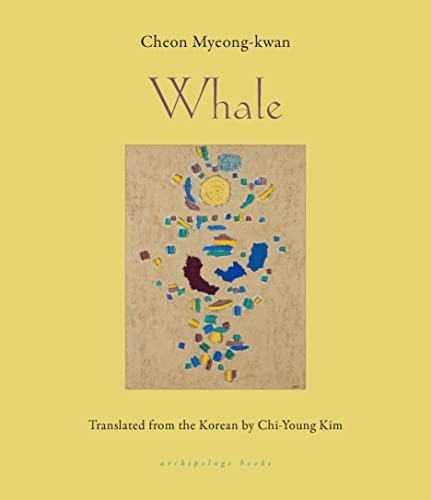
Whale
Whale is a sprawling village epic that behaves like a folk tale even when it is talking about brickworks, movie theaters, and twentieth-century upheaval. Geumbok chases a sensation she first felt seeing a whale. Her mute daughter Chunhui grows into a body the world treats as spectacle and labor. A one-eyed woman commands bees. Fortunes appear and vanish with the logic of rumor. Chi-Young Kim’s translation was shortlisted for the International Booker Prize in 2023.
The novel was already a modern Korean favorite long before the English edition. It is on this list to represent a different register from the slim contemporary books that dominate translation lists. The humor is broad. The violence is not hidden. Magical touches sit beside hunger and ambition. Readers who want a tidy moral will not get one. Readers who like One Hundred Years of Solitude comparisons should treat that as a marketing rhyme, not a map. Start here if you want scale and strangeness rather than a single Seoul apartment.
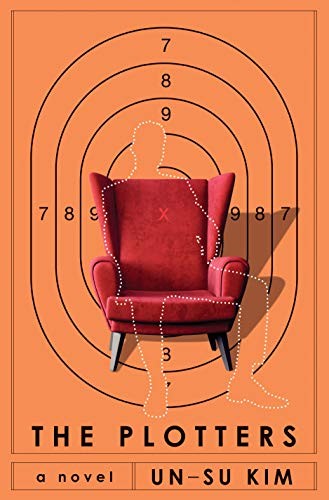
The Plotters
In an alternate Seoul, assassination is an industry with middle managers. Reseng, raised in a crumbling library by a killer called Old Raccoon, works as a hit man until a job stops following the usual script. Un-su Kim treats the guild system as both joke and political diagram: the person who pulls the trigger is never the person who designed the plot. Sora Kim-Russell’s translation keeps the deadpan asides that make the violence feel bureaucratic.
Time later included the novel among its 100 best mystery and thriller books. That reputation is useful and incomplete. The book reads like noir, then keeps pausing for cats, beer, and unread library shelves. It is the most conventionally entertaining novel on this list, which is why thriller readers who do not otherwise read translations often finish it. It is also why literary readers sometimes call it slight. Read it for atmosphere and moral sourness, not for a realistic portrait of Seoul policing.
The Old Woman with the Knife
Hornclaw is sixty-five and still working as a contract killer, though her company prefers the phrase disease control specialist. On the subway she looks like any other older woman with a small Bible. Chi-Young Kim’s translation makes that camouflage feel exact. The plot follows what happens when age, injury, and an unexpected human attachment interfere with a career built on not attaching to anyone.
Published in Korean as Pagwa in 2013 and in English in 2022, the novel became a rare crime translation that reviewers discussed as a book about aging women rather than only as a hit-woman gimmick. That is why it is here beside The Plotters instead of instead of it. Un-su Kim writes the industry. Gu Byeong-mo writes the body doing the work. The book is short, sardonic, and bloody. Readers looking for a cozy elder-heroine story will be misled by the premise. Readers interested in how Korean fiction handles older women outside family melodrama will not.
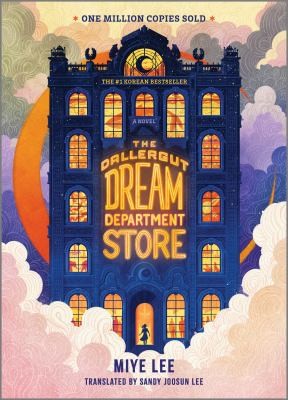
DallerGut Dream Department Store
- Series
- DallerGut Dream Department Store
Somewhere in the collective subconscious, a department store sells dreams by floor: childhood, food, flight, reunion with the dead. Penny is a new clerk learning the stock, the staff, and the etiquette of customers who arrive in pajamas. Miye Lee treats the shop as both workplace comedy and fable about why people keep requesting the same nights. Sandy Joosun Lee translated the English editions.
The novel began as a crowdfunded Korean debut and became a million-copy bestseller with a sequel. English publishers sold it beside Japanese comfort fiction, which is fair as marketing and incomplete as description. There is a stolen-dream mystery, but the pleasure is inventory and atmosphere. It is on this list because many readers now start Korean fiction with cozy fantasy rather than Nobel prose. If the whimsy feels thin, that is a real complaint. If you want a low-stakes door into translated Korean books, this is one of the easiest currently in print.
Concerning My Daughter
A widowed care worker wants a stable, conventional life for her adult daughter, Green. Green moves back into the apartment with her long-term girlfriend, Lane. The mother cannot accept that household as family. At work she is told to reduce care for Jen, an elderly patient without descendants. Kim Hye-jin holds those two plots next to each other until the mother’s ideas about usefulness, blood, and duty start to crack.
Jamie Chang, who also translated Kim Jiyoung, Born 1982, keeps the mother’s voice tight and unflattering. The novel won major prizes in Korea before the 2022 English editions from Restless Books and Picador. It belongs at the end of this list because it complicates the family theme running through Shin, Cho, and Park. The book is short and argumentative. Readers seeking a coming-out triumph will find something more uncomfortable: a parent who loves her child and still withholds recognition. That discomfort is the novel’s honesty.
How to choose among these 15
If you want the books that changed the English-language conversation, start with The Vegetarian, Human Acts, and Kim Jiyoung, Born 1982. If you want comfort after those, go to Welcome to the Hyunam-dong Bookshop or DallerGut Dream Department Store. If you want plot, pick The Plotters, The Old Woman with the Knife, or The Hole.
Tone differences matter more than prestige. Almond and Love in the Big City are both about young people in pain, but one is a controlled coming-of-age novel and the other is a messy queer city book. Please Look After Mom and Concerning My Daughter are both family novels; only one asks a parent to accept a queer household. Match the book to the mood you can actually finish.
Frequently asked questions
What is the best Korean book to start with in English?
For most first-time readers, Kim Jiyoung, Born 1982 is the most readable social novel, while Welcome to the Hyunam-dong Bookshop is the gentlest. Readers who want the writer who now defines the field internationally should begin with Human Acts or The Vegetarian, knowing those books are heavier.
Are these books all originally written in Korean?
Yes. Every title on this list was written in Korean and published in English translation. Korean-American novels written in English, including Pachinko, are often recommended beside them but are a different category.
Which Korean books are the least bleak?
Welcome to the Hyunam-dong Bookshop and DallerGut Dream Department Store are the softest. Almond is hopeful compared with Han Kang, but it still includes violence. Cursed Bunny, The Hole, Human Acts, and The Vegetarian are the opposite of comfort reading.
Do I need to know Korean history first?
No for most of the contemporary titles. Human Acts is the exception: a short primer on the 1980 Gwangju Uprising will help, and many editions include a translator’s note. Whale assumes some twentieth-century atmosphere but works as a tall tale even without a timeline.
Is Korean literature only dark?
No. Prize-winning translations often emphasize trauma, state violence, and patriarchy, which is why the reputation stuck. Healing fiction, workplace fantasy, and comic noir are now a large part of what travels in English.
These 15 Korean books to read do not form a single national mood. They form a practical map: prize literature, feminist reportage, family novels, horror, crime, queer fiction, memoir, and the comfort books now selling worldwide. Pick by appetite, then let the next title correct the first.
Sources and further reading
- Nobel Prize outreach on Han Kang
- LTI Korea record for The Vegetarian
- W. W. Norton / Liveright book page
- Penguin Random House page for Please Look After Mom
- The Booker Prizes page for Cursed Bunny
- Bloomsbury page for Welcome to the Hyunam-dong Bookshop
- Korea Herald on overseas Korean fiction sales
- Grove Atlantic page for Love in the Big City
- Archipelago Books page for Whale
- Restless Books page for Concerning My Daughter
- Wikipedia entry for The Hole
- Penguin Random House page for The Plotters
- Books and Bao Korean novels list
- Reddit thread on Korean books in English